Languages
Tuesday, November 17, 2026



News and Views from the Global South
Headlines

Taking Bangladesh to Zero-Leprosy, One New Case at a Time
Sandhya Mandal has never felt so vindicated. For the past four years, the 36-year-old community health worker from Meherpur – a rural district bordering India – has been traveling 50 km every day along dusty roads on an old motorbike, searching for leprosy patients who needed urgent treatment. But in her community, instead of compliments, neighbours and relatives raised questions about her work and her character. “They ask why I come home so late and what is this ‘work’ that I really do. Some even imply that I might be doing something like prostitution,” Mandal tells IPS.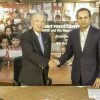
Nippon Foundation Announces US$ 2m Support for the Education of Rohingya Children in Bangladesh
In the light of limited access to education for displaced Rohingya children, the Nippon Foundation has announced US$ 2 million support to BRAC to launch a project to ensure educational facilities to both Rohingya and local community children.
Aung San Suu Kyi Defends Myanmar from Accusations of Genocide, at Top UN Court
Myanmar will have “no tolerance” for human rights abuses committed in Rakhine state and will prosecute the military, if war crimes have been committed there, Aung San Suu Kyi told the International Court of Justice (ICJ), the UN’s main judicial body, on Wednesday.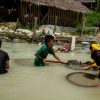
Building Momentum to Hold Companies to Account
Millions of adults and children around the world suffer abuses as workers who obtain raw materials, toil on farms, and make products for the global market. They are at the bottom of global supply chains, for everything from everyday goods like vegetables and seafood to luxury items like jewelry and designer clothing that end up on store shelves worldwide.
Climate Financing Being Undermined by Rich Nations, NGOs Charge
The successful battle against climate change – which has triggered a rash of natural disasters, including floods, droughts and rising sea levels— will be predicated largely on the availability of financing.
Bangladesh Can Be Leprosy-Free by 2030 Says Leprosy Activist
 Despite its efforts to eliminate leprosy as a public health threat, Bangladesh's leprosy burden ranks fourth-highest in the world. Four thousand new cases are detected annually – an average of 11 to 12 cases per day over the last 10 years.

Bangladesh Can Be Leprosy-Free Before 2030 Prime Minister Tells National Zero Leprosy Conference
Leprosy is not a curse but should be detected and treated early, Bangladeshi Prime Minister, Sheikh Hasina, has told delegates at a gathering in her country's capital to discuss the elimination of the disease.
A Reflect on Why the Current Case Against Myanmar in ICJ Is Crucial
Nobel peace laureate Aung San Suu Kyi has arrived at the Hague to defend Myanmar at the International Court of Justice, against charges of genocide of the Rohingya people, as brought on by the Gambia.
Accelerating SDG Progress in Asia – Pacific
“The 2030 Agenda is coming to life”, declared the Secretary General at the opening of the first SDG Summit, a quadrennial event for the follow up and review of the 2030 Agenda for Sustainable Development. As leaders from Asia – Pacific took the floor, they highlighted country progress of SDG implementation and reaffirmed commitment to achieve the 2030 Agenda. Statements reflected different approaches across the region. Yet all converged on one priority: accelerated actions and transformative pathways.
Human Rights? But Not for Sanitation Workers
This year’s Human Rights Day advocates for everyone to stand up for their rights and those of others. Yet this will feel like a distant reality for the millions of sanitation workers in developing countries who are forced to work in conditions that endanger their health and even their lives.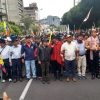
Human Rights and the Global Protests: Addressing Systems as Well as Symptoms
Human rights advocates should be as concerned with the economic injustices giving rise to recent worldwide demonstrations as with the repressive responses to them.
Why Is Growth Slowing in China?
China’s gross domestic product (GDP) grew by 14%. Since then, its growth rate has declined by more than half to 6.6% in 2018. The five-year moving average growth rate is at its lowest since reforms began in 1978, although annual growth briefly fell lower during 1989, the year of the Tian An Men incident.
South-South Cooperation Offers Solutions to Urgent Climate Challenges
Climate change is the defining challenge of our time, and developing countries are recognized as hotspots for climatic risks. Through solidarity, peer-to-peer learning and collective self-reliance, developing countries are collaborating among themselves to address the threat.
The World had an ‘Unprecedented’ Number of People in Humanitarian Need this Year
The world had an unexpected number of people in crisis this year, which exceeded projected numbers the United Nations had expected, with climate change being one of the key crises that led to “needs to unprecedented levels” according to a new report.
Social Summit Demands Stronger Commitments in Climate Talks
As the COP25 deliberations enter the decisive final week, representatives of environmental and social organisations gathered in a parallel summit are pressing the governments to adopt stronger commitments in the face of a worsening climate emergency.
Fostering Sustainable Urbanization and Rural-Urban Linkages
As urbanization continues apace, coupled with rapid population growth and rural to urban migration, the challenges for inclusive rural transformation continue, and the importance of fostering improved rural-urban linkages for better food systems becomes increasingly important.. According to the UN, by 2050 some 66% of the world’s population of 9 billion is expected to live in urban areas. Such rapid urbanization is increasingly shaping the rural space and rural livelihoods (through markets, demand for agricultural goods and labour, migration, and through the provision of services to rural areas). It is therefore critical for the increasing emphasis on urban development to take into account the importance of rural development.
Children Risk Early Marriage: Climate Change One of the Factors
Filomena (15), a fisherman’s daughter from a village in Nampula Province, Mozambique was married to a 21-year-old from the same village.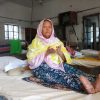
Building a Leprosy Free Bangladesh
Despite having remarkable success in leprosy control in the last decades, the Bangladesh government is now moving forward with a vision to build a leprosy- free country.
Saved Seeds are Seeds of Resilience
People have a right to define their own food system. This includes which seeds they use. Last week, farmers in Nakuru County, Kenya, celebrated the launch of “Ten rich, underutilized crops,” a publication and documentary that capture their efforts to promote and sustain the varieties they grow.
The Economic & Humanitarian Catastrophe Threatening Pacific Island Communities
When UN Secretary-General Antonio Guterres addressed the Economic and Social Commission for Asia and the Pacific (ESCAP) last month, he pointed out the dramatic impact of climate change triggering natural disasters around the world--- from glaciers that melt, ice caps that disappear and corals that bleach.
The Changing Distribution of World Population
In addition to its unprecedented rapid rate of demographic growth during the past 75 years, world population’s distribution across the planet has changed significantly over the past seven decades. The momentous global changes in humanity’s geographic distribution pose serious social, economic, political and environmental challenges and disquieting implications for the future.« Previous Page — Next Page »


