Languages
Tuesday, November 17, 2026



News and Views from the Global South
Headlines
UN Welcomes ‘Most Comprehensive Agreement Ever’ on Global Health
Describing it as an “important landmark” on our “journey to health for all”, Secretary-General António Guterres on Monday welcomed the UN Political Declaration on universal health coverage, or UHC, which commits countries to advance towards full coverage for their citizens in four major areas around primary care.
The “Climate Emergency, Urban Opportunity” Report by the Coalition for Urban Transitions
The Coalition for Urban Transitions recently released a report titled Climate Emergency, Urban Opportunity: How national governments can secure economic prosperity and avert climate catastrophe by transforming cities. The report indicates the numerous benefits of prioritizing zero-carbon cities and provides national governments with six key priorities for actions to take to achieve a successful urban transition.
Nature’s Solution to Climate Change
When it comes to saving the planet, one whale is worth thousands of trees.

Advice to US: When You’re Going to a Gunfight, Bring all Your Friends with Guns
Jim Mattis a former United States Defense Secretary in the Trump administration quotes a Marine Corps dictum in a recently released book titled “Call Sign Chaos: Learning to Lead”.
World Summit of Nobel Peace Laureates Calls for Decisive Action, With No Time to Waste
In a world of increasing fragility and declining resources, can the world foster peace? With a looming climate crisis, is war inevitable? Will nuclear war be the final result? Are women the ultimate peace builders? How do we train and engage youth to promote peace?
Jersey, a Gorilla and the Civil War in Cameroon
A month ago I visited Jersey, one of the few European territories still welcoming refugees, though in the case of Jersey they have to be wealthy and are generally fleeing not from war and misery, but from taxes. Once Jersey and the nearby island of Guernsey harbored one of Europe´s most famous political refugees – Victor Hugo (1802-1885), who after he had been too outspoken in his criticism of the autocrat Louis Napoleon found it more convenient to live on the Channel Islands than in France. In spite of being very close to France and with a population that at the time was mainly French-speaking, these islands were nevertheless British territory.
50 Days of Kashmir Under Lockdown – in Pictures
It is 50 days into the lockdown in Kashmir since roads were blocked off, schools shut, and internet and communication services stopped.
Africa’s Industrial Development: Turning Challenges into Opportunities
When world leaders gathered in New York for the 70th session of the General Assembly back in 2016, and proclaimed the period 2016-2025 as the Third Industrial Development Decade for Africa (IDDA III), it reaffirmed the importance of industrialization in supporting Africa’s own efforts towards sustained, inclusive and sustainable economic growth and accelerated development.
We Need Biodiversity-Based Agriculture to Solve the Climate Crisis
The Earth is living, and also creates life. Over 4 billion years the Earth has evolved a rich biodiversity — an abundance of different living organisms and ecosystems — that can meet all our needs and sustain life.
The Social Impact of Economic Inequality
Increasing economic inequality is a defining challenge of our time. In recent years, it has triggered analysis and reflection by many scholars, politicians and others on its causes and consequences on economic growth and efficiency, politics and democracy, human rights, individual behaviors, access to health, social cohesion and environmental degradation. The perception that the top 1% of income earners are gaining at the expense of the other 99% has resulted in widespread public debates in many countries on the social and political repercussions of inequality.
In Southern Brazil, Need Becomes an Environmental Virtue
The state of Santa Catarina in southern Brazil is the largest national producer and exporter of pork and this year it also leads in exports of chicken, of which it is the second-biggest producer in the country.
World’s Hard Fought Battle Against Climate Change
UN Secretary-General Antonio Guterres describes the ongoing crisis as a “climate emergency”-- as the world continues its hard fought battle against devastating droughts, floods, hurricanes and rising sea levels that threaten the very existence of small island developing states located in low-lying areas.
Confronting the New Climate Reality in Asia and the Pacific
In less than ten days world leaders will be gathering at the United Nations in New York for the Climate Action Summit. Their goal is simple; to increase ambition and accelerate action in the face of a mounting climate emergency. For many this means ambition and action that enables countries to decarbonize their economies by the middle of the century. But that is only half the equation. Equally ambitious plans are also needed to build the resilience of vulnerable sectors and communities being battered by climate related disasters of increasing frequency, intensity and unpredictability.
A Brief Guide to the Impacts of Climate Change on Food Production
Food may be a universal language – but in these record-breaking hot days, so too is climate change. With July clocking in as the hottest month on Earth in recorded history and extreme weather ramping up globally, farmers are facing the brunt of climate change in croplands and pastures around the world.
‘I Want my Kids to Know What a Rhino and Turtle Are’ – #ClimateStrike Kids Say
 From Nigeria, to Kenya to the Democratic Republic of Congo, to South Africa, thousands of African climate campaigners have taken to the streets joining millions around the world for the global Climate Strike ahead of the United Nations Climate Action Summit 2019, which starts in New York next week.

Hiring for Inclusion
As companies begin to focus on hiring people with disabilities, we need to shape how they think and act on this interest.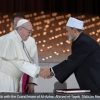
Why We Need Religion More than Ever in the Pursuit of Peace
The proliferation of political crises and armed conflicts in every corner of the world does not exclude religious groups, which unfortunately also contribute to animosities, intolerance and hatred. The Middle East has been on the hit-list of violet extremist groups for decades. One telling example is Syria where clashes have on occasion taken religious or denominational overtones, fracturing Syrian society for decades to come. They have given rise to sectarian divisions along ethnic and religious lines in a country where inter-religious harmony once prevailed. We observe a similar situation in Iraq. In Myanmar, government security forces unleased a brutal campaign of ethnic cleansing and hatred against the Muslim Rohingya population. The military crackdown on the Rohingya community has significantly aggravated inter-communal violence in the country. And in the Central African Republic, armed militant groups sloganizing misrepresentations of Islam and Christianity, commit abuses and human rights violations on each other on a daily basis.
Rural Bangladesh Families Spend 2.0 Billion Dollars on Climate Change ― Dwarfing Government & International Finance
In an alarming imbalance struggling families in rural Bangladesh spend almost US$2 billion a year on preventing climate-related disasters or repairing damage caused by climate change ― far more than either the Bangladesh government or international bodies.
Biogas Makes Pig Farming More Sustainable in Southern Brazil
Biogas has the potential to provide 36 percent of the electricity consumed in Brazil or replace 70 percent of diesel if purified as biomethane, according to the Brazilian Association of Biogas and Biomethane (Abiogas). 
Not Enough Good Information About Africa’s Climate for Adaptation
 "We don't have a good appreciation of our local weather systems," says Dr James Kinyangi head of the African Development Bank's climate and development Africa special fund, which supports investments in climate and weather observations networks in Africa.

Boko Haram’s Youngest Victims
“Khadija” was just 8 years old when Boko Haram fighters attacked her village in northeast Nigeria and took her by force to their camp. Her abductors tried to marry her and other captives to members of the armed Islamist group, she told me. When the captives refused, they were locked in a room.« Previous Page — Next Page »


