Languages
Wednesday, October 14, 2026



News and Views from the Global South
Headlines

Will Low Fertility Rates Return to the Replacement Level Any Time Soon?
Will low fertility rates return to the replacement level of 2.1 births per woman any time soon? A simple answer to this vital demographic question is: unlikely.
As Attacks on Women Defenders Intensify, so Must Our Support
A global crackdown on civic freedoms is intensifying – and women are on the frontlines of the attack. CIVICUS’s 2025 People Power Under Attack report analyses the extent to which freedoms of association, expression and peaceful assembly are being respected or violated. The report reveals that people in 83 countries now live in conditions where their freedoms are routinely denied, compared to 67 in 2020. In 2020, 13 per cent of the world’s population lived in countries where civic freedoms were broadly respected; now it’s more like 7 per cent. Among the most documented violations in 2025 were detention of human rights defenders, journalists and protesters, and women human rights defenders (WHRDs) were among the most affected.
Venezuela Needs More Local Data To Understand the Impacts of Climate Change
A group of 55 researchers gathered and analyzed 1,260 bibliographic references to compile the Second Academic Report on Climate Change in Venezuela. Their final conclusion is that more local studies are still needed to record the direct impacts across different Venezuelan regions and, in particular, to provide data to design the adaptation plans necessary to address climate change.
UNDP’s Digital Rights Dashboard: A Conversation Starter on Human Rights in the Digital Age
Within a generation, digital systems have changed much of how we learn, work and participate in civic life, especially in more connected regions. This shift is unfolding at different speeds in developing countries, but the direction of travel is unmistakable.
Sindh People’s Housing Redefines Post-Disaster Adaptation Success
By any comparison, the statistics for Sindh People's Housing for Flood Affectees (SPHF) are phenomenal. In 2022, photographs from the region showed people treading carefully through waist-deep water with their few belongings grasped firmly above their heads in an attempt to escape the flooding caused by 784 percent more than average monsoon rains.
From Law to Lives Saved: How the Maternal Newborn and Child Health Bill Can Deliver Universal Health Coverage
For women in labour across Kenya, reaching a health facility, finding skilled health workers, and affording care can be a matter of life and death. These challenges are not rare, but daily realities for many families.
In Taliban-Ruled Afghanistan, a Young Woman Works in Disguise to Feed Her Family
Shabnam, a 26-year-old law graduate, manages her life and work by disguising herself as a boy. In the middle of a crowded market with the clatter of street sellers and the smell of nearby restaurants, a small, nondescript shop blends into the chaos. Inside, rusty shelves line the walls, empty soda cans hanging on the wall add a touch of color, and an old table covered with a worn-out cloth sits in the corner. To most passersby, the shopkeeper looks like a young man.
‘Once Conversations about Democracy and Equality Begin, They Are Very Hard to Silence’
CIVICUS discusses restrictions on civic space in Thailand and the detention of activist and human rights lawyer Arnon Nampa with Akarachai Chaimaneekarakate, Advocacy Lead at Thai Lawyers for Human Rights (TLHR).
CIVICUS 2025 Report Reveals Widespread Attacks on Civic Freedoms Worldwide
Over the course of 2025, global civic space conditions have deteriorated sharply, with most countries experiencing some degree of obstructed civil liberties. As authoritarian governments strengthen their hold and have even escalated the use of military force to suppress public dissent, civilians report facing increasing limitations of freedoms of association, peaceful assembly, petition and religion, as well as notable crackdowns on press freedoms.
Funding for Human Rights Organizations – including at the Grassroots Level – have Been Slashed Worldwide
Human rights are underfunded, undermined and under attack. And yet. Powerful. Undeterred. Mobilizing. This year no doubt has been a difficult one. And one full of dangerous contradictions. Funding for human rights has been slashed, while anti-rights movements are increasingly well-funded.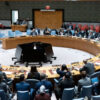
A New UN Secretary-General Needs the Blessings of the US–or Get Vetoed
When there was widespread speculation that a UN Under-Secretary-General (USG), a product of two prestigious universities—Oxford and Cambridge—was planning to run for the post of Secretary-General back in the 1980s, I pointedly asked him to confirm or deny the rumor during an interview in the UN delegate’s lounge.
International Funding for 30×30 Biodiversity Target Falls Billions Short of Global Goals
A new study and interactive dashboard released today in Nairobi at the seventh session of the United Nations Environment Assembly (UNEA) finds that current international financial flows remain billions of dollars short of what is required to achieve the global biodiversity target of protecting and conserving at least 30 percent of the world’s land and ocean by 2030 (30x30).
How Community Radio Is Powering Tanzania’s Climate Resilience
At dawn in the mangrove-choked Rufiji estuary, paddles from wooden canoes slice through still waters as a soft voice drifts across the tide.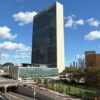
The Daunting Tasks Ahead for the New UN Secretary-General
The election of the next Secretary-General of the United Nations comes at a highly inopportune moment in 2026, when the UN is being bypassed, and multilateralism—with the UN at its core—is under increasing challenge from some of the world’s most powerful states and leaders.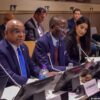
UN Pact for the Future Requires Global Solidarity and Localized Solutions
More than one year since its adoption, the UN Pact for the Future is held up as a critical framework for countries to address today’s issues through global cooperation. Its agenda for global governance and sustainable development is ambitious, and it is for this reason the Pact poses implementation challenges when it comes to the direct impact on local communities. It will require the joint efforts of governments, civil society and international organizations to achieve the goals laid out in the Pact.
Thousands Gather in Nairobi as Science Meets Diplomacy for Planet Protection
“There will never be a better time than now to invest in a stable climate, thriving ecosystems, and resilient lands, or in sustainable development that delivers for all,” said Amina J. Mohammed, the deputy Secretary-General of the United Nations, during the opening plenary of the seventh meeting of the UN Environment Assembly (UNEA-7) taking place from December 8 to 12, 2025.
Climate Crisis Disrupts Sundarbans Community Festival, Prosperity
A dried karam tree branch stands on the bank of a pond in a field in Datinakhali village adjacent to the Sundarbans. Despite many efforts, the tree could not be saved.
Cyclone Ditwah Leaves Millions Affected as Sri Lanka Faces Widespread Flooding, Displacement, and Rising Health Risks
In late November, Cyclone Ditwah made landfall in Sri Lanka and southern India, bringing heavy rainfall that triggered widespread flooding and devastating landslides. The storm caused extensive damage to civilian infrastructure and resulted in a significant loss of life. Communities have been severely impacted, with limited access to essential services, while humanitarian agencies face challenges in reaching the most vulnerable populations.
Sri Lanka & the Global Climate Emergency: The Lessons of Cyclone Ditwah
Tropical Cyclone Ditwah, which made landfall in Sri Lanka on 28 November 2025, is considered the country’s worst natural disaster since the deadly 2004 tsunami. It intensified the northeast monsoon, bringing torrential rainfall, massive flooding, and 215 severe landslides across seven districts.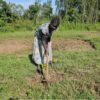
Farmers Earn While Reviving Native Forests Through a Blockchain-Powered App
For years, Morris Onyango had been trying to reforest his degraded land on the shores of River Nzoia, in Siaya county, 430 kilometers from Kenya’s Capital, Nairobi. But every time he planted trees on his farm, his efforts bore little fruit, as floodwaters would not only wash away his tree seedlings but also fertile topsoil on his land.
The New Fragility: Peacebuilding Meets Digital Democracy
Established democracies are exhibiting governance stresses that were once associated primarily with fragile and conflict-affected states. Polarisation is weakening institutional trust, fragmenting civic norms, and reducing societies’ ability to solve problems collectively. This is the new fragility. At the same time, governments and civil society organisations are adopting digital tools to support public participation. These deliberative technologies hold real promise, but in polarised environments they also carry risks. Their success depends on the same principles that have guided peacebuilding efforts for decades.
« Previous Page — Next Page »





