Languages
Saturday, November 21, 2026



News and Views from the Global South
Headlines

Fate of Earth Must Not be Decided by US & Fellow Nuclear States
When the United Nations continues its negotiations in June for an international treaty against nuclear weapons, there must be a treaty that should cover every single aspect of the devastating weapons --- and leading eventually to their total elimination from the world’s military arsenals.
Women Clearing Bombs in Cambodia
Mao Neav takes a few quick steps out into the field, followed by her faithful dog Onada, tail wagging, tongue out and panting, ready for what is out there. The field is peppered with cluster bombs.
Trump’s First 100 Days: a Serious Cause for Concern
This week, Donald Trump will mark his first hundred days as US President. It’s time to assess his impact on the world, especially the developing countries.
Building resilient rural livelihoods is key to helping Yemen
People in Yemen are currently suffering from the world’s largest humanitarian crisis. More than 17 million people around Yemen’s rugged landscape are acutely food insecure, and the figure is likely to increase as the ongoing conflict continues to erode the ability to grow, import, distribute and pay for food. More than 7 million people are on the verge of famine, while the rest are marginally meeting the minimum day-to-day nutritional needs thanks to external humanitarian and livelihoods support. Large-scale famine is a real risk that will cast an awful shadow for generations to come.
Reclaiming the Bandung Spirit for Shared Prosperity
"The despised, the insulted, the hurt, the dispossessed—in short, the underdogs of the human race were meeting. ... Who had thought of organizing such a meeting? And what had these nations in common? Nothing, it seemed to me, but what their past relationship to the Western world had made them feel. This meeting of the rejected was in itself a kind of judgment upon the Western world!." —Richard Wright, The Color Curtain [University Press of Mississippi, 1956].
Bamboo Gaining Traction in Caribbean as Climate Savior
Keen to tap its natural resources as a way to boost its struggling economy, Guyana struck a multi-million-dollar deal with Norway in 2009.
Tracking Extremism
There is apparently no direct link between the brutal lynching of Mashal Khan, the arrest of Naureen Leghari, a convert to the so-called militant Islamic State (IS) group, and the surrender of Jamaatul Ahrar (JuA) leader Ehsanullah Ehsan.
May Does a Mahinda but Without Astrology
So it is May’s day. Prime Minister Theresa May who pledged that she will run her course as Prime Minister and dismissed the idea of an early election did a rather sudden u-turn. Those who remember the Margaret Thatcher era would recall her October 1980 conference speech when she told those waiting “with bated breath” for a Thatcher u-turn “You turn if you want to. The Lady’s not for turning”. She was punning on the title of the Christopher Fry play “The Lady’s Not for Burning”.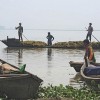
Prelude to a Spreading Nightmare
The recent flash floods in the haor regions exemplify the threat of climate change that looms over Bangladesh. It signifies our national ignorance of climate change and its impact on haors and other disaster prone areas. On the occasion of International Mother Earth Day, we focus on why the fate of the haors, with their rich biodiversity and agriculture, should matter to the rest of the country.
Nicaragua’s South Caribbean Coast Improves Readiness for Climate Change
The effects of climate change have hit Nicaragua’s Caribbean coastal regions hard in the last decade and have forced the authorities and local residents to take protection and adaptation measures to address the phenomenon that has gradually undermined their safety and changed their way of life.
Middle East, Engulfed by a ‘Perfect Storm’
A perfect storm has engulfed the Middle East, and continues to threaten international peace and security.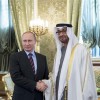
Mohamed bin Zayed, Putin discuss friendship, cooperation, regional and international issues
His Highness Sheikh Mohamed bin Zayed Al Nahyan, Crown Prince of Abu Dhabi and Deputy Supreme Commander of the UAE Armed Forces, has discussed with Russian President Vladimir Putin, friendship, cooperation, regional and international issues of mutual interest.
Caricom’s Energy-Efficient Building Code Could Be Tough Sell
Caribbean Community (Caricom) states are in the process of formulating an energy efficiency building code for the region that would help reduce CO2 emissions, but implementation of the code may depend heavily on moral suasion for its success.
Civil Society: “Everyday Things Are Getting Worse” for Children in Yemen
Persistent attacks on health care in Yemen is severely impacting children’s well-being, civil society detailed at the launch of a report.
A Bit Bolshie
To the uninitiated, the sight of a motley bunch of around three dozen odd foreigners — men, women and children — piling on to a train in Zurich might not have appeared extraordinary. But there was a crowd on the platform.
Bannon Down, Pentagon Up, Neocons In?
The apparent and surprisingly abrupt demise in Steve Bannon’s influence offers a major potential opening for neoconservatives, many of whom opposed Trump’s election precisely because of his association with Bannon and the “America Firsters,” to return to power after so many years of being relegated to the sidelines. Bannon’s decline suggest that he no longer wields the kind of veto power that prevented the nomination of Elliott Abrams as deputy secretary of state. Moreover, the administration’s ongoing failure to fill key posts at the undersecretary, assistant secretary, and deputy assistant secretary levels across the government’s foreign-policy apparatus provides a veritable cornucopia of opportunities for aspiring neocons who didn’t express their opposition to the Trump campaign too loudly.
Marjia’s Suicide
In yet another tragic incident related to child marriage, a teenage girl from Akkelpur upazila of Joypurhat committed suicide by hanging herself from the ceiling in her living room. Fifteen-year-old Marjia Sultana killed herself finding no other way out of being married off by her family.
A Woman in China
Sometimes it takes a single person with courage to awaken a society. So it may be in the case of Ye Haiyan, a women’s rights activist in China who has sacrificed nearly everything to bring to attention the condition of sex workers in her country.
New Education Model Can “Achieve Much More,” Says Education Envoy
UN’s education envoy has unveiled a new model that could provide every child with access to education by 2030. Citing concerns about the neglect of children’s rights, the Special Envoy for Global Education Gordon Brown urged for more and better finance to ensure every child is in school and learning.
Tensions in Cambodia Are Growing
Tensions in Cambodia are growing. The reigning party have been in power for decades, but as the upcoming elections in June come closer, support is gathering for the opposition. The response from the government has been to pass laws that seek to silence protests.
FEATURED VIDEO: Investing in a Clean, Green Future
 From tourism-dependent nations like Barbados to those rich with natural resources like Guyana, climate change poses one of the biggest challenges for the countries of the Caribbean – and it hasn’t gone unnoticed by the region’s premier financial institution, the Caribbean Development Bank (CDB).
« Previous Page — Next Page »


