Languages
Monday, November 23, 2026



News and Views from the Global South
Headlines

Humanitarian Summit, The Big Fiasco
The World Humanitarian Summit (WHS) held in Istanbul on May 23-24, managed to send a strong wake-up call to the world about the unprecedented human suffering now in course, but failed to achieve the objective of attracting the massive funds needed to alleviate the humanitarian drama, as none of the leaders of the Group 7 of the richest countries nor of the five permanent members of the UN Security Council attended, with the exception of the German Chancellor Angela Merkel.Debate Over Bangladeshi Militants’ External Connections
As targeted killings of individuals with unorthodox views and members of minority communities continue unabated in Bangladesh, so does the debate on whether international terrorists have made inroads to the country. The question has been whether the claims of the Islamic State (IS) and Al Qaeda in the Indian Subcontinent (AQIS) of their presence in Bangladesh should be taken at face value. In the past months, both these organisations have been claiming responsibility for a series of killings. Until recently, these claims have not been accompanied by justifications, but that pattern seems to be changing. The AQIS affiliate Ansar-al Islam, issued a long statement after the murder of Xulhazs Mannan, an LGBT activist and USAID staff member. The government, on the other hand, has continued to deny the existence of these organisations and insists that these are the acts of 'homegrown' militants. In April, the English magazine of the IS, Dabiq, published an interview with the so-called Amir of the Bangladeshi chapter of the IS to bolster its presence. Ansar-al Islam claims to represent the AQIS in Bangladesh. This is a mutated version of the organisation Ansarullah Bangla Team (ABT), which came into being in 2007.Middle-Class Ethos
The middle class is viewed as a positive force for progress given its higher education, mobility and wealth. But this view is based on its role in developed states in fostering egalitarian progress, democracy and the rule of law by initiating social movements.
Water Security Critical for World Fastest-Growing Economy
Lack of water management and limited access to data risk hindering Myanmar’s economic growth, making water security a top priority of the new government.
Water: An Entry Point for SDG Implementation in Myanmar
All people, economies, and ecosystems depend on water. Yet water is often taken for granted, overused, abused, and poorly managed. The way we use and manage water leaves a considerable part of the global population without access, and threatens the integrity of ecosystems that are vital for a healthy planet and people.
Economic Interests Harming Global Health: WHO Chief
Putting economic interests over public health is leading the world towards three slow-motion health disasters, Margaret Chan, Director-General of the World Health Organization’s warned the world’s health ministers on Monday.
Natural Capital Investment Key to Africa’s Development
Plugging Africa’s funding gaps to accelerate social and economic development requires a fresh approach to using its natural capital, environment experts said on Monday.
Prickly Pears Drive Local Development in Northern Argentina
Family farmers in the northern Argentine province of Chaco are gaining a new appreciation of the common prickly pear cactus, which is now driving a new kind of local development.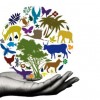
Why Mainstreaming Biodiversity Is the Call for the Day
We have become familiar with the term biodiversity today due to the Convention of Biological Diversity [CBD] that was accepted by the UN Council on December 29, 1993, after which many nations, including Bangladesh, started becoming its signatories. As biodiversity is the foundation of life and is essential for the services provided by ecosystems, this year's theme of the International Biodiversity Day is “Mainstreaming Biodiversity; Sustaining People and their Livelihoods.”
Is it in Europe’s Interest to Push Russia into China’s Arms?
No mention in the media of the dangerous increase in the tension between Europe and Russia and yet Nato has just made operational in Romania a missile system, the ABM, which the United States has declared will protect it from “rogue” states, like Iran.
Humanitarian Summit: Too Big to Fail?
With a line up of heads of state or government telling all what they did to alleviate human suffering and promising to do more, along with leaders of civil society and humanitarian organisations denouncing lack of honest political will to act while governments continue spending trillions of dollars in weapons, the two-day World Humanitarian Summit kicked off today May 23 in Istanbul.
Bangladesh’s Urban Slums Swell with Climate Migrants
Abdul Aziz, 35, arrived in the capital Dhaka in 2006 after losing all his belongings to the mighty Meghna River. Once, he and his family had lived happily in the village of Dokkhin Rajapur in Bhola, a coastal district of Bangladesh. Aziz had a beautiful house and large amount of arable land.
Species Loss, the Migration Hiding in Plain Sight
Two months ago, I was in Agadez, a city in the middle of the famous Ténéré Desert of Niger. Agadez has become a major transit point on a hazardous journey for the hundreds and thousands of desperate people from all over West Africa trying to make it to the Mediterranean coast every year.
Humanitarian Summit Aims to Mobilise Up to 30 Billion Dollars
The two-day World Humanitarian Summit (WHS), opening today May 23 in Istanbul, aims at mobilising between 20 and 30 billion dollars to face the on-gowing, worst-ever humanitarian crises, said Stephen O’Brien, UN Under-Secretary-General for Humanitarian Affairs andEmergency Relief Coordinator.What do Aid Organisations Want from the Humanitarian Summit
The UN World Humanitarian Summit takes place in Istanbul, 23-24 May. So what hopes do the humanitarian organisations, which deliver aid on the ground, have for the outcomes?
Africa: Resolved to Address African Problems Using African Solutions
The African Union (AU) representing 54 countries and home to 1,2 billion inhabitants, will be in Istanbul to participate in the May 23-24, 2016, first-ever World Humanitarian Summit (WHS) with two key demands—that the international humanitarian system be redefined, and a strong, firm own commitment to itself, to the continent and its people, anchoring on the primacy of the states.
Myanmar Seeks to Break Vicious Circle of Flood and Drought
It has been two weeks now since the village of Htita, with its few bamboo houses hemmed in by parched, cracked earth and dried-out ponds, has enjoyed the novelty of its first ever water well.
A Teacher Has Been Taught His Lesson!
Greek historian Herodotus, living in the fifth century, couldn't have known in advance that a headmaster was going to be humiliated in Narayanganj on the second Friday of May 2016. But when he said that men trusted their ears more than their eyes, it set the standard of mob justice for all time to come. Those who've watched the disgusting video of that outrageous incident couldn't believe their eyes while ears burned with shame. The headmaster was doing earholding sit-ups while an all-daddy lawmaker wagged his finger, keeping count. When the exhausted and embarrassed victim fell on the floor after the third time, he was pulled up to stand on his feet. Then like a mechanical toy, the poor man was made to raise his folded hands to his forehead asking for forgiveness before a hysterical crowd.The Heavens Poured and Atlas Shrugged
Sri Lankan parliamentarians appear to have been moved to unseemly mirth regarding the floodwaters which devastated the country this week, causing more than sixty three officially reported deaths and thousands more missing, with even greater numbers rendered homeless and destitute.
County Governments in Kenya Must Take Lead in Fight for Gender Equality
The 3rd Devolution Conference that took place in Meru, Kenya between 19 and 21st April was an opportunity to discuss how the post-2015 development agenda will be localized and how county governments will deliver on the Sustainable Development Goals (SDGs).
When Emergencies Last for Decades
For the millions of people whose lives have been uprooted by conflict and natural disasters the average amount of time before they can return home is now 17 years.« Previous Page — Next Page »


