Languages
Thursday, November 19, 2026



News and Views from the Global South
Active Citizens
POLITICS-MALAWI: New Efforts for Citizen Power
Civil society organisations in Malawi are keen on the newly introduced Governance and Transparency Fund (GTF) which, they hope, will provide people with more power to ensure that there is proper governance and transparency in the country.
AFRICA: Keen on Democracy, Despite Mixed Results
Over the last twenty years, the ballot box has replaced military coups as a means of political change across Africa, says Professor Emmanuel Gyimah-Boadi, a political scientist from the University of Ghana. However the results of democratic practices are a mixed bag of sand and sim-sim.HEALTH-AFRICA: Research and Policies Lack Civil Society Input
Health experts and activists have heavily criticised African governments for failing to collaborate with civil society organisations (CSOs) on health research and health policy development.DEVELOPMENT-AFRICA: Governance Still Failing
How can governance be improved to give development a chance in Africa? Political theorist Patrick Chabal believes a role has to be found for traditional methods of accountability to be used alongside formal systems recognised in the West.
DEVELOPMENT-AFRICA: Gender Budgeting Still Finding Its Feet
With the world slightly past the halfway mark to the Millennium Development Goal deadline of 2015, pressure is mounting to promote gender equality. Goal Three is to promote gender equality and empower women - but in fact, every goal relates directly to women's rights.
RIGHTS-ZIMBABWE: Activists Demand Justice for Politically-Motivated Rapes
"I was raped by four Zanu PF militias at night, just outside their base, during the elections. They took turns to rape me, accusing me of supporting the opposition, MDC [Movement for Democratic Change]", said Pauline Moyana* from Mutasa, a community in Zimbabwe’s eastern Manicaland province.
AGRICULTURE: Swazi Input Trade Fairs Falling Short
Mary Ntshangase sits under a big umbrella - a packet of beans in one hand and a packet of peanuts in the other - wooing customers to her stall.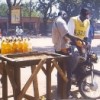
TRADE-CAMEROON: Borders – Where Two Economies Meet
No one pays full price for petrol in northern Cameroon, not when there's cheaper Nigerian contraband available. In Garoua town for example, there are about 4,000 commercial motorcycles which all depend on "zoa zoa" or "federale" as this highly cherished liquid is generally referred to.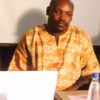
DEVELOPMENT: Zimbabweans Worried About Aid With Strings Attached
Aid with strings attached frequently does not translate into the improvement of the lives of the people for whom that money was ostensibly sourced in the first place. Most of the capital received in aid is used to pay back debt owed to Western donors.POLITICS-DR CONGO: Regional Leaders Urge Effective Ceasefire
African leaders meeting in Nairobi have called for an end to the renewed fighting in the eastern part of the Democratic Republic of Congo (DRC) which has displaced 253,000 people since August, according to the United Nations.
SOMALIA: Women 'Keep Life Going' in Violent Streets of Mogadishu
On the fifth day of every month a group of women entrepreneurs gather to share their experiences and discuss matters of trade. What makes this exceptional is that the women are from south-central Somalia and they meet in Mogadishu, one of the world's most devastated and dangerous cities.POVERTY-AFRICA: Leaders Cannot Close Their Ears
Eight years ago, the leaders of 189 countries pledged to work towards achieving the Millennium Development Goals, eliminating extreme poverty by 2015. The Stand Up, Take Action Campaign mobilises millions of people around the world to press for action to make this a reality.WORLD FOOD DAY: Zambia's Women Farmers Demand Policy Changes
Zambia's tens of thousands of peasant farmers are crucial to the country's food security, yet they have little voice in agricultural policy. Cecilia Violet Makota is one of the rare exceptions.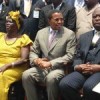
AFRICA: Civil Society Gains Strength at AU
The launch of the African Union’s official civil society council may strengthen the continent’s ability to address human rights violations and tackle poverty, activists say.
Q&A: "We Will Write About Them"
While formal publishing companies in Nigeria languished through the economic crises that accompanied the structural adjustment programmes of the late 1980s and early 1990s, young Hausa writers began writing about their lives and contemporary problems they faced. Bypassing formal publishers, they self-published their novels, often with the help of a writers' cooperative.
SIERRA LEONE: Building Peace
Sierra Leone has been a major recipient of foreign aid since the end of a devastating 11-year civil war in 2002. But government, donors and citizens are all questioning how effectively this aid is being used.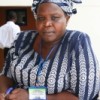
DEVELOPMENT: Accra Agenda for Action – A Step Backwards?
Ahead of the Third High Level Forum on Aid Effectiveness (HLF3), opening in Accra on September 2nd, representatives of civil society at a parallel forum have raised concerns that the HLF could represent a step backwards in efforts to improve aid effectiveness.ECONOMY: Eastern Europe and Central Asia See ‘Remarkable Growth’
Russia and the transition economies of Eastern Europe and Central Asia, former members of the now-defunct socialist bloc, were among the world leaders in growth in 2001.DEVELOPMENT: Former Communist Nations No Paradise for Children
The former communist countries of Europe and Central Asia, in the rush for economic growth, have neglected their goals to improve the standard of living for all and to build humane and democratic societies, says a new report by the United Nations Nations Children's Fund (UNICEF).POLITICS-CUBA/RUSSIA: New Era of Tensions for Former Comrades
Cuba strongly objects to Russia's announced closure of an electronic intelligence centre on the Caribbean island - a move Havana says is Moscow's "special gift" to Washington - stoking a new public dispute between the two countries, though Cuba is calling for negotiations.POLITICS-CUBA/RUSSIA: New Era of Tensions for Former Comrades
Cuba strongly objects to Russia's announced closure of an electronic intelligence centre on the Caribbean island - a move Havana says is Moscow's "special gift" to Washington - stoking a new public dispute between the two countries, though Cuba is calling for negotiations.« Previous Page — Next Page »


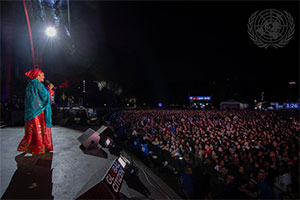 Global Citizen Festival in New York. Credit: UN Photo/Eskinder Debebe
Active citizens are committed to social change because they know that it is achievable. However, major political challenges face active citizens across the world. For example, in authoritarian regimes in Latin America where the hegemonic party has been in power for decades on end, protestors and human rights activists face enormous repression and struggle to materialize their advocacy into concrete results. The same can be said for Africans, where a shift towards elected government in recent decades has yet to translate into an effective voice in decision-making. Now, the Strengthening Citizen Demand for Good Governance, which uses evidence-based approaches – funded by DFID's Governance and Transparency Fund – seeks to raise their voices.
In 2025, the CIVICUS Monitor’s People Power Under Attack report revealed that civic freedoms are severely limited in 122 of 198 countries and territories, and only 7.2% of the global population now lives in countries where civic space is open. Through partnership with the Overseas Development Institute (ODI) and CIVICUS, IPS reporters across the continent will seek to define the extent and limits of state capability, government accountability and the responsiveness of leaders to the needs of citizens.

The Week with IPS

NEXT STOP - SDGs
Tracking global progress towards a sustainable world
Tracking global progress towards a sustainable world
