Languages
Sunday, November 22, 2026



News and Views from the Global South
Africa

SIERRA LEONE: New Agriculture Plan Sprouts
When in power, the Sierra Leone People's Party (SLPP) promised that thanks to its pursuit of a pro-agriculture agenda, no Sierra Leonean would go to bed hungry by 2007. But the appointed date came and the people were still hungry. Unfortunately for the SLPP, it was an election year.MIDEAST: Egypt Makes Cultural Clout Count
Egypt has long been recognised as the cultural trendsetter of the Arabic- speaking world. Despite recent challenges to this role with the advent of satellite television, experts say that contemporary Arab culture remains largely defined by Egyptian literature, music, film and television.
POLITICS-MOZAMBIQUE: Another Term for Incumbent President?
Mozambique’s incumbent president looks set to serve a second term of office as partial results of the country’s presidential, parliamentary and provincial elections are announced.WORLD: IMF Has Long Way to Go – Even After "Istanbul Decisions"
The International Monetary Fund (IMF) may be performing better during the current economic crisis than during the Asian crisis of the late 1990s, but it still has "a long way to go".ZAMBIA: Give Us Our Constitution
Pressure is mounting for a new constitution that is inclusive of all citizens' views as the ongoing delays by the body granted to draft it still continues.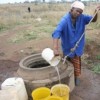
SWAZILAND: More Boreholes, No Water
In the drought-stricken area of Siteki, Tibuyile Maziya has been trying to fill up her four 20-litre buckets with water at a community for the last four hours. With a baby on her back and two more buckets to fill up, 19-year-old Maziya says she walks to this well at least three times a week to get water for her family of 15.ECONOMY-AFRICA: Pros and Cons to Huge Chinese Investment in DRC
Concerns abound about a nine billion dollar Chinese investment in the Democratic Republic of the Congo, especially around environmental consequences and transparency. And, on the Chinese side, investors complain not only about the lack of security in the DRC but about their own government not providing enough support.RIGHTS-UGANDA: Colliding with the Fourth Estate
Charles Odobo Bichachi, editor of the Independent Newspaper has in a span of a year, been summoned to the police several times accused of publishing seditious statements. And just last month, Bichachi fell into trouble again: this time over a cartoon.
KENYA : Practical Measures Needed on Teen Sexual Education
Kenyan teenagers are having sex. And they appear to have no clue how to go about it.SOUTH AFRICA: GMOs – Strategic Priority in Whose Interest?
The South African government is in the process of drafting regulations to police genetically modified organisms (GMO) as part of the national Consumer Protection Act, but environmental experts are worried the GMO section of the new Act, which was signed into law last April, will not be put into practice.ECONOMY-AFRICA: The “Threat” of an Independent Private Sector
From Algeria to Zimbabwe, there have been calls to develop the private sector. But some governments regard independent private sectors as a threat to their power and have even actively blocked business. Meanwhile African women have had a particularly raw deal in business. Some Africans question whether the private sector or the state should drive development.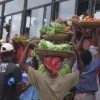
AFRICA: Lost in the Tracking of Budgets
As Susan Muonanji and other vendors scrambled around one of the many transport busses to sell cabbages and tomatoes at a market along one of Malawi’s key roads, a national budget session had just started in parliament some 100 kilometres away in the capital city, Lilongwe.AFRICA: Broken Promises Litter the Aftermath of Global Crisis
It seems that, once again, Africa and the rest of the developing world have been short-changed, given the broken promises in the wake of the global economic implosion.TRADE: What Will China’s Legacy in Africa be by 2049?
With its recent history of tremendous economic growth, China has a few lessons to teach Africans. But African governments should be vigilant in ensuring that their countries also reap benefits from their relations with China.
ZAMBIA : Fishing in Troubled Waters
In two decades of fishing on the Zambezi, Darius Wamulume has never seen anything like this. With deep ulcerations and tissue decay, the fish he has caught recently is too unsightly to sell and too suspect to eat.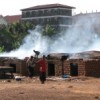
WATER-UGANDA: Reducing Run-off To Protect Lake Victoria
The Ggaba landing site on Lake Victoria is the nearest wholesale fish market to the Ugandan capital, Kampala. More than 6,000 people live and work in this fishing community.WATER-BOTSWANA: A Garden In the Heart of the Village
Look, there's no drama with the borehole in Mokobeng. And that's the way it should be.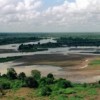
AFRICA: Could Regulation Ease Fears Over Land Grabs?
The 'land rush' across Africa by international investors should be regulated to protect smallholder farmers from deals that could leave them landless and hungry.
UGANDA: Rebuilding Home and Hearth
Dusk gathers in the thickets of Palemy village, in the Gulu district of northern Uganda. Men, women, and children follow foot paths through the dark to the residence of Mzee Otto Yuvani.RIGHTS: Arms Treaty Could Be Powerful Tool to Protect Children
The impact of global weapons trafficking on children and their recruitment as fighters should be on the agenda of talks for an international Arms Trade Treaty, say United Nations experts and non-governmental organisations.MOZAMBIQUE: Watching the Water Flow Away
Less than 100 kilometres from the second-largest dam in Africa, women walk with their babies strapped on their back, water pails balanced on their heads.« Previous Page — Next Page » *#*

The Week with IPS

NEXT STOP - SDGs
Tracking global progress towards a sustainable world
Tracking global progress towards a sustainable world
