Languages
Monday, September 21, 2026



News and Views from the Global South
Aid
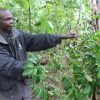
Uganda Coffee Smallholders Grapple With EU Regulations on Imports
In Kubewo village in eastern Uganda, children often go to work with their parents in the coffee gardens. Earnings from Arabica coffee are used, their parents and grandparents say, to pay for children’s education and other expenses for the family.
Absence of Reproductive Care Haunts Syrian Displaced Women
Pregnant women in northern Syria's camps for internally displaced people fear about their health and the health of their unborn children because of a lack of basic medical care and a healthy diet. These conditions exacerbate the illnesses and challenges faced by women, particularly amid the region's widespread poverty, food insecurity, and the remoteness of hospitals and health centers from the camps.
Intl. AIDS Conference: Trans Man Asks Governments to Pressure Uganda to Repeal Punitive Anti LGBT+ Law
Jay Mulucha, Executive Director of FEM Alliance Uganda, gave an impassioned plea to governments around the world to push lawmakers in his home country to reverse punitive new legislation criminalizing the LGBT+ community.
Emergency Response: Building Resilient Education Systems in Haiti Amid Multiple Crises
Haiti is witnessing unprecedented levels of lawlessness and brutality from armed gangs, which target schools and hospitals. The groups have plunged the country into a crisis and apart from the gun violence accusations, disturbing reports of ruthless sexual violence, including gang rape. Millions of children are in harm's way; many are out of school and it is estimated that between 30 and 50 percent of armed group members are children.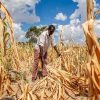
Southern African Drought: Extreme Hardship, Hopefully Only in the Short Term
Heading into the traditional dry period of winter in southern Africa, there was significant consternation due to the drastically below average rainfall the region has been experiencing since January 2024.
Overwhelmed Healthcare Systems in Gaza Struggle Through Evacuation Orders
For nine months, over 2 million people in the Gaza Strip have been forcibly displaced in the wake of the armed conflict between Israel and Hamas. The ongoing fighting and displacement have put significant strain on humanitarian organizations on the ground to address even basic health needs. The United Nations and other humanitarian organizations have stressed that the healthcare system in Gaza has collapsed or has suffered undue pressure as a result of the fighting. Out of 36 hospitals in the area, 13 remain open, operating with partial functionality.
A Bleak Future 50 Years after the New International Economic ‘Non-order’?
Fifty years ago on 1 May 1974, the Sixth Special Session of the General Assembly (April–May) adopted a revolutionary declaration and programme of action on the establishment of a New International Economic Order (NIEO) “based on equity, sovereign equality, interdependence, common interest and cooperation among all States, irrespective of their economic and social systems”. The hope was that a NIEO would “correct inequalities and redress existing injustices, make it possible to eliminate the widening gap between the developed and the developing countries and ensure steadily accelerating economic and social development and peace and justice for present and future generations”. Alas, what evolved is far from what was envisioned or called for.
Germany’s Climate Envoy Talks Partnerships with SIDS; Urges G20 Nations to Step Up Emissions Reductions
Germany’s State Secretary and Special Envoy on International Climate Action, Jennifer Morgan, has emphasized the need for urgent climate action and called on G20 nations to do more to curb greenhouse gas emissions. The G20 comprises 19 developed and developing nations, the European Union and, since 2023, the African Union. It represents the world’s biggest economies, totaling 85 percent of the global GDP.
Turning the Tide: Health Community Turns to UNFCCC for Inclusivity
There is a rapid realization that climate change is impacting health, which is why the recently adopted World Health Organization's Climate Change and Health Resolution is considered pivotal.
Climate Finance: The Planet is Speaking, Listen and Respond with Justice
As the planet groans under record-breaking temperatures and extreme weather events, Africa, which is responsible for only two to three percent of global emissions, stands out disproportionately as the most vulnerable region in the world. António Guterres, the United Nations Secretary-General’s special address on climate action titled ‘A Moment of Truth’ said 2024 was the hottest May in recorded history, and that this marks twelve straight months of the hottest months ever. For the past year, every turn of the calendar has turned up the heat.
Quiet Revolution Underway as IFAD’s Innovative Solutions Rise to Global Rural Challenges
Technology and innovation are at the center of the International Fund for Agricultural Development’s strategy to fulfill its global mission to eradicate poverty and hunger in the developing world, IFAD’s President Alvaro Lario told IPS in an exclusive interview.
Commonwealth Secretary-General Calls for Concrete Finance Commitments for Small Island Developing States
Commonwealth Secretary-General Baroness Patricia Scotland is calling for concrete commitments to climate finance that will acknowledge the multi-dimensional vulnerability faced by the world’s small island developing states (SIDS).
Malawi Moves To Regulate Carbon Trading Amid Transparency Concerns in Global Market
Malawi is increasingly pitching carbon trading as a source of revenue it needs to bolster the economy, which is suffering from foreign exchange shortages caused by a large trade imbalance and being buffeted by several shocks, including the climate crisis.
Dissenting Voices at Nairobi Soil Health Forum Over Increased Fertilizer Use
As the Africa Fertilizer and Soil Health Summit convened in Nairobi to review the progress made in terms of increasing fertilizer use in line with the 2006 Abuja Declaration, experts, practitioners, activists, and even government officials pointed out that accelerated fertilizer use may not be the magic bullet for increased food production in Africa.
1.8 Million More Palestinians Doomed to Poverty if Gaza War Persists
Nearly seven months into the Gaza war, the UN warns that to rebuild and restore the buildings lost in this period, it would take several decades, and to revitalize Palestine’s economy, it would be a great undertaking. Meanwhile, the great losses in housing and public services and the economic stall only threaten to push even more Palestinians into poverty.
LDCs Need Concessional Grants, Not Loans, Say Experts
Olaide Bankole was born and raised in Nigeria, and he observed how climate change was evident in the country with temperature rises and rainfall variability and how drought, desertification, and sea level rises have been affecting its people. He is also aware of how rising sea levels threaten southern Nigerian cities like Lagos and coastal areas, increasing their vulnerability to flooding and waterborne diseases.
Conditions Worsen for Belarus Migrants Stuck in ‘Death Zone’ on EU Border
As the refugee crisis on the Belarus/EU borders approaches its fourth year, a crackdown on activism in Belarus is worsening the situation for migrants stuck in a “death zone” as they attempt to leave the country. Groups working with refugees say the repression of NGOs in Belarus has led to many organizations stopping their aid work for migrants, leaving them with limited or no humanitarian help.
Small Island States Fostering Effective Energy Transition To Achieve a Blue Economy
Small Island Developing States (SIDS), a distinct group of 39 states and 18 associate members, are making efforts to promote the blue economy as they possess enormous potential for renewable energy relying on the sea. Experts predict that switching to renewables will help SIDS countries decarbonize power generation as an appropriate option for islands to cut their carbon dioxide (CO2) emissions, fulfill Paris Agreement pledges and contribute to the global fight against climate change.
‘Scattered Measures’ in Humanitarian Aid for Gaza Are Not Enough – UN Secretary General
As the humanitarian crisis in Gaza drags into its sixth month on Sunday, April 7, the UN Secretary-General calls for a “true paradigm shift” in the delivery of humanitarian aid. On Friday April 5, 2024, Secretary-General António Guterres spoke before reporters to mark six months since the October 7 attacks, where 1,200 civilians in Israel were killed in a terrorist attack led by Hamas, which has since led to a military campaign by the Israel Defense Forces (IDF) into Gaza.
Abandoned Children Growing Problem in Northern Syria
Wael Al-Hassan was returning from work in the Syrian city of Harim when he heard the sound of a baby crying. He was returning from work on December 10, 2023. He stopped momentarily, turned on his mobile phone flashlight to investigate, and spotted a baby girl, around one month old, wrapped in a white blanket, lying by the roadside.
UNWRA Chief Warns Agency’s Fate ‘Hangs in the Balance’
UNRWA Commissioner-General Philippe Lazzarini asked the UN General Assembly to urge member states to support the organization's mandate during this period of unprecedented crisis for the region and the agency. He also called for member states to facilitate a “long-overdue political process” for the two-state solution for Israel and Palestine. Only then, in this context, should UNRWA be allowed to transition.« Previous Page — Next Page »


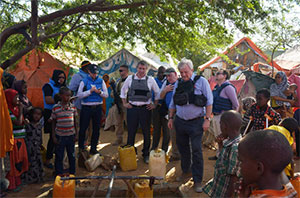 UN Emergency Relief Coordinator Visits Somalia. Credit: UN Photo/Tobin Jones
In recent years, conflicts have broken out across the world with no sign of slowing down or stopping. In times like this, millions of people globally are in dire need of humanitarian aid. Famine, warfare, natural disasters, and economic decline plague a host of nations, including Palestine, Sudan, Chad, Lebanon, and Haiti, to name a few. Humanitarian aid provides millions of people with critical services including healthcare, food, clean drinking water, psychosocial support, housing, and access to education. UN agencies such as the UNDP, UNICEF, the World Food Programme (WFP), UNHCR, UNRWA, and UNEP work with the UN Office for the Coordination of Humanitarian Aid (OCHA) and local organizations to come up with the best possible strategies to support affected communities. At the same time, humanitarian aid and those working on the frontlines are consistently threatened by both actors directly involved in conflict as well as those who are meant to contribute to the international humanitarian regime at large. The near-collapse of United States international aid structures in 2025, including the termination of 83% of USAID’s 6,300 global initiatives, has left millions of people without access to vital humanitarian assistance. 98 million people in 2025, only 65% of people targeted for humanitarian assistance, received the help they needed. In contrast, 123 million people received some form of humanitarian assistance in 2024, and OCHA’s 2026 Global Humanitarian Overview estimates that 239 million people are in need of assistance in 2026. IPS is well-positioned to discuss current initiatives to provide aid and relief through in-depth reporting and opinion content.

The Week with IPS

NEXT STOP - SDGs
Tracking global progress towards a sustainable world
Tracking global progress towards a sustainable world
