Languages
Friday, November 20, 2026



News and Views from the Global South
Armed Conflicts
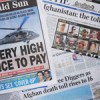
POLITICS: All Quiet on the Australian Front on Role in Afghanistan
The lack of debate here concerning Australia’s military involvement in Afghanistan is unlikely to change in the near future despite the recent deaths of five Australian Defence Force (ADF) personnel in the war-ravaged nation.Switch to Petraeus Betrays Afghan Policy Crisis
Despite President Barack Obama's denial that his decision to fire Gen. Stanley A. McChrystal as commander in Afghanistan and replace him with Gen. David Petraeus signified any differences with McChrystal over war strategy, the decision obviously reflects a desire by Obama to find a way out of a deepening policy crisis in Afghanistan.
U.S. Private Security in Afghanistan “Pay Off Warlords, Taliban”
Every day, as many as 260 trucks filled with supplies for U.S. troops - from muffins to fuel to armoured tanks - are driven from the Pakistani port of Karachi across the Khyber pass into Afghanistan.U.N. Chief Names Advisory Panel on War Abuses in Sri Lanka
Defying a challenge by the government of Sri Lanka, U.N. Secretary-General Ban Ki-moon Tuesday named a three-member panel of experts to advise him on how he should proceed with investigating violations of human rights and humanitarian law during the concluding stages of that country's long-drawn-out separatist war last May.
FILM: A Congolese Woman’s Journey of Survival and Triumph
Suffering through the atrocities of war affects people in different ways. Some become crippled by anger, others by fear. Some become violent and want only revenge. And some, like Rose Mapendo, an inspiring survivor of the war and ethnic cleansing in the Democratic Republic of Congo, come out with a strong commitment to work for peace and reconciliation.BOOKS-US: The More They Promise Change…
A year and a half into the presidency of Barack Obama, any hopes that he would usher in a dramatic rethinking of U.S. foreign policy have been more or less definitively dashed.Hearings Reveal Lapses in Private Security in War Zones
Jerry Torres, CEO of Torres Advanced Enterprise Solutions, has a motto: "For Torres, failure is not an option." A former member of the Green Berets, one of the elite U.S. Army Special Forces, he was awarded "Executive of the Year" at the seventh annual "Greater Washington Government Contractor Awards" in November 2009.Fragile States Becoming More Fragile
Some of the world's weakest states are becoming ever more fragile, according to the 2010 edition of the annual "Failed States Index" (FSI) released here Monday by Foreign Policy magazine and the independent Fund for Peace (FFP).COLOMBIA: New President-Elect, Same Old Story
Former Colombian Defence Minister Juan Manuel Santos was elected president with the votes of just 30 percent of all voters on the electoral rolls, while turnout stood at a mere 45 percent in this country caught up in a civil war since 1964.
Arab-Israeli Parliamentarian Fights Death Threats
"I stopped counting after I had received 50 death threats. I told my secretary not to tell me about them any more," Arab-Israeli Knesset (parliament) member, Haneen Zoabi told IPS.Surge of Think Tanks Blurs U.S. Policy Lines – Part 2
There has been a growing tendency in recent years for think tanks and military brass to jointly pursue policy objectives, some of which are opposed by the public or the White House.Israel Navigates Between Inquiries
Israel's easing of its land blockade of Gaza is unlikely to lessen international pressure for a change in its policies towards the Palestinians. Nor can Israel be expected to give up its battle to undermine Hamas' control of the Gaza Strip.Recruiters of Child Soldiers Face U.N. Sanctions
Individuals and armed groups that are considered repeat offenders in the recruitment and use of child soldiers may soon be subject to United Nations sanctions.Surge of Think Tanks Blurs U.S. Policy Lines – Part 1
In early May, Gen. David Petraeus, head of U.S. Central Command, was awarded the American Enterprise Institute's Irving Kristol Award, which is given to individuals who have "made exceptional intellectual or practical contributions to improved government policy, social welfare, or political understanding".US-VIETNAM: 300 Million Dollars to Clean Up Agent Orange
Thirty-five years after the end of the Vietnam War, a joint U.S.-Vietnamese panel endorsed a 10-year, 300-million-dollar "plan of action" to deal with the deadly health and environmental legacy of the U.S. military's widespread use of "Agent Orange" during the conflict.
DR CONGO: Pursuing Rebels at What Price
Operation Amani Leo, launched jointly by MONUC (the United Nations Mission in Congo) and FARDC (the Congolese army) in January to regain control of mining territories in the eastern provinces of North and South Kivu from rebels, while ensuring security for the local population has been extended to September. But Congolese women are arguing for changes in the conduct of military operations.
U.S.: Do Armed Contractors Belong in War Zones?
Should private contractors like Blackwater be allowed to continue to provide armed security for convoys, diplomatic and other personnel, and military bases and other facilities in Afghanistan and Iraq? A bipartisan U.S. Congressional commission will spend two days cross-examining 14 witnesses from academia, government and the companies themselves to come up with an answer.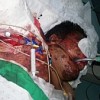
RIGHTS-MIDEAST: ‘Gaza Blockade Must Go’
Under intense international pressure Israel declared last week that it would ease its crippling blockade on Gaza by permitting an additional but limited number of daily items, including food, into the coastal enclave.Timing of Leak of Afghan Mineral Wealth Evokes Scepticism
The timing of the publication of a major New York Times story on the vast untapped mineral wealth that lies beneath Afghanistan's soil is raising major questions about the intent of the Pentagon, which released the information.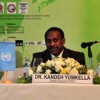
SRI LANKA: U.N. Wants Economic Recovery for Former Conflict Zone
With thousands of war affected civilians still without livelihood and an economy still reeling from the aftermath of a decades-long conflict in Sri Lanka’s northern region, plans should be in place to revive local economies and jobs, says a top United Nations official.
Q&A: Laying to Rest the Ghosts of the Past – With Truth
This year marks 15 years since the bloody war in Bosnia - Herzegovina (BH) ended. Apart from the 44-month siege of the capital of Sarajevo by Bosnian Serb forces there was the massacre of some 8,000 Bosniak Muslim men and boys after the United Nations-protected enclave of Srebrenica fell into their hands.« Previous Page — Next Page »


Armed conflicts are a sad constant on daily front pages worldwide. Wars, civil wars, revolts, coups, genocides, ethnic and political violence, and global terrorism capture our attention for the geopolitical landslides, human suffering, food crises and streams of migration that follow in their wake. As in times of natural disaster, man-made crises claim frequent casualties among the poor, women and children. IPS examines emerging and ongoing armed conflicts around the world with an eye on the underlying social and political dynamics, and special focus on the lived experiences of those most affected by armed conflict.

The Week with IPS

NEXT STOP - SDGs
Tracking global progress towards a sustainable world
Tracking global progress towards a sustainable world
