Languages
Saturday, November 7, 2026



News and Views from the Global South
Armed Conflicts

Choose Hope: Standing at the Crossroads of the Future
We are at the tipping point in human history, facing major existential crises. The conflict between Russia and Ukraine has heightened the risk of a nuclear weapon being used since the Cold War. Furthermore, the climate crisis is accelerating. In these crises, the most affected are those in vulnerable situations.
A Russian Veto Threatens to Trigger a Nuclear Arms Race in Outer Space
When the 15-member UN Security Council failed last month to adopt its first-ever resolution on outer space—co-sponsored by the US and Japan—the Russian veto led to speculation whether this was a precursor for a future nuclear arms race in the skies above. The vetoed resolution was expected to “affirm the obligation of all States parties to fully comply with the 1967 Outer Space Treaty, including not to place in orbit around the Earth any objects carrying nuclear weapons or any other kinds of weapons of mass destruction, install such weapons on celestial bodies or station such weapons in outer space in any other manner.”
Many African Nations Making Progress in the Rule of Law
The United Nations Office of Rule of Law and Security Institutions (OROLSI) supports the promotion of the rule of law, security, and peace in conflict-affected countries.
1.8 Million More Palestinians Doomed to Poverty if Gaza War Persists
Nearly seven months into the Gaza war, the UN warns that to rebuild and restore the buildings lost in this period, it would take several decades, and to revitalize Palestine’s economy, it would be a great undertaking. Meanwhile, the great losses in housing and public services and the economic stall only threaten to push even more Palestinians into poverty.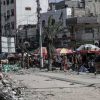
How Israel Has Used US Weapons to Commit War Crimes
The report from Amnesty International USA comes ahead of a May 8 deadline for the Biden administration to certify that Israel is complying with international and domestic laws.
Press Freedom and Climate Journalism: United in Crisis
Journalism is in crisis, again. The challenges to press freedom are enormous and multi-faceted and they are deepening -- in “free” and open societies as well as autocracies. And there are no simple solutions. For individuals and entire media outlets the crisis is existential.
Gaza Journalist Describes 33 Harrowing Days in Israeli Custody
Diaa Al-Kahlout, the veteran Gaza bureau chief for the Qatari-funded London-based newspaper Al-Araby Al-Jadeed, had been covering the Israel-Gaza war for two months when he became part of the news.
The Tragic Death of Palestinian Journalists
It is only fitting, against the backdrop of World Press Freedom Day, to recount the horror being inflicted on journalists and reporters around the world, which is increasing day by day. To tell the story of the mounting death of journalists in Gaza, it is essential to put into perspective the plight of journalists around the world.
The Deadliest Days for Journalists in War Zones
The seven- month-long war in Gaza is perhaps the only military conflict in contemporary history which has claimed the lives of over 100 journalists, including targeted killings.
Education Cannot Wait Interviews Amy Clarke, Co-Founder and Chief Impact Officer for Tribe Impact Capital LLP
Amy Clarke is Co-Founder and Chief Impact Officer of the multi award-winning Tribe Impact Capital, a dedicated impact wealth manager and B Corps, based in London. She has over 29 years of experience in sustainability, both leading in-house teams (Microsoft and Bank of America) and as a management consultant specialising in climate and sustainability (PwC and EY). Amy serves as a Trustee to B Lab UK and is also an Advisor to fellow B Corps, Greenheart Consulting and Black Seed Ventures. She sits on the Global Steering Group of the Global Ethical Finance Initiative (GEFI) and the Investment Committee of The Blue Cross (having previously served as a Trustee). Amy has both BSc and MSc degrees in environmental studies. In her spare time, she serves as Head of Catering and Entertainment for her three-legged rescue Staffordshire Bull Terrier.

Niger’s Military Coup Triggers Child Marriages, Sex Work in Neighboring Countries
A group of young girls aged between 15 and 17 sit tight, following attentively a lesson being taught by a Mualim (Islamic teacher) in a makeshift madrassah (Qur’anic school) located in one of the impoverished townships of Benin’s economic capital, Cotonou. They arrived in Benin recently, fleeing poverty, hunger, climate change, and rising insecurity in their home country, Niger, in the aftermath of the military coup that toppled democratically-elected president Mohamed Bazoum.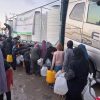
Gaza Teetering on the Brink of Mass Starvation
As we pass 200 days of war, the population of northern Gaza is teetering on the brink of mass starvation. Oxfam analysis found that the 300,000 people in northern Gaza had been forced to survive on an average of 245 calories per day from January to March—less than a single can of beans, and well below the recommended daily intake of 2,100 calories.
Attacks on UNRWA Not About Its Neutrality, Says UNRWA Chief
The UN Palestinian refugee agency welcomed the recommendations made in the report from the independent investigation led by Catherine Colonna and warned of new and continuing concerns that threaten the agency’s operations.
US Foreign Policy in Middle East Still Governed by Israeli Priorities
The vote and the American veto at the United Nations Security Council on April 18 was predictable. Though European countries are increasingly supportive of a Palestinian state, the US is not yet ready for that eventuality, for these reasons:
Seeking Justice for the Civilian Victims of the Syrian Civil War
When the Syrian Army launched its offensive against the stronghold of rebel FSA (Free Syrian Army) in Homs in February 2012, the safety of civilians was not a factor.
Will a Two-State Solution include Palestine as a UN Member State?
The Biden administration, once again displayed its political hypocrisy by denying UN membership to Palestine, while continuing to advocate a “two-state’ solution” to the crisis in the Middle East. But one lingering question remains: will the two-state solution include-- or exclude-- Palestine as a full-fledged UN member state?
Making the Global Financial Architecture Work for Emerging Markets and Developing Countries (EMDEs)
The world is facing multiple crises that must be tackled quickly, with innovative approaches and brave decisions. The global financial architecture is an area that needs reform and thinking outside the box. The system created 80 years ago is not able to deal with today’s problems that range from climate change to pandemics, to increasing inequality, to conflict and fragility, to food insecurity and poverty.
The Summit of the Future Is a Rare Chance to Fix a Broken System: Civil Society Must Be Included
Today, the spectre of a major regional conflict, and even a possible nuclear conflagration, looms large in the Middle East. Despite stark warnings issued by the UN Secretary-General, António Guterres, the multilateral system is struggling to resolve the very challenges it was supposed to address: conflict, impoverishment and oppression. In a deeply divided world, this September’s Summit of the Future offers a rare chance to fix international cooperation and make good on gaps in global governance.
Education Cannot Wait in Responding to the Regional Crisis Stemming From the Armed Conflict in Sudan
The conflict in Sudan is one of the worst in the world today, and millions of children and adolescents bear the brunt within and across the border from Sudan.
Rwanda: A Ravaged Country That Bounced Back
As we contemplate the clouded futures of Gaza, Ukraine, and other dire conflict zones that get far less coverage, it may be instructive to recall the surprising success story of a ravaged country that bounced back: Rwanda.
When the Man Who Built the Bombs Met the Man Who Dropped the Bombs…
The award-winning Hollywood movie Oppenheimer portrays the life of J. Robert Oppenheimer, who helped create the atomic bomb, which claimed the lives of an estimated 140,000 to 226,000 people and devastated the two Japanese cities of Hiroshima and Nagasaki in August 1945.« Previous Page — Next Page »





Armed conflicts are a sad constant on daily front pages worldwide. Wars, civil wars, revolts, coups, genocides, ethnic and political violence, and global terrorism capture our attention for the geopolitical landslides, human suffering, food crises and streams of migration that follow in their wake. As in times of natural disaster, man-made crises claim frequent casualties among the poor, women and children. IPS examines emerging and ongoing armed conflicts around the world with an eye on the underlying social and political dynamics, and special focus on the lived experiences of those most affected by armed conflict.

The Week with IPS

NEXT STOP - SDGs
Tracking global progress towards a sustainable world
Tracking global progress towards a sustainable world
