Languages
Sunday, November 8, 2026



News and Views from the Global South
Armed Conflicts
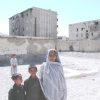
Afghan War Deadly for Children Despite Peace Process: UN
The United Nations has warned that the past four years were among the deadliest for children in Afghanistan since the United States-led invasion of 2001, with nearly 13,000 youngsters killed and injured in that period.
Constitutional Committee Breakthrough Offers ‘Sign of Hope’ for Long-suffering Syrians
There is a “sign of hope for the long-suffering Syrian people” as a Syrian-led, Syrian-owned, credible and inclusive Constitutional Committee is set to start deliberations next month, the United Nations Special Envoy for the country told the Security Council on Monday.
The Risk of Nuclear War is Increasing
Over the long course of the nuclear age, millions of people around the world, often led by a young generation of clear-eyed activists, have stood up to demand meaningful, immediate international action to halt, reduce, and end the threat posed by nuclear weapons to humankind and the planet.
Right-Wing Politicians Fear “Invasion” of Europe & US by Migrants and Refugees
The United Nations commemorated its annual World Day of Migrants and Refugees (WDMR) on September 29 ---- this time amidst rising anti-immigrant rhetoric and widespread xenophobia.
World Summit of Nobel Peace Laureates Calls for Decisive Action, With No Time to Waste
In a world of increasing fragility and declining resources, can the world foster peace? With a looming climate crisis, is war inevitable? Will nuclear war be the final result? Are women the ultimate peace builders? How do we train and engage youth to promote peace?
Jersey, a Gorilla and the Civil War in Cameroon
A month ago I visited Jersey, one of the few European territories still welcoming refugees, though in the case of Jersey they have to be wealthy and are generally fleeing not from war and misery, but from taxes. Once Jersey and the nearby island of Guernsey harbored one of Europe´s most famous political refugees – Victor Hugo (1802-1885), who after he had been too outspoken in his criticism of the autocrat Louis Napoleon found it more convenient to live on the Channel Islands than in France. In spite of being very close to France and with a population that at the time was mainly French-speaking, these islands were nevertheless British territory.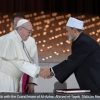
Why We Need Religion More than Ever in the Pursuit of Peace
The proliferation of political crises and armed conflicts in every corner of the world does not exclude religious groups, which unfortunately also contribute to animosities, intolerance and hatred. The Middle East has been on the hit-list of violet extremist groups for decades. One telling example is Syria where clashes have on occasion taken religious or denominational overtones, fracturing Syrian society for decades to come. They have given rise to sectarian divisions along ethnic and religious lines in a country where inter-religious harmony once prevailed. We observe a similar situation in Iraq. In Myanmar, government security forces unleased a brutal campaign of ethnic cleansing and hatred against the Muslim Rohingya population. The military crackdown on the Rohingya community has significantly aggravated inter-communal violence in the country. And in the Central African Republic, armed militant groups sloganizing misrepresentations of Islam and Christianity, commit abuses and human rights violations on each other on a daily basis.
Boko Haram’s Youngest Victims
“Khadija” was just 8 years old when Boko Haram fighters attacked her village in northeast Nigeria and took her by force to their camp. Her abductors tried to marry her and other captives to members of the armed Islamist group, she told me. When the captives refused, they were locked in a room.
NYC Library Ditches Controversial Saudi Royal MBS’ Event
A New York library appeared to bow to pressure this week when it canceled an event that was being co-hosted by Saudi Arabia’s crown prince Mohammad bin Salman, who is accused of a range of human rights abuses.
International Cooperation Required to Solve World’s Severest Problems
In an interview with Dan Smith, Director of the renowned Stockholm International Peace Research Institute (SIPRI) and Professor of Peace and Conflict at the University of Manchester. The native Londoner, he has been researching conflicts and peace for decades and served in the UN Peacebuilding Fund Advisory Group, which he chaired for two years.
Big Power Conflicts are Increasingly Taking Place in Outer Space
Nearly every article on ‘space security’ begins with the acknowledgement that satellites and space-based services are critical for modern societies. And with good reason.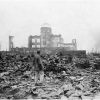
The Push for Peace-From the Global Village to the Global Neighborhood
From the ashes of a tragedy that wiped out almost 90% of the city of Hiroshima on 6 August 1945, an institute called the Hiroshima Peacebuilders Center (HPC) rose like a phoenix of hope that is pioneering the creation of a global pool of peacebuilders. It is driven by the 2030 Agenda for Sustainable Development declaration that "there can be no sustainable development without peace and no peace without sustainable development.”
The Costs of Heightened Conflict in the Himalayas
As a series of conflicts in the Hindu Kush Himalayan region come into sharp focus, sidelining local populations, the long-term environmental costs may leave the region degraded, poor and desperate.
Culture of Peace Takes Big Stride as UN Observes 20th Anniversary of Norm-Setting 1999 Decision
It has been a long, arduous journey – a journey ridden curiously with obstacles and indifference. Two decades have passed by since the UN General Assembly (UNGA) adopted, by consensus and without reservation, its landmark and norm-setting resolution 53/243 on the Declaration and Programme of Action on a Culture of Peace in 1999.
Kashmir: How Modi’s Aggressive ‘Hindutva’ Project has Brought India and Pakistan to the Brink – Again
August is immensely important in the history of the Asian subcontinent, marking the month that India and Pakistan gained independence from the British in 1947. Now, in 2019, it has once again proved momentous, when, ten days before India’s Independence day celebrations, prime minister Narendra Modi’s government revoked the autonomy of Indian-administered Kashmir – a status provided for under the Indian Constitution.
U.N. Criticised for Link-up with Saudi Prince MBS
The United Nations is under growing pressure to scrap an event it is co-hosting with the private foundation of Saudi Arabia’s crown prince Mohammad bin Salman, who has been linked to the killing of journalist Jamal Khashoggi.
UNICEF’s Goodwill Envoy a Messenger of ill-Will, Complain Critics
When two-time Wimbledon tennis champion Boris Becker, a UNICEF goodwill ambassador, refused to make a commitment not to play in South Africa, a country blacklisted for its apartheid policies, the UN children’s agency stripped him of the prestigious title, back in October 1987.
Close the Door on Nuclear Testing
Everybody knows that nuclear weapons have been used twice in wartime and with terrible consequences. Often overlooked, however, is the large-scale, postwar use of nuclear weapons:
Sudan Transition an “Opportunity” to End Darfur Crisis
Sudan’s transition to civilian rule offers a chance to end the ethnic violence that plagues the western province of Darfur and end a peacekeeping mission there, a top United Nations official said Monday.
Two Million Children in West and Central Africa Robbed of an Education Due to Conflict
Fourteen-year-old Fanta lives in a tent in a settlement in Zamaï, a village in the Far North Region of Cameroon with her mother and two brothers. They came here more than a year ago after her father and elder brother were murdered and her elder sister abducted by the extremist group Boko Haram.
The Syrian Tragedy
As I often do, I recently discussed the Syrian Civil War with a friend of Lebanese origin. He is far from supporting the Syrian regime, which occupied his country of origin between 1989-2008. My friend assumes the Syrian government was behind the assassination of Lebanon´s prime minister Bachir Gemayel, who in 1982 together with 26 others were blown to pieces by a bomb planted at the headquarters of the Lebanese Forces. He also suspects Syria was behind the death of former prime minister Rafik Harari, who in 2005 was killed in a car bomb explosion. However, this does not make my friend an admirer of Israel or the U.S., which together with Russia, Turkey, Iran, and Saudi Arabia meddle in Syria´s bloody internal strife. It is an almost impossible task to disentangle the mess of warring fractions guided by corrupt politicians, religious fanatics, liberal politicians, bandits, Mafiosi and/or foreign commercial and strategical stakeholders.« Previous Page — Next Page »





Armed conflicts are a sad constant on daily front pages worldwide. Wars, civil wars, revolts, coups, genocides, ethnic and political violence, and global terrorism capture our attention for the geopolitical landslides, human suffering, food crises and streams of migration that follow in their wake. As in times of natural disaster, man-made crises claim frequent casualties among the poor, women and children. IPS examines emerging and ongoing armed conflicts around the world with an eye on the underlying social and political dynamics, and special focus on the lived experiences of those most affected by armed conflict.

The Week with IPS

NEXT STOP - SDGs
Tracking global progress towards a sustainable world
Tracking global progress towards a sustainable world
