
Sunday, November 8, 2026



News and Views from the Global South
Armed Conflicts

Despite Halting Progress, UN Continues its Push for a Nuclear-Weapons-Free Zone in the Middle East
A longstanding proposal for a regional nuclear-weapons-free zone (NWFZ) in the Middle East – one of the world’s most conflict-ridden regions – has been kicked around the corridors of UN committee rooms since 1974.
Statistics and Stories – Time to Change the Refugee Narrative?
Statistics and stories. When aid agencies appeal for funding to tackle the latest refugee crisis and journalists do their reporting, then these are the two narratives most chosen -- one impersonal and the other upfront and individual. The sheer numbers can feel overwhelming. The UN refugee agency UNHCR says more than 70 million people are currently displaced by conflict, the most since the Second World War. Among them are nearly 26 million who have fled their countries (over half under the age of 18) and 3.5 million more are registered as asylum seekers.
Saudi UNESCO Win Riles Khashoggi Standard-Bearers
Human rights campaigners have reacted angrily to the election of Saudi Arabia to the United Nations cultural agency UNESCO’s top board, highlighting the kingdom’s ongoing crackdowns on political freedoms and critics.
Achieving the Possible: “Weapons of Mass Destruction Free Zone in the Middle East”
A historic conference on the Middle East opened at the United Nations in New York on 18th November and will continue until 22nd November. The Conference on the Establishment of a Middle East Zone Free of Nuclear Weapons and Other Weapons of Mass Destruction is presided over by Ambassador Sima Bahous of Jordan.
The Slippery Slope to Autonomous Killing Machines
Would you trust an algorithm with your life? If that thought makes you uncomfortable, then you should be concerned about the artificial intelligence (AI) arms race that is secretly taking off, fueled by the arms industry.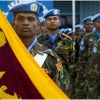
UN Peacekeeping Should Not Violate Charter or Principles of Sovereignty of Member States
Given the political, economic and social exigencies of contemporary peacekeeping, it is important that the Department of Political and Peacebuilding Affairs (DPPA) remains engaged in the process.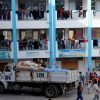
UN Agency for Palestinians in Crisis as Chief Quits
The United Nations agency for Palestinian refugees was in “crisis mode” on Wednesday after director Pierre Krahenbuhl resigned amid a misconduct probe over whether he fast-tracked his girlfriend into a top aid job, analysts said.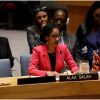
The Fight for Bread Became a Fight for Freedom
My name is Alaa Salah. I am 22 years old and I grew up in Khartoum. Before the revolution, I was a student of architectural engineering. I did not grow up around politics, but in an ordinary middle-class family—my mother is a designer and my father owns a construction company.
Beyond the Headlines: the Development Story Behind Irregular Migration
Last week, a too-familiar human tragedy captured news headlines. 39 people were found dead inside a shipping container on an industrial estate in Essex in Southeast England; 31 men and 8 women whose individual identities, for now, remain anonymous, as authorities begin to investigate one of Europe’s worst people-trafficking cases.
World’s Spreading Humanitarian Crises Leave Millions of Children Without Schools or Education
As massive protests escalated worldwide last month, millions of children walked out of schools to demonstrate against the lackadaisical response – primarily from world leaders --to the ongoing climate emergency resulting in floods, droughts, typhoons, heat waves and wildfires devastating human lives.
Fearless Young Women and Insensitive Men
On October 11, the Norwegian Nobel Prize Committee announced that this year´s Peace Prize is awarded to Ethiopia´s prime minister Abiy Ahmed: “For his efforts to achieve peace and international cooperation, and in particular for his decisive initiative to resolve the border conflict with neighbouring Eritrea.”1 Let us hope that Abiy remains a worthy Peace Prize winner and that warfare and human suffering on the Horn of Africa will finally come to an end.
Trump Poised to Withdraw from Open Skies Treaty
The Trump administration is reportedly on the verge of withdrawing from the 1992 Open Skies Treaty, according to lawmakers and media reports. Rep. Eliot Engel (D-N.Y.), chairman of the House Foreign Affairs Committee, first sounded the public alarm in an Oct. 7 letter to National Security Advisor Robert C. O’Brien.
Africa’s Investment Drive Gathers Pace
Headwinds are blowing amid IMF warnings of a “synchronised slowdown” in global economic growth, yet Africa’s investment drive is still gathering pace, supported by intense international competition in development finance.
Holding Transnational Corporations Accountable for Human Rights Abuses
In Geneva this week, a treaty process is underway that promises to usher in a new era for human rights around the globe. The process—the intergovernmental working group on the binding treaty on transnational corporations and human rights—could mean that for the first time, human rights would be prioritized above corporate profits.
Election Death Toll Underscores Afghanistan’s Fragile Democracy
A wave of bloody Taliban attacks aimed at derailing Afghanistan’s recent elections killed and maimed hundreds of people, including children, the United Nations mission to the country said on Tuesday.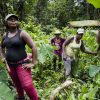
Rural Poverty Is Still a Scar on the Soul of Colombia, but a New Program Supporting Agri-Entrepreneurship Can Help Heal the Wounds
Rural poverty and inequality continue inflicting large swaths of population in Colombia, especially in rural areas. This situation, endemic since at least the beginning of the twentieth century, was at the root of the 50-year long conflict that shattered the country, leaving 220,000 deaths and 5.7 million displaced persons, and devastating a significant part of the rural areas, where government services and infrastructure vanished.Statement by NRC Secretary General Jan Egeland following the announcement of the Nobel Peace Prize winner for 2019:
"We congratulate Dr. Abiy Ahmed on the Nobel Peace Prize and his courageous efforts in bringing ambitious reforms to Ethiopia and offering the hand of peace to neighbouring Eritrea. The Norwegian Refugee Council is among the very few international groups operating in Eritrea and Ethiopia and assisting people in need in both countries. We have witnessed the dramatic improvement in relations between the two countries during Dr. Abiy Ahmed´s government after conflict and tension over the years produced displacement and suffering.14 aid agencies warn of humanitarian crisis in North-East Syria
Civilians in north-east Syria are at risk and humanitarian aid could be cut off following the launch of a new military operation in the area, leading aid agencies are warning.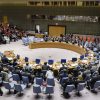
Aid Groups Warn of Humanitarian Crisis from Turkey’s Assault on Syria
Aid groups operating in northeastern Syria have been raising the alarm about civilian casualties and an impending humanitarian crisis this week, as Turkey began a military assault on the turbulent region’s Kurdish militants.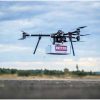
The Role of Emerging Technologies in Military Conflicts
Throughout history, technology has transformed armed conflict. The carnage of First World War battlefields is a stark example of what happens when advances in weaponry outpace the normative frameworks around its use.
South Sudan’s Authorities Allow Serious Human Rights Abuses to Flourish and go Unpunished – Report

Human rights movement Amnesty International has accused South Sudanese authorities for lack of independence as they have allowed allowing human rights abuses, war crimes and crimes against humanity to go unpunished.
« Previous Page — Next Page »





Armed conflicts are a sad constant on daily front pages worldwide. Wars, civil wars, revolts, coups, genocides, ethnic and political violence, and global terrorism capture our attention for the geopolitical landslides, human suffering, food crises and streams of migration that follow in their wake. As in times of natural disaster, man-made crises claim frequent casualties among the poor, women and children. IPS examines emerging and ongoing armed conflicts around the world with an eye on the underlying social and political dynamics, and special focus on the lived experiences of those most affected by armed conflict.

The Week with IPS

Tracking global progress towards a sustainable world
