Languages
Sunday, November 8, 2026



News and Views from the Global South
Armed Conflicts

UNFPA Highlights Need to Address Sexual and Reproductive Health of Women in Crisis Areas
The United Nations Population Fund (UNFPA) is appealing for $683million in their mission to address sexual and reproductive health services for women and girls in conflict areas in the world.
A Humanitarian Response to the Crisis in Zimbabwe
In November 2019, the UN’s Special Rapporteur on the Right to Food described Zimbabwe – a country once hailed as the bread basket of Africa – as a state on the brink of man-made starvation.
Children are Bearing the Bitter Brunt of Counter-Terrorism Efforts: Report
Counter-terrorism efforts adopted by governments around the world in response to threats of terrorism are affecting children negatively in numerous ways, a report by Watchlist on Children and Armed Conflict (Watchlist) claimed last week.
US Mideast Peace Plan: from a Paper Pharaoh & a Fake Moses
Israeli Prime Minister Benjamin (Bibi) Netanyahu was slapped corruption charges last week while he was hobnobbing with US President Donald Trump in Washington. Bibi has, apparently, done his homework in psychology. He knew the quickest way to get around Trump was to flatter him.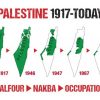
US Mideast Peace Plan: Israelis Offered the Cheese & Palestinians the Holes
The Israeli human rights organization B’Tselem has described the much-ballyhooed US Middle East peace plan as “more like Swiss cheese-- with the cheese being offered to the Israelis and the holes to the Palestinians”.
**UPDATE** African Nations Caught in Conflict Re-commit to Inclusive Education
Djibouti’s President Ismail Omar Guelleh knows that his country is in need of an education system that is, “innovative, based on universal principles and values and adaptive of the local realities”.
China Ranked World’s Second Largest Arms Producer Trailing Behind US
Donald Trump, the vociferously unpredictable US president, has long chastised China for seeking “unfair” advantage over trade and tariffs, violating intellectual property rights and “manipulating” the country’s currency to its advantage.
Mosul, an Epicentre of the ISIS Conflict, is a Devastated Iraqi City
As Iraq this month faces the threat of new conflicts – including a proxy war between the US and Iran – the shadow of the last conflict runs long.
UN expresses deep distress over terror attacks
The United Nations Country Team in Kenya is deeply distressed by the rising cases of terrorist attacks on schools, teachers and learners, especially in the north-eastern regions of Kenya. While we stand in solidarity with the affected communities, we reiterate that acts of terror and hate are even more egregious when they target innocent, unarmed civilians including children.
Is Iraq Now a Virtual “US-Occupied Territory”?
Pat Buchanan, a senior advisor to three US Presidents and twice candidate for the Republican presidential nomination, once infamously described the United States Congress as “Israeli-occupied territory” -– apparently because of its unrelentingly blind support for the Jewish state.
U.S. Might Pull Troops from West Africa, but Who Will it Affect?
While the United States is busy with foreign operations such as killing Qasem Soleimani, a key figure in Middle East Politics, behind the scenes it is reportedly considering a change that experts worry might be of grave concern: a potential withdrawal of troops from West Africa.
‘Unprecedented Terrorist Violence’ in West Africa, Sahel Region
The top UN official in West Africa and the Sahel updated the Security Council on Wednesday, describing an “unprecedented" rise in terrorist violence across the region.
How Gender-based Violence Should be Reported in the Media
Sexual and gender-based violence terrorizes women and girls around the world, affecting as many as one in three women. Reporters play an essential role in bringing these cases to light so that authorities can take action and prevent further abuses. Yet reporting on gender-based violence comes with serious risks to survivors.
2020: a Year Full of Danger
Let’s face what lies ahead with open eyes: 2020 is going to be a very tough year for the world, and developing countries in particular. The infant decade has already begun with the harbingers of climate disaster as thousands fled to beaches in Australia from raging bush fires, and the Middle East braced for more conflict after a U.S. air strike in Baghdad killed Iran’s top general.
2020 Is the Decade of Action & It Has to Be a Sprint
Happy New Year, Kenya. 2020 marks a decade of action towards the realization of the Sustainable Development Goals by 2030. Peace and development are inextricably linked, with each making the achievement of the other far more likely. This puts the conflict-prevention and development work of the UN at the heart of the agenda in East Africa, but in a multi-agency and programme environment, making meaningful progress is challenging.
UN Chief Warns of Rising Misogyny, Xenophobia, Discrimination, Racism & Hate Speech
As we prepare to bid farewell to 2019, we must take a clearsighted look at the global situation and the new challenges we face. Our world is undergoing a shift. It is no longer bipolar or unipolar. But it is not yet truly multipolar. Balances of power are changing, creating new and dangerous risks.
Forced to Flee. Displaced with a Dream. Time for Action.
Genesis smiles and holds her hand up proudly to answer questions in class. She claps her hands in support of her classmates when they answer the teachers’ questions correctly. “I miss my cousins and aunts in Venezuela, she says.” Her smile fades and her lips tighten. She struggles to hold back her tears. “I can’t return. I want to stay here in my school, with my new friends.” Her smile returns, as she resolutely states: “I want to become a lawyer, so I can help solve problems.”
Syria Regime Detains, Tortures Doctors in ‘War on Health’
Syria’s government has arrested, detained and tortured large numbers of medics in a systematic effort to cut off treatment to swaths of the turbulent country’s population and swing the civil war in its favour, according to a new report.
The Story Behind The Gambia’s Lawsuit against Myanmar over the Rohingya Genocide
On Nov. 11, the Gambia filed a lawsuit against Myanmar in the International Court of Justice for the southeast asian country’s atrocities against the Rohingya population.
Nuclear False Warnings & the Risk of Catastrophe
Forty years ago, on Nov. 9, the U.S. Defense Department detected an imminent nuclear attack against the United States through the early-warning system of the North American Aerospace Defense Command (NORAD). U.S. bomber and missile forces went on full alert, and the emergency command post, known as the “doomsday plane,” took to the air.
IEDs: Tackling Terrorists’ Weapon of War
Some of the most memorable images of the late Diana, Princess of Wales, show her wearing a protective suit while touring a minefield in Angola in 1997 to raise awareness of the devastating effects of land mines.« Previous Page — Next Page »





Armed conflicts are a sad constant on daily front pages worldwide. Wars, civil wars, revolts, coups, genocides, ethnic and political violence, and global terrorism capture our attention for the geopolitical landslides, human suffering, food crises and streams of migration that follow in their wake. As in times of natural disaster, man-made crises claim frequent casualties among the poor, women and children. IPS examines emerging and ongoing armed conflicts around the world with an eye on the underlying social and political dynamics, and special focus on the lived experiences of those most affected by armed conflict.

The Week with IPS

NEXT STOP - SDGs
Tracking global progress towards a sustainable world
Tracking global progress towards a sustainable world
