Languages
Sunday, November 8, 2026



News and Views from the Global South
Armed Conflicts
As COVID-19 Burns, World’s Forgotten Wars Continue to take Toll on Civilians as Well
Earlier this year, just before the coronavirus virtually shut down international travel, I sat under a mesquite tree and listened to a rambling speech by a South Sudanese general at a military base outside of the capital, Juba.
We Cannot Let the Education Gap Widen at the Start of the Decade of Action
Prior to the COVID-19 pandemic, we estimated that 75 million children and youth - of whom 39 million are girls - were not able to access a quality education in countries impacted by armed conflicts, forced displacement, natural disasters and climate change-induced emergencies. The impact of COVID-19 has both globally and exponentially deepened the already existing critical education crisis.
US Pulls the Plug on a UN Global Cease-Fire Resolution
After six weeks of negotiations, the United States shot down hopes for a resolution to be approved in the United Nations Security Council on May 8, refusing to back worldwide cease-fires as the US continues to castigate China and the World Health Organization for the Covid-19 pandemic. Meanwhile, momentum behind tenuous cease-fires is vanishing, experts say.
VE Day Marks the End of the Second World War-But the World is Still at War
The world commemorated the 75th Anniversary to mark the end of the 2nd World War also called VE Day on 08 May 2020. With her nation, and much of the world still in lockdown due to COVID 19, England’s Queen marked 75 years since the allied victory in Europe with a poignant televised address. From Windsor Castle, Queen Elizabeth said, “the wartime generation knew that the best way to honour those who did not come back from the war, was to ensure that it didn’t happen again”.
Enforced Disappearances, Arbitrary Detentions, Hate Speech & Attacks on Civilians – ICC Report on Libya
The International Criminal Court (ICC) on Tuesday highlighted crimes against humanity and grave mismanagement of the law in Libya during a release of their latest report on the North African nation.
COVID-19 Pandemic Vulnerable to Exploitation by Proliferators, Terrorists & Criminals
Even during this pandemic, perhaps especially during this pandemic, the global institutions to help prevent the spread of biological and chemical weapons to proliferators or terrorists must continue their work.
China & India Ranked World’s Biggest Military Spenders Trailing US
China and India, which went to war back in 1962 largely over a disputed Himalayan border-- and continue a longstanding battle for military supremacy in Asia-- have set a new record in arms spending.
Covid-19 & its Impact on the Work of Disarmament
Humanity has faced no challenge greater than COVID-19 since the Second World War. As this rapidly developing global health emergency places unprecedented strain on our medical, economic and social systems, we must work hard to prevent new risks for instability, unrest and conflict.
Slums, Camps, Terrorism: Experts Worry about Coronavirus Hitting South Asia
As coronavirus makes its way through different continents, countries, and communities around the world having claimed more than 23,000 lives, experts are ringing alarm bells about the implications of the disease as it hits South Asia, which hosts almost 2 billion of the world’s population.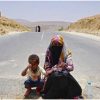
Coronavirus Worsens Yemen’s Long Tale of Woe
In every room in Yemen’s Al-Saba’een hospital, patients in critical condition waited on chairs, and still others laid on the bare ground. I saw women and girls sharing beds in pairs, and children laying close together being treated.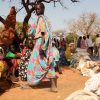
What does U.N. Secretary General’s Call for Ceasefire Mean for Countries in Conflict?
Conflict experts are concerned the the global ceasefire called for by the United Nations amid the coronavirus outbreak may not work and could lead to a rise in violence.
Could the Coronavirus Be a Biological Weapon in the Not-Too-Distant Future?
The devastating spread of the deadly coronavirus across every continent-- with the exception of Antarctica-- has triggered a conspiracy theory on social media: what if the virus was really a biological weapon?
Polycephaly* in Afghanistan: Failure of the US or Curse of History
The fourth and last presidential election in Afghanistan on 28 September 2019 was yet another setback to the democratic process. Not only did it take months for the Independent Election Commission to announce the results but they were again marred by allegations of massive fraud that culminated with two candidates declaring themselves as winners.
The 2020 NPT Review Conference: From the Sublime to the Ridiculous
This year marks the 50th anniversary of the nuclear Non-Proliferation Treaty (NPT) and coincidentally the tenth quinquennial (five yearly) review conference is scheduled to be held at the United Nations in New York from 27 April to 22 May.
US and France Significantly Increase Arms Exports
There has been a significant increase in arms exports from the United States and France, according to a new report. The flow of arms to the Middle East has increased, with Saudi Arabia being the world’s largest importer.
Realising Women’s Rights Difficult for Africa’s Fragile States
Pokot girls are expected to face the knife stark naked and with courage. To inspire confidence, their fathers sit a few metres away from them with a spear in hand.
Coronavirus Threatens to Wreck Nuclear Review Conference
First, it was the ill-fated annual sessions of the UN Commission on the Status of Women (CSW), scheduled for March 9-20, which was undermined by the spreading coronavirus COVID-19.
What ails Libya’s peace process?
A succession of meetings over the last two months in Berlin, Geneva and Munich has signified a renewed multilateral effort to resolve the Libyan civil conflict. With 13 nations led by the UN, seeking to enforce a brittle arms embargo and comprehensive cease-fire, the concerned parties have been seeking to resolve the rivalry between the UN-recognized administration based in the capital of Tripoli and the country’s western regions with the backing of Turkey, Qatar and Italy, and the rival eastern-based government led by General Khalifa Haftar, with the support of Egypt, France, Russia and other states.
A Multi-Billion Dollar US Mideast Arms Market May be in Jeopardy
When President Saddam Hussein ran one of the world’s most authoritarian regimes in the militarily-volatile Middle East during 1979-2003, US newspapers routinely described him as “the strongman of Iraq” — as most journalists rightly view dictators worldwide.
Investigation a Crucial Tool for Preventing Child Rights Violations in Armed Conflicts
There has been a disturbing increase in violence perpetrated against children in conflicts worldwide, coupled with almost total impunity.
Globalization of Indifference: Ai Weiwei and the Refugee Crisis
Humans belong to a species that is constantly on the move . Since some Homo Sapiens 125,000 years ago began to move from the African continent, humans can be found all over the world, even in such utterly inhospitable places as the icebound plateaus of Antarctica. By moving, humans have tried to escape inadequate food-supply or otherwise unacceptable living conditions. Natural forces have forced them to leave, or even more commonly – violent actions by other humans. With them migrants have brought their means of expression and interaction, some of them expressed through their art.« Previous Page — Next Page »





Armed conflicts are a sad constant on daily front pages worldwide. Wars, civil wars, revolts, coups, genocides, ethnic and political violence, and global terrorism capture our attention for the geopolitical landslides, human suffering, food crises and streams of migration that follow in their wake. As in times of natural disaster, man-made crises claim frequent casualties among the poor, women and children. IPS examines emerging and ongoing armed conflicts around the world with an eye on the underlying social and political dynamics, and special focus on the lived experiences of those most affected by armed conflict.

The Week with IPS

NEXT STOP - SDGs
Tracking global progress towards a sustainable world
Tracking global progress towards a sustainable world
