Languages
Tuesday, November 17, 2026



News and Views from the Global South
Asia-Pacific

In sight but out of mind
This year Bangladesh exceeded all expectations, achieving a GDP rate of over 7 percent. With higher growth, the issue of labour rights is also gaining prominence in our national discourse, with more and more emphasis being given on workplace safety and wellbeing. Those amongst us who are educated are becoming more and more aware of our rights in our workplace, as we unhesitatingly demand for better pay, better facilities, a better life, really. And why shouldn't we? This is our right as promised by our Constitution and by our state. But there still remains a large portion of our workforce, over 80 percent to be precise, who are not warranted recognition by any of our state apparatuses. When we talk proudly of progress and development, we tend to take for granted that only those who fall under a formalised structure deserve acknowledgement and thereby can demand their rights under the law. We choose to ignore more than half of Bangladesh's population who, despite their indispensible contribution, are regarded as expendable, replaceable, and thus, undeserving of formal rights or protection.
Choose Humanity: Make the Impossible Choice Possible!
We have arrived at the point of no return. At this very moment the world is witnessing the highest level of humanitarian needs since World War Two. We are experiencing a human catastrophe on a titanic scale: 125 million in dire need of assistance, over 60 million people forcibly displaced, and 218 million people affected by disasters each year for the past two decades.Accountability Moves
Behold Pakistan`s latest sporting craze: the game of accountability one-upmanship. One Sharif called for `across-the-board accountability` and was reported to have removed a number of military officers on corruption charges; the other Sharif vowed to resign from his prime ministerial post if investigations into the leaked Panama Papers prove wrongdoing on the part of his family.
Cold-Blooded Lechery and Hushed Silence!
The photograph of a toddler in a Chinese street, published on an online portal, waving a steel pipe at an urban management force working to clear up pavements would itself have made news. But there was so much more to it with the infant actually shouting: 'Don't touch my grandma, go away', to the appreciating, if somewhat amused, glance of onlookers.
Ecosystem Conservation Gives Hope to a Vulnerable Community
42 year-old Saraswati Subedi still remembers the night she almost died in a flash flood. “I heard the cries of my neighbours and ran out of the room with my two children. There was water all around and I thought we were going to die, so I started to pray,” says the mother of the three in Karki Tahara – a village by the river Harpan Khola in Nepal’s Kaski district.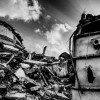
What Can Be Done for Victims Still Fighting for Survival?
Three years have elapsed since the collapse of Rana Plaza, Savar, on a fine morning of April 24, 2013. The disaster, one of the deadliest in the world's industrial history in two centuries, claimed the lives of 1,135 men and women and injured another 2,500, nearly 200 of whom severe enough to keep them hospitalised for months.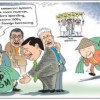
Will the IMF Facility Be a Turning Point in the Economy?
The IMF Extended Fund Facility (EFF) of US$ 1.5 billion with an agreement on an economic program supported by the IMF is now imminent. This could be a turning point in the economic fortunes of the country. The IMF facility would replenish the reserves, add confidence in the economy and have a salutary effect on capital inflows.
Panorama of Perfidy in the Panama Papers
Ever since the Panama Papers hit the fan, the leak has been working like a series of introductions at a high-profile gathering. It's putting a bunch of names to a bunch of faces, men and women leading a double life because of their money. It also shows that these folks have something in common with the squirrels. The rodents hide their nuts, and they hide their assets.Poverty Puzzles
Whichever way you parse the data we have it shows that poverty headcount in Pakistan over the last decade and a half to two decades has decreased substantially. Initially, it was thought the data was not good enough, that it had been manipulated and so on, but even after multiple rounds of national surveys, the same trends are evident. And though the actual percentage of the poor may vary with the method one uses, the trend of falling poverty remains invariant. There must be something to this trend.
No Turning Back in the Global Fight Against Climate Change
As people around the globe observe Earth Day today, world leaders are making history at the United Nations in New York. Over 100 countries will sign the Paris Agreement on climate change, representing their commitment to join it formally. This marks a turning point in the story of our planet and may set a record for the largest number of signers to an international agreement in a single day. Moreover, last month, President Obama announced with President Xi Jinping that our two countries will sign the Paris Agreement today and formally join this year. We are confident other countries will do so too, with the intention of bringing this historic and ambitious agreement into force as quickly as possible.Coat Linings
Is nothing sacred anymore? Has privacy lost its sanctity? Why cannot our prime minister go to London for an urgent medical check-up, drop in on his tailors Scabal in Savile Row for a fitting, and then treat himself and his acolyte ministers to a lunch at Churchill Hotel, without also being photographed by amateur paparazzi on their ubiguitous mobiles? Now that Swiss bank counters and Panamanian desktops have been converted into unscreened confessionals, is nothing secret or sacrosanct? One`s sympathies reach out to our nouveau-riche rulers. They thought they had buried their money long enough for it to acquire the patina of `old money`. (`Old money` is what a ruler makes in his/her first administration.) As aspiring arrivistas, they felt that they had finally `arrived`. However, our elected Noriegas have found themselves sharing the predicament of the wife of the general-industrialist whose automotive companies were nationalised by Mr Zulfikar Ali Bhutto in January 1972. `Life is so unfair, she moaned. `Just when we thought we had made it into the 22 families, Bhutto goes and does this to us.
Healthcare solutions that are smart
Every hour, tuberculosis kills nine Bangladeshis. Another seven die each hour from arsenic in drinking water. Simple and cheap solutions are available to avoid almost all these deaths.
HIV Time Bomb Ticks On
Radhika Banarjee, a 24 year-old CSW, listened carefully at an advocacy gathering in the heart of Dhaka, Bangladesh’s capital.Fighting the Chotoo Gang
A group of notorious gangsters has apparently brought the Punjab police toitsknees.A2,200-strong police force has retreated after losing several men since the operation against the Chotoo gang in the southern Punjab district of Rajanpur began earlier this month. The army is now being dragged into yet another law and order issue that the civilian agencies should have been able to deal with.
OPINION: Breaking the Grip of Rimbunan Hijau over Papua New Guinea
James Sze Yuan Lau and Ivan Su Chiu Lu must be extremely busy men. Together, they are listed as directors of some 30 companies involved in various activities and services related to logging or agribusiness in Papua New Guinea (PNG). The former is the managing director of Rimbunan Hijau (RH) PNG and son-in-law of RH’s founder Tiong Hiew King; the latter is executive director of RH PNG Ltd.. All but two of these 30 companies have the same registered address at 479 Kennedy Road, in the national capital, Port Moresby–the headquarter of the RH group in the country.
When Only Men Make the News
On the onset, it seems women are everywhere in the media. You switch on the TV, there is inevitably an attractive woman luring you into buying a product. On the radio, there is the 'young new thing' vivaciously flirting with her male co-host while shuffling through songs; and in print, the entertainment pages would simply not sell without a titillating image of a female celebrity and a scoop on her latest rendezvous. But take a closer look, beyond the objectified and stereotypical images of women, being manufactured and mass consumed ad nauseam, and where are the women, really? Take a look at the news media, for instance. Where are the women in the newsrooms, in the bylines on the front and back pages, in the column spaces of our opinion pages, in the talk shows, not simply as hosts, but as commentators on so-called hard issues such as politics and foreign affairs? Where are the women in our news (discounting the PM and her alter-ego), except as wailing victims of violence, natural disasters and such and as muses of our male photographers during cultural festivals?
Arsenic Threat Looms Large in India: Well Switching Provides the Way Forward
An Indian Govt. Parliamentary Committee on Estimates on “Occurrence of High Arsenic (As) content in Groundwater” in December, 2014 stated that more than 70 million people in 96 districts in India is under threat due to As occurrence in groundwater.A Cash-Strapped Nation on a Splurging Spree
In our student days there was a commonly used Sinhala phrase – “clean suit empty pocket”. That succinctly conveyed the image of a well-clad individual without a cent on his person.
Matrix of Biometrics
Biometrics is the science of using physical (and behavioural) features for identification purposes. The most ubiquitous biometrics we encounter is 'the face'. Every individual has a distinct face, which is used by others to identify/ recognise him or her. Human beings also start recognising voices from the age of three months. Handwriting recognition is part of behavioural biometrics. The most versatile and reliable biometric data possibly comes from human genes.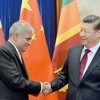
No Free Chinese Takeaway but Chinese Takeover on the Menu
There is no such thing as a free Chinese takeaway; and, if the visiting Lankan high powered delegation led by Prime Minister Ranil Wickremesinghe fancied otherwise, the Chinese hosts made pretty certain the guests got the message crystal clear when the fortune cookie, opened after the diplomatic feast of niceties was over, revealed the thumping bill of fare.Historic Victory for Investigative Journalism
The world was shaken up this week with the leaks of the ‘Panama Papers’ exposing the financial shenanigans of world leaders, past and present. They showed how such leaders of men, women and nations and their business side-kicks hid their embezzled wealth in tax havens around the world and thereby avoided paying taxes in their respective countries. They enjoyed the good life with their monies stacked in offshore banks, some using shell companies with front-men as the account holders, while their fellow countrymen and women were asked to pay their taxes.« Previous Page — Next Page »


The Week with IPS

NEXT STOP - SDGs
Tracking global progress towards a sustainable world
Tracking global progress towards a sustainable world
