
Saturday, September 5, 2026



News and Views from the Global South
Biodiversity

Courage, not Compromise? A Rallying Cry that Failed a Deadlocked COP Meeting
Courage and not compromise. That was the motto desperately launched by members of the civil society in the twilight of the negotiations of the Plastic Pollution Treaty in Busan, South Korea last week.
Focus on Africa: IPBES Plenary Session Makes Inaugural Visit to Biodiverse Continent
The Intergovernmental Science-Policy Platform on Biodiversity and Ecosystem Services’ (IPBES) first Plenary session in Africa is a “crucial acknowledgement of Africa’s important contribution to biodiversity conservation, which is a global public good, a heritage that Africa has the privilege to share with the peoples of the world,” says Dr. Luthando Dziba, from South Africa, co-chair of the IPBES Multidisciplinary Expert Panel.
COP29 Falls Short on Finance
COP29, the latest annual climate summit, had one job: to strike a deal to provide the money needed to respond to climate change. It failed. This was the first climate summit dedicated to finance. Global south countries estimate they need a combined US$1.3 trillion a year to transition to low-carbon economies and adapt to the impacts of climate change. But the last-minute offer made by global north states was for only US$300 billion a year.
Giving the Ocean a Fighting Chance Through the Great Blue Wall
The Ocean is our life source, but for decades it has been repeatedly marred by humankind. With the disposal of pollutants into the Ocean, overexploitation of Ocean resources and the human-driven increase of global temperatures, the Ocean is changing and not for the better. Our Oceans are warming, corals are dying, fish stocks are declining, toxic chemicals are being released into the Ocean – these eAects are clearly visible today, but there is hope. There are organisations from all around the world that are fighting to save our Ocean.
Nature, Climate, and Prosperity: Unlocking the Power of Integrated Action
As the world faces escalating challenges, from climate change to biodiversity loss and ecosystem degradation, there is now a rapidly expanding understanding that these crises are deeply interconnected.
Brazil Vows to Make COP30 a Catalyst for Climate Action and Biodiversity Celebration
As Brazil gears up to host COP30 in Belém next year, Moisés Savian, the country's Secretary of Land Governance, Territorial and Socio Environmental Development, outlined the event's significance in showcasing Brazil's environmental policies and fostering global collaboration.

Dazzling Wildlife Portraits at COP29: A Conversation with Photographer Brad Wilson
As delegates at COP29 stroll through the venue in Baku, Azerbaijan, many pause to marvel at the stunning portraits of animals and birds adorning the pavilion walls. These 16 captivating images, showcasing Azerbaijan's rich biodiversity, are more than just art—they’re a call to action.

Peace Talks—Delegates Turn To Climate Summit for Insights Into What Really Makes People Safe
At a time when the COP29 summit is primarily focused on climate finance as a tool to cool catastrophically high global temperatures and reverse consequences for all life on earth, delegates—alarmed and concerned by the state of world peace and stability—are seeking ways to enhance safety.
Robust Negotiations Still Needed to Push Rich Countries to Honor Financial Commitments
The irony is that whatever the stakes, finance always features as the “crying onion” at each COP. Hence for the COP29, dubbed the finance COP, no wonder we reach an ocean of tears—especially in view of the current geopolitics, when the world is facing the likelihood of having its historically biggest financial contributor on climate pull out.
From the Biodiversity COP16 to the Climate COP29: Building Equitable Accountability, Alignment, and Adequacy on Finance
The United States just went through its most consequential election. While the outcome raises questions about what the re-election of Trump means for U.S. engagement in global climate talks moving forward (in view of his previous stunt), the game is still on, with or without him. Despite the challenges, local communities, cities, states, private actors, and the public more broadly have embarked on an unstoppable journey—upholding the spirit of the Paris Agreement.
Voices from the Margins: Small-Scale Fishers Demand Rights, Recognition at COP16
Small-scale fishers play a fundamental role in feeding people—they use sustainable methods of catching and processing fish products and are a significant force in the employment and livelihoods of millions of people internationally—yet, until now, they have been excluded from climate and biodiversity conferences.
Diverse Diets Are Essential for Nourishing a Healthy Planet as Well as Healthy People
It’s often said that we are what we eat. However, our diets are also a reflection on the health of our food systems, the environment and agricultural biodiversity.
COP16 Delivers on Indigenous Peoples, Digital Sequencing, But Fails on Finance
The curtains fell on the 16th Conference of the Parties of UN Biodiversity (COP16) on Sunday without any formal closing. In a voice message, David Ainsworth, the Communications Director of the UNCBD, confirmed that the COP was suspended due to a lack of quorum in the plenary and would be resumed sometime later. However, before being suspended, the parties managed to adopt a historic decision to open the door for Indigenous Peoples (IPS) and local communities (LCs) to influence the global plan to halt the destruction of biodiversity.
Defending Biodiversity in Armed Conflict: Can COP16 Meet the Expectations?
José Aruna, a forest defender from Sud Kivu province in the Democratic Republic of the Congo (DRC), remembers the night in September 2019 when a group of heavily armed men barged into his house in the middle of the night. Aruna and his wife—6 months pregnant at the time—were in bed when he heard sounds of boots on the front yard and quickly knew something was about to happen.
Food Security Is Key To Making ‘Peace with Nature’
As countries are meeting in Cali, Colombia, for the 2024 UN Biodiversity Conference (CBD COP 16), the fate of biodiversity hangs in the balance, and with it, the sustainability of our food systems.
Chickens as Well as Cheetahs: Biodiversity Conservation Must Also Include Livestock
As the UN’s COP16 biodiversity conference continues, the temptation is to focus on the wild flora and fauna under threat. But there is another, less obvious yet just as critical biodiversity crisis unfolding around the world that also deserves attention.
By Choosing What We Eat, We Choose the World We Want To Live In
“How we prepare and eat food should not be at the expense of our biodiversity,” says 3-Michelin-starred chef Mauro Colagreco, who is on a mission to change our relationship with food and what we choose to eat. Colagreco, the owner of Mirazur, an award-winning restaurant in Menton, France, is a tribute to gastronomy. Among other world rankings, Mirazur's fine food and service have earned it first place in the World's 50 Best Restaurants. In the 2020 edition of the "100 Chefs" world ranking, Colagreco's peers named him the Best Chef in the World and Chef of the Year in 2019.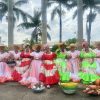
At COP16, Biodiversity Credits Raising Hopes and Protests
At the end of the first week at the 16th Conference of Parties on Biodiversity (COP16), finance emerges as the biggest issue but also shrouded in controversies. On Saturday, as the COP moved closer to its most crucial phase of negotiations, resource mobilization—listed under Target 19 of the Kunming-Montreal Global Biodiversity Framework (KMGBF)—took centerstage, with most parties demanding faster action, greater transparency and the adoption of true solutions to halt biodiversity loss.
UNEP’s 2024 Emissions Gap Report Warns: ‘No More Hot Air, Please’
The United Nations Environment Programme’s (UNEP) Emissions Gap Report 2024 delivered a stark reminder that the world is still far from meeting its climate commitments.
COP16 – Is This Our Last Chance to Save Nature?
As COP16 approaches, we have been reflecting on the state of our planet in 2024; the word "crisis" feels insufficient to describe the devastation we're witnessing.
Capacity Building Is Key to Africa’s Digital Sequencing Success Story
Christian Tiambo has always wished to uplift local farmers’ communities through cutting-edge science. As climate change wreaked havoc on local agriculture, Tiambo, a livestock scientist at the Centre for Tropical Livestock Genetics and Health (CTLGH) and at the International Livestock Research Institute (ILRI), focused on conserving and developing livestock that could withstand environmental stress.« Previous Page — Next Page »


The world's diverse flora and fauna are facing urgent threats due to pollution, climate change, commercialization of nature and other forms of harmful human intervention. The widespread loss of biodiversity is worrying not simply because of the disappearance of exotic species which deserve saving, but because tampering with nature's equilibrium means that the loss of one form of life is a threat to another. IPS taps into its own diverse network of correspondents around the world to report on continuing and emerging dangers to nature's riches - and the struggle to protect them.

The Week with IPS

Tracking global progress towards a sustainable world
