Languages
Saturday, September 26, 2026



News and Views from the Global South
Biodiversity

Landmark UN Report Issues Stark call for Sustainable Land Management to Save Human Health
With 50% of humanity affected by land degradation, the world must move to a ‘crisis footing’ to conserve, restore and use land resources sustainably, a major UN report has said.
Big Business Depletes Nature, Big Business Supplants Nature with Synthetic Food
In case you were not aware, please know that humanity used to cultivate more than 6.000 plant species for food, but now instead fewer than 200 of these species make major contributions to food production. Out of these, only 9% account for 66% of total crop production.
Earth Day to Earth Disaster
Since the first Earth Day observed on 22 April 1970, world conditions have worsened greatly across three critically interrelated global dimensions that portend a disastrous future for life on planet Earth.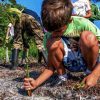
The Suicidal War on Nature Continues Unabated – International Mother Earth Day
The gloomy picture is drawn from indisputable scientific conclusions and should be already known by everybody, in particular by decision-makers, whether they are politicians… or rather not.
Commonwealth Climate Finance Hub to Boost Belize’s Delivery of Climate Change Projects
In September 2020, at the height of the COVID-19 pandemic, the UK-based Commonwealth Secretariat announced that it had dispatched highly skilled climate finance advisors to four member nations to help them navigate the often-complicated process of accessing climate funds. Belize, the Caribbean Community’s (CARICOM) only Central American member, was one of the recipients.
The Mayan Train and the Fight for Mexico’s Ancient Jungle
Along the wide slash of white earth in southwestern Mexico there are no longer trees or animals. In their place, orange signs with white stripes warn visitors: "Heavy machinery in motion," "No unauthorized personnel allowed".
How a Massive Climate Project Can Help Win Peace for Ukraine – And Help African Job + Food Crises
How would the late Archbishop Desmond Tutu have reacted to the Russian Invasion of Ukraine? Differently than you might think. The invasion of Ukraine is a mass human tragedy. It is killing Ukrainians, exposing families to violent atrocities, and has driven a refugee crisis of over 4 million people and counting. The war in Ukraine has also reawakened our fear of global war - even nuclear war - and the importance we place on global peace.
Indian Agriculture Towards 2030
India began its journey as an independent nation in 1947 with fresh memory of the Bengal Famine of 1943 which claimed 1.5 to 3 million lives. Against this backdrop, the First Five Year Plan (1951-56) prioritized agriculture which, however, shifted to heavily industrialization in the second Plan.
Palm Oil for Biodiesel in the Amazon: Sustainable Fuel or Deforestation Risk?
Oil palm, known as dendezeiro in Brazil, can produce up to ten times more vegetable oil per hectare than other crops, but it is regularly condemned as harmful to the biodiversity of tropical forests in Asia, Africa and Latin America. Now, its cultivation looks set to advance in the Brazilian Amazon.
Shall the Arctic Burn?
Climate change and land-use change are projected to make wildfires more frequent and intense, with a global increase of extreme fires of up to 14 percent by 2030, 30 percent by the end of 2050 and 50 percent by the end of the century, according to a new report by the UN Environment Programme (UNEP) and GRID-Arendal, a non-profit environmental communications centre based in Norway.
International Women’s Day, 2022
War, Autocrats and Fossil Fuels – Women on the Front Line
For decades women’s demands for political and economic inclusion have placed them centre-stage in mass struggles against dictatorships across the world. Russia’s invasion of Ukraine and its indiscriminate attacks on civilians now put women’s movements firmly on the front line of war, autocrats and fossil fuels.

With One Million Species Endangered, the Web of Life Is at Risk of Extinction
These are not by any means just mere figures. It is about the risk of extinction of the whole life cycle. See what is at stake.
Pacific Islanders: Failure to Commit to 1.5 Degrees at COP27 will Imperil the World’s Oceans
Oceans play a pivotal role in regulating the world’s climate and maintaining the conditions for human life on earth. And they are a crucial source of sustenance and economic wellbeing in many developing countries, including small island developing states. But Pacific Islanders are deeply concerned about the fate of the oceans if world leaders fail to secure the pledges needed to limit the global temperature rise to 1.5 Degrees Celsius above pre-industrial levels at the next COP27 climate change summit in November.
Speed Dating with the Future, a Romance with Science and Biodiversity
In a busy world where love is a complicated affair, speed dating is one way to connect, but can it work to ignite more sustainable relationships with nature? Are we open to a romance with science and evidence?
When the Fate of Half Our Planet is being Discussed, it’s too Important to Shut out Civil Society
Over the past two weeks, a petition signed by almost five million people globally was handed in to governments around the world. It called for a Global Ocean Treaty to help rescue our oceans.
Nature Insight: Speed Dating with the Future
 Speed dating is about having a short time to communicate things that could change your life. That’s exactly what we’re doing on this podcast, by introducing you to people with unique insight into our relationship with nature.
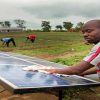
Road to COP27: Why Africa cannot be Complacent on Energy, Climate Change
A year ago, we welcomed 2021 with a sense of cautious optimism when the newly developed vaccines promised a shift in the fight against the COVID-19 pandemic. The focus turned towards building back better and doing things differently as many countries started to rethink and rebuild their shattered economies.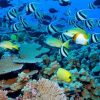
Future of Coral Reefs in the Time of Climate Change
Coral reefs are one of the world’s most biologically diverse and productive ecosystems. They provide abundant ecological goods and services and are central to the socio-economic and cultural welfare of coastal and island communities – throughout tropical and subtropical ocean countries – by contributing billions of dollars to the local and global economies, when combined with tourism and recreation.
A Call to Action on Living Lands
If the ocean is the lifeblood of the Commonwealth, then forests are the lungs that breathe life into its whole system. From the vast boreal woodlands of Canada to the rich primary forests of Papua New Guinea, the Commonwealth covers nearly a quarter of all forest land in the world - an estimated 900 million hectares. These biodiversity havens not only house about half of all animal species on earth, they also give us clean air, water and food, supporting the livelihoods of millions of people while tackling climate change.
The Time to Protect Our Oceans is Now
There is no other place in the world like Costa Rica’s Cocos Island National Park. The waters surrounding the island--covered with tropical forests--are a playground to countless shivers, or schools, of sharks, including hammerhead sharks, whitetip reef sharks and whale sharks.
Why Does Yangtze River Have its Own Protection Law?
The new Yangtze River Protection Law (YRPL), which came into effect on March 1, 2021, is China’s first legislation on a specific river basin. The Yangtze River is China’s longest and largest river system, stretching over 6,300 kilometres and has over 700 tributaries. With a drainage basin covering more than 1.8 million square kilometres, approximately one-fifth of China’s total land area, the river basin is home to over 40% of the country’s population.« Previous Page — Next Page »


The world's diverse flora and fauna are facing urgent threats due to pollution, climate change, commercialization of nature and other forms of harmful human intervention. The widespread loss of biodiversity is worrying not simply because of the disappearance of exotic species which deserve saving, but because tampering with nature's equilibrium means that the loss of one form of life is a threat to another. IPS taps into its own diverse network of correspondents around the world to report on continuing and emerging dangers to nature's riches - and the struggle to protect them.

The Week with IPS

NEXT STOP - SDGs
Tracking global progress towards a sustainable world
Tracking global progress towards a sustainable world
