
Wednesday, September 23, 2026



News and Views from the Global South
Climate Change

Climatic Change Pushes Pakistan’s Promising Trout Fish Farming Towards Brink of Collapse
Pakistan’s once-thriving trout fish farming industry, a vital source of livelihood for communities in the country’s mountainous northern region, is now on the verge of collapse due to the devastating impacts of climate change.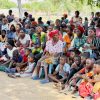
Namibia’s Drought Crisis: Building Resilience for Women and Girls
Communities in the Kavango West region of northern Namibia have firsthand experience of the severe impacts of climate change. The dry, cracked soil and emaciated livestock provide a constant reminder of the lack of access to water in this part of the country.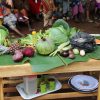
WFP, FAO Warn of the Severity of the Climate Crisis and Food Insecurity
Over the past few years, climate shocks have become more frequent and have devastated economies and agriculture systems, exacerbating widespread malnutrition and hunger. It has become increasingly apparent that the utilization of sustainable agriculture practices and disaster risk management systems are crucial to fulfill growing needs as natural resources continue to dwindle.
The Challenge of the “Carbon Aristocracy”
For centuries, innumerable countries were ruled by an entrenched, typically inherited, political class: the “aristocracy.” The term comes from the Ancient Greek words “aristos”, meaning best, and “kratia,” meaning power. As a result of long and hard-fought democratic struggles, these aristocracies have largely dwindled worldwide (albeit, not everywhere).
‘Areas Essential to the Global Climate Are Being Threatened by Economic Projects’
CIVICUS discusses activism against oil auctions in the Democratic Republic of the Congo (DRC) with François Kamate, founder and coordinator of the young environmental volunteer movement Extinction Rebellion Rutshuru.

Explainer: Why Glaciers Are Alive, Life-Giving and Worth Preserving
The United Nations declared 2025 as the International Year of Glaciers’ Preservation to promote awareness about the role of glaciers, snow and ice. The climate system and global hydrological cycle are dependent on accumulated water in solid form as glaciers, snow and ice. Because of the global temperature rise and its impact on the Earth’s cryosphere, socio-economic and environmental effects are being observed.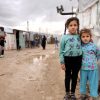
Report Exposes Silent Global Emergency as More Crises-Affected Children Need Urgent Education Support
A report released today on the International Day of Education sounds alarm as the number of school-aged children in crisis worldwide requiring urgent support to access quality education reaches a staggering 234 million—an estimated increase of 35 million over the past three years fueled by intensifying armed conflict, forced displacements, more frequent and severe weather and climatic events, and other crises.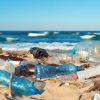
Let the Kite Fly High
The global plastics negotiation process, launched in 2022 under a resolution by the UN Environment Assembly, represents an unprecedented effort to combat the escalating plastic pollution crisis.
Food Systems Worsen Diets, Health
Corporate-dominated food systems are responsible for widespread but still spreading malnutrition and ill health. Poor diets worsen non-communicable diseases (NCDs), now costing over eight trillion dollars yearly!
Still Hopes for a Future Plastic Treaty– But it Won’t be Easy
The last few weeks of 2024 were a disappointment for those who strongly believed that planet Earth is in need of bold actions. First, there were the frustration stemming from what could be defined at minimum as unconvincing outcomes of both COP 16 on Biodiversity and COP 29 on Climate.
Photo Essay: Kashmir’s Ingenious Climate-Responsive Architecture.
India's average temperature has risen by 0.7°C since 1901, bringing more frequent and intense heat waves, erratic rainfall patterns, and a marked decline in monsoon consistency since the 1950s.
Africa & Europe Must Join Forces to Protect Our Ocean by Pressing Pause on Deep Sea Mining
Deep-sea mining may not be on the official agenda next week at the World Economic Forum in Davos (January 20-24), but restoring public trust in international cooperation is.
Education Cannot Wait Interviews Adenike Oladosu, ECW Global Climate Champion and BBC 100 Women 2024
Adenike Oladosu is a leading Nigerian ecofeminist, climate justice leader and researcher. She was appointed as an ECW Global Climate Champion on World Environment Day in June 2024. In December of last year, Adenike was honored by #BBC100Women, selected as one of the BBC’s 100 most influential and inspiring women from around the world. She was also a finalist for the Pritzker Emerging Environmental Genius Award.

Trillions in Dirty Money: How Hidden Loopholes Fuel Corruption and Inequality
It is no longer a secret that at major global summits there are more lobbyists than official delegates. There, they participate as ‘guests,’ and most of them work for big business corporations. Their goal? To deter the adoption of policies that conflict with their employers’ interests.
Laureates Call For Moonshot Innovation Effort to Avert Hunger Catastrophe
Neglected indigenous crops, rich in nutrition and resilient to climate change, are key to tackling global hunger only if governments invest in research and development (R&D) to tap the potential of such innovations. More than 150 Nobel and World Food Prize Laureates are calling for investment in moonshot technologies to realize the potential of innovative solutions such as these hardy crops, warning that without swift action, there is a "food insecure, unstable world.”
The Year 2024: Hopes & Despairs
Thank God, we have survived another year of genocide, war, destruction and climate crisis. The passing year of 2024 has been a mixture of hope and despair. It began with some hope as the International Court of Justice (ICJ) ruled in favour of South Africa’s case against Israel for committing genocide and ordered Israel to take all measures within its power to prevent the commission of all acts within the scope of Article II of the Genocide Convention, and to take immediate and effective measures to enable the provision of urgently needed basic services and humanitarian assistance to address the adverse conditions of life faced by Palestinians in the Gaza Strip.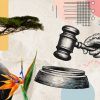
Nature Goes to Court
Nature is taking the stand as courtrooms worldwide become battlegrounds for Earth’s rights. The rise in climate litigation shows how the environment can take centre stage as a plaintiff, demanding justice and accountability, benefiting us all.
Geopolitical Uncertainties Cloud World Economic Prospects, UN Report Says
In the past few years, the world economy has made significant strides in mitigating inflation, unemployment, and poverty. Despite this, global growth has yet to regain its pace from before the pandemic.
Our Health is at Stake: The Solutions SIDS Need to Fight Climate Change
Climate change is one of the most serious global threats to the future of the world’s population. Its impact extends far and wide, from the economy to governance to the very health and well-being of society.
Financing for Development Priorities Today
The forthcoming fourth United Nations Financing for Development conference must address developing countries’ major financial challenges. Recent setbacks to sustainable development and climate action make FfD4 all the more critical.
Tanzania’s Disaster Preparedness: A Nation on Edge
As the dust settled over Kariakoo’s bustling streets, Halima Abdallah’s voice trembled through the cracks of a collapsed four-story building. “Help me, please! I don’t get air,” she gasped, trapped under the rubble. For four hours, rescue workers scrambled to locate her. Their efforts, hampered by the lack of proper equipment, relied on tools hastily borrowed from a private company. By the time they reached her, it was too late. Abdallah had died.« Previous Page — Next Page »


As unsustainable human consumption and production systems are driving changes in average temperatures and weather patterns, "abnormal" is increasingly becoming the norm. So far, a lack of financing has been standing in the way of a comprehensive global plan for climate adaptation, and a global financial crisis has contributed to an increasing reliance on public-private partnerships. Our Climate Change page provides you with the latest news about international and local efforts to address what's frequently been called "the challenge of our time", the forces behind the climate change and the impact it has on the world's most vulnerable populations. Along the way, we bring you stories on growing citizen awareness, new scientific data, and emerging climate policies towards sustainable development.

The Week with IPS

Tracking global progress towards a sustainable world

