
Monday, October 5, 2026



News and Views from the Global South
Climate Change
Climate Change: the Partnership with Asian & Pacific Small Island Developing States
Stories of growing vulnerability make regular headlines across all Asian and Pacific small island developing States (SIDS). With tens of thousands of people displaced every year due to climate and disaster-related events, there are continued concerns about the costs of climate-related hazards.
The Impact of Climate Change on a Biodiversity Hot Spot
If there is a place where the interlinkages and dependencies between the effects of climate warming and biodiversity loss are clearly at display, it’s Nepal. There is clear evidence on the impact of climate change on the country’s ecosystem considering the fact that Nepal is an important biodiversity hotspot.
Revival of Hope: How a Remote Indian Village Overcame Water Scarcity
The people of Patqapara Village, a hamlet in India's West Bengal State, were until recently reeling under absolute distress due to water scarcity. The lack of irrigation facilities in this far-flung and inaccessible hamlet had resulted in a steady decline in agricultural activities. With a population of around 7,000, as per government estimates, the village primarily depends on agriculture for its livelihood. However, in recent years, drastic changes in weather patterns, including unseasonal rainfall, delayed monsoons, and soaring temperatures above normal levels, led to the drying up of irrigation canals and wells in the village. This left the local population in chaos, as their cultivable fields were bereft of any irrigation facilities.
Ahead of UN Summit of the Future, Mobilizing Youth for Change
In a significant precursor to the United Nations Summit of the Future slated for September, the "Future Action Festival" convened at Tokyo's National Stadium on March 24, drawing a crowd of approximately 66,000 attendees and reaching over half a million viewers via live streaming. The event, a collaborative effort by youth and citizen groups, aimed to foster a deeper understanding and proactive stance among young people on nuclear disarmament and climate change solutions.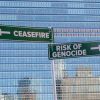
Global Governance: Time for Reform
At last the UN Security Council has passed a resolution calling for an immediate ceasefire in Gaza. While stopping short of demanding a permanent end to the violence, it goes further than the world’s peak peace and security body had so far managed since the start of the current brutal phase of conflict in October. But the time it’s taken to get to this point signals an ongoing failure of global institutions to uphold human rights.
IMF Urges Non-alignment in Second Cold War
The IMF no. 2 recommends non-alignment as the best option for developing countries in the second Cold War as geopolitics threatens already dismal prospects for the world economy and wellbeing.
Fall-out from Ecuador’s Crises Highlights Need to Invest in Grassroots Resilience
Shocking and ongoing levels of violence in Ecuador since the New Year followed by flooding caused by El Niño landed a double blow for those in the country who live day to day and are most vulnerable to instability.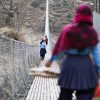
New Report Examines Progress on Global Sustainable Development Goals
At the half-way point of the 2030 Agenda, the Sustainable Development Goals (SDGs) “are in deep trouble.” The need to accelerate progress towards the Sustainable Development Goals has never been more urgent as only approximately 12% of targets are currently on track. “Planet” is equally at risk as “people”.
Fueling Future: Dabaa Nuclear Project Offers Light in Egypt’s Economic Gloom
Egypt’s economy continues to face significant challenges, but amidst these, the Dabaa Nuclear Power Plant project emerges as a beacon of hope.
Education Cannot Wait Interviews Professor Mohammed Belhocine, Commissioner for Education, Science, Technology and Innovation within the African Union
Professor Mohammed Belhocine is an Algerian national. Former Head of the Department of Internal Medicine, he held various positions in Algeria, at the Faculty of Medicine and the Ministry of Health, before joining the international civil service in 1997. Former Director of the Division of Non-Communicable Diseases at the WHO Regional Office for Africa (in Harare, then in Brazzaville), he was also WHO Representative in Nigeria and Tanzania. He ended his career as UN System Coordinator and UNDP Resident Representative in Tunisia from 2009 to 2013. From June 2015 to February 2016, at the request of the WHO Regional Director, he returned to duty as WHO Representative in Guinea, playing an active role in providing technical support and expertise to the country's response to the Ebola epidemic. In October 2021, supported by his country, he was elected to the position of Commissioner for Education, Science, Technology and Innovation within the African Union. Professor Belhocine is the father of three children and has six grandchildren.

Exploring New Depths: NF-POGO Centre of Excellence Driving Innovative, Diverse Ocean Observation
Picture yourself as an early-career ocean researcher. You have the opportunity to be at sea in addition to learning on campus. Through cutting-edge technology and immersive facilities, you experience the most realistic ocean exploration scenarios, including braving extreme cold and harsh environments. That’s the experience at the Launch, a 'living lab' at the Marine Institute of Memorial University in Newfoundland and Labrador, located on the east coast of Canada. It’s an experience meant to prepare you for the real-world complexities of the type of ocean research needed to tackle urgent global issues like climate change.
How Women in Ahmedabad Slums Are Beating Back Climate’s Deadly Heat
Seema Mali is desperate. She has no defences against this changing climate’s brutal heat. Mali makes fresh flower garland the whole year, but her summer income has been plummeting by 30 percent over the last 8–10 years due to the extreme heat.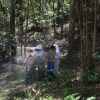
Beekeeping Offers Opportunity to Zimbabwean Farming Communities
Honeybees quickly react with a sharp and loud buzz sound as beekeeper Tanyaradzwa Kanangira opens one of the wooden horizontal Kenyan top bar hives near a stream in a thick forest in Chimanimani, 412 kilometres from Zimbabwe’s capital, Harare. The 26-year-old puffs some smoke, a safety measure, as he holds and inspects a honeycomb built from hexagons by the honey bees.
Brazil’s Biofuel Potential Set to Expand Thanks to Sustainable Aviation Fuel
Brazil is counting on biofuels to assert itself as an energy powerhouse in the near future, as a decisive supplier of low-carbon jet fuel, a requirement of the climate crisis. The electrification of automobiles has tended to curb the strong ethanol and biodiesel agribusiness developed in the country since the 1970s. But demand for sustainable aviation fuel (SAF) now offers the possibility of significant new expansion for many decades to come.
International Women’s Day, 2024
Inside Women Dominated Seaweed Farms in Kenya’s Indian Ocean Waters
Nearly two kilometers into the Indian Ocean from the Mwazaro beach coastline in Lunga Lunga Sub-County, Kwale County, women can be spotted seated in the shallow ocean waters or tying strings to erected poles parallel to the waves. It is a captivating sight to see rows of seaweed farms in the Indian Ocean. 
Into the Abyss: The Scramble for the Ocean Floor
Beneath the vast expanse of the ocean surface lies another world. At first, around the shores, the continental shelf is little more than an extension of the adjoining landmass. But then one reaches the edge of the abyss and, with the sudden drop that follows, everything changes. Remarkably, in view of what is known about the rest of the planet, and even outer space, most of the ocean floor remains largely a mystery. The scientific consensus is that only 5% of the deep sea has been explored in any detail. When a passenger jet was lost somewhere in the Indian Ocean in 2014, rescuers floundered without definitive maps of the maritime space and its currents at different depths that might have helped in their search.
International Women’s Day, 2024

On March 8th, we celebrate International Women’s Day. A day to honour the resilience, achievements, and potential of women worldwide. The world faces crises—geopolitical conflicts, poverty, and climate change.

UN Environmental Assembly Call for Action to Address Planetary Triple Threat
The Sixth United Nations Environmental Assembly (UNEA-6) ended with delegates calling for firm actions to address the triple planetary crisis of climate change, nature loss, and pollution. The assembly also reaffirmed its call for “environmental multilateralism” in seeking solutions to the threats, noting that time was running out fast before the threats could besiege the planet and make life a bigger nightmare, especially for the underprivileged.
Venezuela Bids Farewell to Its Last Glacier, Wrapped in Plastic
Venezuela has undertaken the task of covering the remains of its last glacier, La Corona, on Humboldt Peak at 4,900 meters above sea level in the Andes mountains in the southwest of the country, with plastic "blankets" to slow the inevitable end of this icy patch of its mountain landscape and source of legends.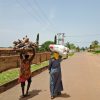
From Gas to Ash: The Struggle of Nigerian Women Amidst Surging Cooking Gas Prices
One sunny mid-morning in Omu-Aran village, a community in Kwara State, North Central Nigeria, Iyabo Sunday sat beside a firewood stand observing her pot of beans with rice (a combination enjoyed by many in Nigeria). The 52-year-old widow used her plastic dirt parker to fan the flames, occasionally blowing air through her mouth for speed and frantically shielding her face from the wisps of smoke that curled from the firewood.
Salvadoran Poultry Farms Produce Biogas, Easing Socio-environmental Conflicts
In a win-win relationship, a segment of El Salvador's agribusiness industry is taking steps to ease the tension of the historic socio-environmental conflict caused by poultry and pig farms, whose waste has caused concern and anger in nearby communities.« Previous Page — Next Page »


As unsustainable human consumption and production systems are driving changes in average temperatures and weather patterns, "abnormal" is increasingly becoming the norm. So far, a lack of financing has been standing in the way of a comprehensive global plan for climate adaptation, and a global financial crisis has contributed to an increasing reliance on public-private partnerships. Our Climate Change page provides you with the latest news about international and local efforts to address what's frequently been called "the challenge of our time", the forces behind the climate change and the impact it has on the world's most vulnerable populations. Along the way, we bring you stories on growing citizen awareness, new scientific data, and emerging climate policies towards sustainable development.

The Week with IPS

Tracking global progress towards a sustainable world

