
Wednesday, November 11, 2026



News and Views from the Global South
Climate Change

Resilience in a Riskier World
Over the past two decades, the Asia-Pacific region has made remarkable progress in managing disaster risk. But countries can never let down their guard. The COVID-19 pandemic, with its epicentre now in Asia, and all its tragic consequences, has exposed the frailties of human societies in the face of powerful natural forces. As of mid-August 2021, Asian and Pacific countries had reported 65 million confirmed coronavirus cases and more than 1 million deaths. This is compounded by the extreme climate events which are affecting the entire world. Despite the varying contexts across geographic zones, the climate change connection is evident as floods swept across parts of China, India and Western Europe, while heatwaves and fires raged in parts of North America, Southern Europe and Asia.
Drought, Storms, Intense Rainfall and Fires Threatening Millions in Latin America and the Caribbean
In 2020, Brazil, Paraguay and Bolivia faced their worst drought in half a century. The Atlantic Basin saw 30 named storms – the most recorded in a single year. Two category 4 hurricanes achieved an unprecedented feat by making landfall in Nicaragua.
How to Feed the World Without Starving the Planet is a $15 Billion Question
A population of more than 9 billion people, hotter temperatures, decaying ecosystems and increasingly severe natural disasters. That is what our world is facing by 2050 because of climate change.
NDC Partnership: Supporting a Global Network of Youth Climate Advocates
Just over six months after launching its Youth Engagement Plan, the NDC Partnership, the coalition assisting governments with their climate action plans, has brought together youth climate advocates for its inaugural NDC Global Youth Engagement Forum.
Solar Energy Revitalises Indigenous and Farming Communities in Chile
Communities in Arica y Parinacota, the region in the extreme north of Chile, are using solar energy and are being empowered by projects for shrimp and trout farming, the production of yarn from camelid wool, the production of tomatoes and cheese, and even the sale of surplus solar power to the national electric grid.
What Might Help Save Our Planet? Different Approaches to Desertification
I am in the Swedish countryside, lush and beautiful in its late summer attire, having a conversation with the son of a friend of mine. Oskar Olin runs a sheep farm, Stabbehyltan Lamm AB, where he practises holistic management. His three-hundred sheep graze within an area of 30 ha where Oskar every day moves his flock from one pasture to another. It takes between 45 to 90 days before the sheep are back on the same pasture where the rotation began. The animals are thus not overgrazing the area, while they at the same time trample down a protective layer of vegetation, which fertilizes the soil. Carbon is bound in the earth, soil organic matter increases, retaining humidity and accordingly deepen the root systems of wholesome plants.
World Bank Looks to Trains in Argentina’s Climate Battle
Argentina will receive a 347 million dollar loan from the World Bank to upgrade one of the most important suburban railway lines in the city of Buenos Aires. The operation is part of the multilateral lender’s new policy, which deepens its commitment to the fight against climate change.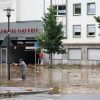
The Water Cycle Is Intensifying as the Climate Warms, IPCC Report Warns – That Means More Intense Storms and Flooding
The world watched in July 2021 as extreme rainfall became floods that washed away centuries-old homes in Europe, triggered landslides in Asia and inundated subways in China. More than 900 people died in the destruction. In North America, the West was battling fires amid an intense drought that is affecting water and power supplies.
Code Red for Humanity and the Planet
UN Secretary General Antonio Guterres is absolutely right to call the latest UN climate report a “Code Red for Humanity.” Without immediate and serious action, we are condemning future generations to a dismal future.
Q&A: Why the World ‘Can’t Afford to Wait’ for Transparent, Equitable Food Systems
The world has been put on notice that there is no time to waste in achieving the goal of food systems transformation.
A Transformational Approach to Climate Change
The International Panel on Climate Change (IPCC) issued its starkest report yet, expressing a clear consensus on the rapid changes to global temperatures.
A Code Red Warning on the Hazards of Climate Change & an Impending Global Disaster
A landmark report on the hazards of climate change predicts a devastating future for the world at large. Authored by the Intergovernmental Panel on Climate Change (IPCC) and released August 9, the study is being described by UN Secretary-General Antonio Guterres as “code red for humanity”— a rallying cry before an impending global disaster.
We Were Born to Do This!
The first time I visited South Sudan in 2004 - prior to its independence - I travelled across the entire the country which was then a region devastated by man’s inhumanity to man. Although South Sudan is slightly larger than France, I could find only one concrete school building in Rumbek.
5 Things To Watch For in the Latest IPCC Report on Climate Science
On Aug. 9, the Intergovernmental Panel on Climate Change (IPCC) will release its most comprehensive report on the science of climate change since 2013. It will be the first of four reports released under the IPCC’s latest assessment cycle, with subsequent reports coming in 2022.
Suburban Living the Worst for Carbon Emissions – New Research
Work, education, entertainment, or simply better connectivity all draw people to cities. By the end of this century around 85% of the world population are predicted to live in cities.
Resumption of China-US Contacts: Use of Protocol as Peacetime Weapon in an Unstable World
It had been four long months since the meeting in Alaska between Chinese and American officials, their first interaction since President Joe Biden assumed office in January this year. That was when the Chinese Foreign policy top mandarins Yang Jiechi (Director, Central Foreign Affairs Commission) and Wang Yi (State Councillor and Foreign Minister) bitterly locked horns with the American top diplomats, Antony Blinken (Secretary of State) and Jake Sullivan (National Security Advisor) in Anchorage in intensely chilly circumstances. Bilateral relations remained pretty much frozen since. Both sides might have come around to the belief that a resumption of some level of contact was overdue. Not so much to bring about a thaw; rather, simply to test the water.
Revamped UN System Crucial for a Changing World
From an international humanitarian perspective, the first half of 2021 has been disappointing. We’re no further ahead in ending the conflict in Syria and Yemen. From the fledgling democracy that it had become, Myanmar has descended into what most of its people had hoped was a bygone era of military rule. And in Ethiopia, where its Prime Minister, Ably Ahmed, was awarded the Nobel Peace Prize in 2019, armed conflict in Tigray is preventing the 2020 winners of the very same prize, the World Food Programme, from delivering the food needed to stop at least 350,000 Ethiopians from starving to death.
Water Scarcity: Coming Soon
In 1995, a highly-respected water expert in South Africa, Bill Pitman, in very concise terms illustrated that the country, already battling a growing lack of water then, would likely run out in 25 years if it did not increase its supply.
Golden Rice: Triumph for Science
After almost two decades, Golden Rice was approved last week by the Philippines authorities for use as food. This together with the approval of the bioengineered Bt eggplant represents a landmark victory of science over misinformation; it will provide consumers with improved nutrition (Golden Rice) and safer food (Bt eggplant).
Water Poverty: The Political Connection
The water we drink and the air we breathe are the basis of life. With universal access to clean water and sanitation, we will be healthier, our economies will be stronger, gender equality will be more achievable, and more children will stay in school.
Child Rights’ Experts Warn that Displaced Children and Young People Risk Being Wiped Out of the Education System
The difficulties in accessing education faced by children and young people forcibly displaced from their homes were today laid bare in a virtual high-level roundtable convened by UNHCR, the UN Refugee Agency, Education Cannot Wait (ECW), the UK and Canada.« Previous Page — Next Page »





As unsustainable human consumption and production systems are driving changes in average temperatures and weather patterns, "abnormal" is increasingly becoming the norm. So far, a lack of financing has been standing in the way of a comprehensive global plan for climate adaptation, and a global financial crisis has contributed to an increasing reliance on public-private partnerships. Our Climate Change page provides you with the latest news about international and local efforts to address what's frequently been called "the challenge of our time", the forces behind the climate change and the impact it has on the world's most vulnerable populations. Along the way, we bring you stories on growing citizen awareness, new scientific data, and emerging climate policies towards sustainable development.

The Week with IPS

Tracking global progress towards a sustainable world

