Languages
Wednesday, September 16, 2026



News and Views from the Global South
Conferences

How Santa Marta Finally Made Fossil Fuel Phase-Out Politically Discussable
The First Conference on Transitioning Away from Fossil Fuels in Santa Marta, Colombia, may eventually be remembered as a defining moment in global climate politics, not because it produced a treaty or a formal negotiation outcome, but because it changed the tone, structure, and ambition of the conversation itself.
‘Nuclear Weapons Are Not Just Tools of War. They Are Weapons of Mass Suffering.’
"We choose hope because despair is a form of surrender that we cannot accept,” UN Ambassador to the Philippines, Enrique Manolo, told civil society representatives and the diplomatic community, considering the question of whether to pursue nuclear disarmament in a world that is becoming more polarized on the issue.
Seychelles’ Blue Bond: Turning Ocean Vision into Action
As the world prepares for the Global Environment Facility (GEF) meeting in Samarkand next month, Seychelles’ pioneering blue bond offers a compelling lesson in practical ocean finance.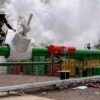
Inside GEF-9: What it is and Why it Could Define the Next Four Years of Environmental Action
The gap between global environmental ambition and real-world progress is widening, with less than five years left to meet key climate and biodiversity targets.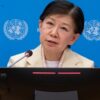
‘Significant Stress’ as UN Prepares for Nuclear Non-Proliferation Treaty Conference
The Eleventh Review Conference of the Parties to the Treaty on the Non-Proliferation of Nuclear Weapons (NPT) will meet at the United Nations in New York from 27 April to 22 May 2026. State parties to the treaty will meet with the urgent aim of finding common ground on the issue of nonproliferation.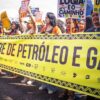
Santa Marta Summit Aims to Push Fossil Fuel Phase-Out as Indigenous Voices Demand Urgent Action
A high-stakes international summit in Colombia starting today (April 24) is expected to sharpen global efforts to phase out fossil fuels, as governments, scientists and Indigenous leaders warn that the world is running out of time to avert irreversible climate damage.
Inside the Funding Model Behind Kenya’s Tana Delta Restoration Project
Lydia Hagodana stands next to a bee yard (apiary) in Golbanti, Tana Delta, where she lives. The air carries a low, steady hum as bees move in and out in a constant stream. She lifts the back of one hive slightly, gauging its weight.
Guardians of the Sea: How GEF Small Grants Program Enables Young Volunteers Take the Lead in Sea Turtle Conservation
Every winter thousands of sea turtles come ashore at Cox’s Bazar, in the Bay of Bengal, Bangladesh, to lay eggs.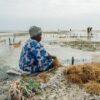
Explainer: How the GEF Funds Global Environmental Action
The Global Environment Facility, widely known as the GEF, plays a central role in financing environmental protection across the world. It supports developing countries in tackling climate change, biodiversity loss, land degradation, pollution, and threats to ecosystems.
Nations pledge $3.9bn to Global Environment Facility as Race to Meet 2030 Goals Tightens
With just four years left to meet a series of global environmental targets, governments are committing to shore up one of the world’s main environmental funds, the Global Environment Facility (GEF), with a $3.9 billion pledge.
Caribbean Leaders and Civil Society Prepare for Global Push on Fossil Fuel Phase-Out
As the world edges closer to breaching key climate thresholds, Caribbean policymakers, scientists and civil society leaders gathered in Saint Lucia this month to coordinate the region’s position ahead of a landmark global meeting on transitioning away from fossil fuels.
Tanzania, Mozambique and Malawi Launch $7.12 Million GEF Project to Protect the Ruvuma Basin
At dawn, the Ruvuma River moves quietly through a vast wetland along the border between Tanzania and Mozambique. Its muddy waters appear calm, disturbed only by drifting logs and the occasional ripple.
Caribbean Civil Society Gathered in Jamaica to Strengthen Resilience Amid Global Shifts
Civil society groups from across the Caribbean met in Jamaica in February 2026 for a landmark regional conference, with development leaders urging stronger governance, digital readiness and deeper partnerships to adapt to a shifting and increasingly complex geopolitical landscape.
As Biodiversity Loss Grows, Rome Talks Urge Nations to Step Up Action
Governments meeting in Rome last week acknowledged that global efforts to protect nature are still not moving fast enough, even as biodiversity loss continues to affect ecosystems, livelihoods, and economies worldwide.
From Pledges to Proof: UN Biodiversity Meeting Begins First Global Review of Nature Action
Governments convened in Rome on Monday (February 16) for a critical round of UN biodiversity negotiations, launching the world’s first global review of how countries are acting to protect nature.
Support Science in Halting Global Biodiversity Crisis—King Charles
British Monarch King Charles says science is the solution to protecting nature and halting global biodiversity loss, which is threatening humanity’s survival.
World Living Beyond Its Means: Warns UN’s Global Water Bankruptcy Report
The world has entered what United Nations researchers now describe as an era of Global Water Bankruptcy, a condition where humanity has irreversibly overspent the planet’s water resources, leaving ecosystems, economies, and communities unable to recover to previous levels.
Excluding Food Systems From Climate Deal Is a Recipe for Disaster
As they ate catered meals, COP30 negotiators had no appetite for fixing broken food systems, a major source of climate pollution, experts warn. Food systems are the complete journey food takes—from the farm to fork—which means its growing, processing, distribution, trade and consumption and even the waste.
Rescued from Fire: the World in 2025
Our traditional “year-ender” usually kicks off with a grim litany of world disasters and crises over the past 12 months, highlights IPS partners and contributors and culminates in a more positive-sounding finale. This time I’d like to begin on a more personal note intended also as a metaphor.
‘Low- and Middle-Income Countries Need Better Data, Not Just Better Tech’
During the Global Development Conference 2025, development experts and researchers kept warning that low- and middle-income countries (LMICs) were being pushed into a wave of digital transformation without the basic statistical systems, institutional capacity, and local context needed to ensure that AI and digital tools truly benefited the poor.
Graduation Must Be a Springboard, Not a Stumbling Block
As we gather in Doha for the High-Level Meeting on “Forging Ambitious Global Partnerships for Sustainable and Resilient Graduation of Least Developed Countries,” the stakes could not be higher. A record number of fourteen countries-equally divided between Asia and Africa are now on graduation track. Graduation from the Least Developed Country (LDC) category is a landmark national achievement—a recognition of hard-won gains in income, human development, and resilience. Yet, for too many countries, this milestone comes with new vulnerabilities that risk undermining the very gains that enabled graduation.« Previous Page — Next Page »


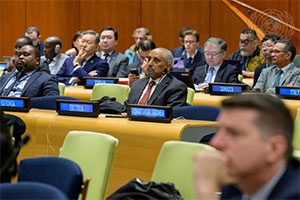 General Assembly Meets to Hear Briefing on UN80 Initiative. Credit: UN Photo/Manuel Elías
Global development conferences are continuing to produce critical frameworks for South-South cooperation and multilateral reform. In January of 2024, the 3rd Global South Nexus (GSN) International Conference was held in Odisha, India, with its theme being “Creating Responsible Professionals for Advancing SDGs: Inputs from Global North and South.” The 2025 UN SDG Report provided a midpoint assessment of the 2030 Agenda, with only 35% of targets on track and 18% having reversed. The 2025 UN Climate Change Conference (COP30) in Belém, Brazil, agreed to mobilize $1.3 trillion annually for climate action by 2035, operationalize the loss and damage fund, triple adaptation finance, and launched the Belém Mission to 1.5°C. In 2025, the Partnership for Economic Policy (PEP) convened its annual Policy Conference in Nairobi, Kenya, addressing the issue of “Financing and Inclusivity in Green Energy Transition in the Global South.” As the Global South advocates increasingly for a South-South framework alongside North-South cooperation, international conferences on sustainability aim to bridge economic and social divides between developed and developing countries in achieving the UN SDGs. Furthermore, to mark the UN’s 80th anniversary, the UN80 Initiative was launched to reshape how the UN system works so that every mandate, dollar, and decision creates greater impact for the global system.

The Week with IPS

NEXT STOP - SDGs
Tracking global progress towards a sustainable world
Tracking global progress towards a sustainable world
