Languages
Friday, November 13, 2026



News and Views from the Global South
Crime & Justice

World Comes Together with $1.35 billion for Yemen
World leaders gathered on Tuesday to pledge $1.35 billion in aid for Yemen, which currently undergoing what many is the world’s “worst humanitarian crisis”, with Saudi Arabia announcing a contribution of $500 million.
The Pandemic Underlines America’s Ingrained Racism
The murder of George Floyd by a police officer in broad daylight came amid a high point in the continuing rampage of the coronavirus throughout the country, killing over 100,000 and infecting nearly 2 million while more than 45 million have lost their jobs.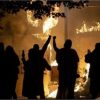
As Minneapolis Burns, Trump’s Presidency is Sinking Deeper into Crisis. And yet, he may still be Re-elected
Violence has erupted across several US cities after the death of a black man, George Floyd, who was shown on video gasping for breath as a white police officer, Derek Chauvin, knelt on his neck. The unrest poses serious challenges for President Donald Trump and former Vice President Joe Biden as each man readies his campaign for the November 3 election.
This Year of Living Dangerously
Indonesia’s founding President Sukarno delivered his annual Independence or National Day address on 17 August 1964 anticipating the forthcoming year as Tahun vivere pericoloso, the ‘year of living dangerously’. 2020 may well be the world’s turn, and not only due to the obvious Covid-19 threat to the world.
Is the Fight for Human Rights & Racial Justice Overriding the Coronavirus Risk?
The deadly coronavirus pandemic, which has claimed the lives of over 372,000 people worldwide, has reinforced the concept of “social distancing” which bars any gathering of over 10 or 20 people – whether at a social event, a wedding, a political rally or even a funeral.
War-Fighting in the Future and Our Current Hobson’s Choice!
Despite all the preoccupation with the current raging pandemic, it sadly appears that there has been no let-up in the global arms race among the major powers. In mid-May, the United States President Donald Trump, at an event for his new Space Force at the White House made a significant announcement, It was that the US was building right now an “incredible” new missile which would travel faster than any other in the world “by a factor of almost three”. This was obviously a response to the latest Russian ‘Avangard’ missile, which Russian President Vladimir Putin claims in invincible, with a speed of twenty times that of sound. The Chinese, reportedly are also feverishly working on their own hypersonic counterparts. All these would be strategic tools to significantly alter the war-fighting capabilities of humanity in the future.
No Woman Should Ever Die Giving Life
Consider this. 24 women, children and babies were murdered at a hospital in Kabul, the Afghan capital. Even by standards of a country as accustomed to bloodshed as Afghanistan, the May 12 attack on a Kabul maternity clinic was an event of unmitigated horror.
The Hotting-Up of the Sino-American Spat: Most Dangerous Side-Effect of Covid-19?
When the United States and China signed the First-Phase of their Trade Agreement in January this year, President Donald Trump called it a “momentous step”, and the world believed they had stepped back from a dangerous brink. But, alas, to cite an idiom that is so current today, it was but a ‘false positive’. As the globe reels from the surgoing COVID-19 pandemic, it is possible that the rapid deterioration of US-China relationship can become one of the worst side-effects of this raging virus.
Forced Marriage, Organ Trafficking Rife in Asia Pacific – Part 2
A single mother, Mai (name changed) had the responsibility of providing for her young son and grandparents, who had brought her up in a poor rural province in southern Vietnam’s Mekong Delta. While she was looking for employment, somebody approached her on social media with an offer of a high-paying job in China. When she arrived in China, she was sold into a forced marriage.
My Adherence My Fallacy: Stigma and Mental Health
The World Health Organization (2019) states that every 40 seconds someone dies by suicide. Annually, this represents over 800,000 people, more than the number of people who die in conflict and by homicide put together. Every suicide is a tragedy that has long-lasting effects on the people left behind and most cases stem from prolonged mental health issues and abuses that are not reported.
‘Passing the Buck’ Becomes Reckless ‘Conspiracy Blame Game’
Although Wuhan local authorities undoubtedly ostracized local medical whistle-blowers, notably Dr Li Wenliang, who suspected a new virus was responsible for flu-like infections in Wuhan in late 2019, official responses were apparently not delayed, and possibly even expedited, as the novel character of the SARS-CoV-2 virus, responsible for Covid-19 infections, was not immediately self-evident.
VE Day Marks the End of the Second World War-But the World is Still at War
The world commemorated the 75th Anniversary to mark the end of the 2nd World War also called VE Day on 08 May 2020. With her nation, and much of the world still in lockdown due to COVID 19, England’s Queen marked 75 years since the allied victory in Europe with a poignant televised address. From Windsor Castle, Queen Elizabeth said, “the wartime generation knew that the best way to honour those who did not come back from the war, was to ensure that it didn’t happen again”.
Former Child Bride Holds Pakistan to Account for Wrongful Imprisonment in Historic Legal Challenge
A former Pakistani child bride, who was wrongly accused of killing her husband at 13 and subsequently spent almost two decades in prison, is making history by being the first victim of a miscarriage of justice to seek compensation from the state, say legal human rights experts.
Protect Journalists’ Rights so We can Stop the COVID-19 Disinfodemic
Andrew Sam Raja Pandian, a digital journalist and founder of a news portal in the southern state of Tamil Nadu, was arrested for running two news articles related to COVID-19.
Press Freedom Needs Protection from Pandemic too
Wearing an orange jacket and face mask, Li Zehua, a Chinese freelance journalist, can be seen filming himself in a car. He is sure that state security agents have been pursuing him since he began documenting events in Hubei’s capital Wuhan, the first epicentre of the COVID-19 pandemic. A second YouTube video, circulating widely since he launched his appeal, ends abruptly when two men knock at his apartment. He has just reappeared online after two months, saying police interrogated him and put him in quarantine and that he was well looked after during this period.
Governments Cautioned Not to Use COVID-19 Lockdown to Cause Harm
 The United Nations High Commissioner for Human Rights is calling on governments and leaders around the world to ensure that their respective lockdown measurements don’t end up causing harm to people by those enforcing the lockdowns.
World Press Freedom Day: The Assault on Media Freedom in Asia Worsens During COVID-19 Pandemic
May 3rd marks World Press Freedom Day around the world. During this COVID-19 pandemic, a robust media environment is critical: access to life-saving information is key in the fight against the virus. As governments impose a range of restrictions in attempts to curb the pandemic, journalists help hold authorities to account by providing analysis, engaging in debate about government actions, and creating a space for dialogue about the future we all hope to see.
As Coronavirus Spreads, No Journalist Should be Sidelined in Prison
In 2014 my husband and I were arrested in my native country, Iran, for the crime of working as journalists. I spent 72 days in Tehran’s notorious Evin prison, all of them in solitary confinement.
On World Press Freedom Day, the EU Must Rescue Media Independence in Hungary Before It’s Too Late
Censorship, smear campaigns and harassment. These are just some of the daily struggles that media professionals are facing in Hungary. And now the threat of jail time may be looming. In the context of World Press Freedom Day, there is little to celebrate in the Eastern Bloc region.
Ensuring Russia’s Sex Workers’ Rights Essential for Wider Gender Equality
Despite seeing a shift in attitudes towards them in recent years, Russian sex workers say they continue to struggle with marginalisation and criminalisation which poses a danger to them and the wider public.
Thandika Mkandawire, Pan-Africanist Par Excellence
Thandika Mkandawire (1940-2020) had a wicked sense of humour. But he was so considerate that he often made himself the butt of his jokes which typically had a moral. When others struggled to pronounce his surname, he would help them out, “Me kinda weary”.« Previous Page — Next Page »


Issues of crime and justice are as pertinent to development as they have ever been. The struggle for abolition of the death penalty is not over, and penal reform is desperately needed in many countries around the world. From violence to religious persecution, white-collar crime to police brutality, we keep you updated with reports from around the world. IPS correspondents focus on the causes of crime, attempts to prevent it, and the process of bringing those who commit crimes to justice. We also cover the campaign against capital punishment, and for legal and prison reforms that would give prisoners the right to life, and also to justice and decency.

The Week with IPS

NEXT STOP - SDGs
Tracking global progress towards a sustainable world
Tracking global progress towards a sustainable world
