Languages
Sunday, November 15, 2026



News and Views from the Global South
Crime & Justice
“Ending the genocide is not profitable”
What made you take up the role of an activist on the Rohingya issue? Personally, there are layers of connections with this issue.
New Safety Handbook by IAWRT
Hopefully female journalists have read it by now “What if…? Safety Handbook for Women Journalists”. The handbook, written by renowned safety trainer Abeer Saady, an Egyptian, and published by The International Association for Women in Radio and Televison (IAWRT), provides hands on tips on what to do when caught in a crossfire , when stopped at checkpoints, arrested during coverage, or kidnapped and held hostage.
Women Activists are Targets of Gender-Biased Violence
Veiled and direct threats, defamation, criminalisation of activism, attacks on their private lives, destruction of property and assets needed to support their families, and even murder are some forms of gender violence that extend throughout Latin America against women defenders of rights.
Will DNA Data Base Deter Sexual Abuse at UN?
The United Nations is fighting a losing battle against the widespread – and continued – sexual exploitation and abuse (SEA) by UN peacekeepers and civilian staff resulting in relatively few convictions amidst daunting problems in tracking abusers and nailing down paternity claims.
Violence: Unending Woes of Indian Women
The statistics are chilling. As many as 2.24 million crimes against women were reported over the past decade: 26 crimes against women are reported every hour, or one complaint every two minutes. As chilling as these statistics are, they don’t reflect the gory details.
Keeping the Spotlight on Violence against Women and Girls
As cases of sexual harassment and assault continue to come to light every day, a different campaign to end such violence wants to keep the spotlight shining.
For Africa to Root out Modern Day Slave Trade, Youth Empowerment Is Crucial
If the thought of a man armed with a rifle and driving with whips a group of African men, women, and children to sell them at a slave market makes you marvel at what kind of greed motivated such revolting barbarity centuries ago, the shocking truth is that we are witnessing a 21st century repeat of that abhorrent practice on African soil.
Rejoicing in the Other and Celebrating Diversity Are Needed More than Ever to Address the Root-Causes of Intolerance
The Chairman of the Geneva Centre for Human Rights Advancement and Global Dialogue H. E. Dr. Hanif Hassan Ali Al Qassim deplored the rise of xenophobia, bigotry and marginalization - targeting refugees, migrants and internally displaced persons - that is taking effect in many regions of the world.
Aid Groups Sound Alarm on DRC Crisis
The Democratic Republic of the Congo (DRC) is on the brink of a humanitarian crisis and the international community must step in before it worsens, humanitarian agencies warn.
Nations without Nationality – An ‘Unseen’ Stark Reality
Here’s another ‘unseen’ stark reality—that of millions of people around the world who are deprived of their identity, living without nationality. Their total number is by definition unknown and their only ‘sin” is that they belong to an ethnic, religious or linguistic minority in the country where they have often lived for generations.
Victims of El Salvador’s Civil War Demand Reparations
Among the sea of names of victims of the Salvadoran civil war, engraved on a long black granite wall, Matilde Asencio managed to find the name of her son, Salvador.
The Weinstein effect: The Global Scourge of Sexual Harassment & Exploitation
When the United Nations Population Fund (UNFPA’s) Goodwill Ambassador Ashley Judd, detailed an incident involving the Hollywood mogul Harvey Weinstein for The New York Times in their eyepopping investigation into decades of alleged sexual harassment, it came as a shock to many.
‘Never Again’: Investing in Prevention and Early Action
After the Rwandan genocide, the United Nations promised ‘never again.’ But has the international community kept their word? From Mexico to Myanmar, conflicts and humanitarian crises have multiplied.
Mounting Illicit Financial Outflows from South
Although quite selective, targeted, edited and carefully managed, last year’s Panama Papers highlighted some problems associated with illicit financial flows, such as tax evasion and avoidance. The latest Global Financial Integrity (GFI) report shows that illicit financial outflows (IFFs) from developing countries, already at alarming levels, continue to grow rapidly.
UN Member States, With Exceptions, Pay Lip Service to Women & Peacekeeping
A UN Security Council (UNSC) resolution adopted on 31 October 2000, underlying the role of women in peacekeeping, has long been described as both historic and unprecedented.
Slave Labour, Another Setback for the Government of Brazil
The wave of conservativism is testing its limits in Brazil, as reflected by a Labour Ministry decree that seeks to block the fight against slavery-like working conditions, which has been provisionally revoked by the justice system.
Adolescent Health Congress Skirts Issue of Abuse, Trafficking
Twenty-year-old Gogontlejang Phaladi of Mahalapye, Botswana is grateful she was never sent to a so-called “hyena” like scores of girls in neighboring Malawi were.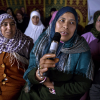
Ending the Male Monopoly on Peace: Women Still Need More Seats at the Table
Whether targeted by perpetrators of sexual violence, oppressed by ideological extremists, or uniquely threatened by the bombing of hospital maternity units, women often bear the brunt of conflicts. Yet when it comes to peace negotiations, women too often don’t have a seat at the table. The continuing reality that men, particularly armed men, enjoy an almost exclusive role in peace processes defies both logic and evidence.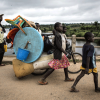
Congo’s Wake Up Call
Late last week, the humanitarian community activated a Level 3 emergency for the Democratic Republic of the Congo (DRC). This trigger in the global humanitarian system is seldom used, and only after serious deliberation by the top echelons of the UN system.
Deliberate Famine Should Be a War Crime, UN Expert Says
The deliberate starvation of civilians could amount to a war crime and should be prosecuted, said an independent UN human rights expert.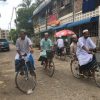
Myanmar’s Democracy Feels Strain of Religious Fault Lines
I try to hold on tight as my driver navigates his motorbike over a bumpy and muddy track. His helmet is decorated with a swastika and an eagle, part of an ill-inspired fashion trend called Nazi chic. It's symbolic for a country where hate and racism seen to have become normalized.« Previous Page — Next Page »


Issues of crime and justice are as pertinent to development as they have ever been. The struggle for abolition of the death penalty is not over, and penal reform is desperately needed in many countries around the world. From violence to religious persecution, white-collar crime to police brutality, we keep you updated with reports from around the world. IPS correspondents focus on the causes of crime, attempts to prevent it, and the process of bringing those who commit crimes to justice. We also cover the campaign against capital punishment, and for legal and prison reforms that would give prisoners the right to life, and also to justice and decency.

The Week with IPS

NEXT STOP - SDGs
Tracking global progress towards a sustainable world
Tracking global progress towards a sustainable world
