Languages
Tuesday, September 1, 2026



News and Views from the Global South
Democracy
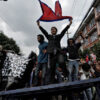
A Grim Year for Democracy and Civic Freedoms – but in Gen Z There Is Hope
2025 has been a terrible year for democracy. Just over 7 per cent of the world’s population now live in places where the rights to organise, protest and speak out are generally respected, according to the CIVICUS Monitor, a civil society research partnership that measures civic freedoms around the world. This is a sharp drop from over 14 per cent this time last year.
End of Year Video 2025
 Multiple shocks defined 2025: conflict, climate breakdown and shrinking democracy.
Multilateral institutions were tested as never before.
Multiple shocks defined 2025: conflict, climate breakdown and shrinking democracy.
Multilateral institutions were tested as never before.

Myanmar’s Sham Election: Trump Legitimises Murderous Military Dictatorship
Myanmar is heading for an election, beginning on 28 December, that’s ostensibly an exercise in democracy – but it has clearly been designed with the aim of conferring more legitimacy on its military junta.
‘Once Conversations about Democracy and Equality Begin, They Are Very Hard to Silence’
CIVICUS discusses restrictions on civic space in Thailand and the detention of activist and human rights lawyer Arnon Nampa with Akarachai Chaimaneekarakate, Advocacy Lead at Thai Lawyers for Human Rights (TLHR).
CIVICUS 2025 Report Reveals Widespread Attacks on Civic Freedoms Worldwide
Over the course of 2025, global civic space conditions have deteriorated sharply, with most countries experiencing some degree of obstructed civil liberties. As authoritarian governments strengthen their hold and have even escalated the use of military force to suppress public dissent, civilians report facing increasing limitations of freedoms of association, peaceful assembly, petition and religion, as well as notable crackdowns on press freedoms.
The New Fragility: Peacebuilding Meets Digital Democracy
Established democracies are exhibiting governance stresses that were once associated primarily with fragile and conflict-affected states. Polarisation is weakening institutional trust, fragmenting civic norms, and reducing societies’ ability to solve problems collectively. This is the new fragility. At the same time, governments and civil society organisations are adopting digital tools to support public participation. These deliberative technologies hold real promise, but in polarised environments they also carry risks. Their success depends on the same principles that have guided peacebuilding efforts for decades.
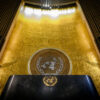
UN80 is Less a Reform Than a Survival Manual
Let’s just say the quiet part out loud: the UN is not reforming because it suddenly woke up one morning inspired by efficiency. It’s reforming because the Organization is broke. Not metaphorically broke. Not diplomatically broke. Actually broke. The kind of broke where arrears sit at $1.586 billion and everyone pretends that’s just an unfortunate bookkeeping hiccup instead of the fact that the lights are flickering.
‘Seven Million People Have Taken to the Streets to Stand up for Democracy’
CIVICUS discusses US civil society action under the second Trump administration with Bridget Moix, General Secretary of the Friends Committee on National Legislation, the oldest faith-based lobbying organisation in the USA, advocating for peace, justice and environmental stewardship. Bridget has participated in the No Kings movement, a nationwide grassroots response to democratic backsliding and attacks on rights.
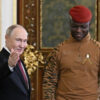
Burkina Faso: Three Years of Broken Promises
Three years ago, Captain Ibrahim Traoré seized power in Burkina Faso with two promises that have proved hollow: to address the country’s deepening security crisis and restore civilian rule. Now he has postponed elections until 2029, dissolved the independent electoral commission and pulled the country out of the Economic Community of West African States (ECOWAS) and the International Criminal Court (ICC). Burkina Faso has become a military dictatorship.
The U.S. President Doth Protest Too Much, Methinks
With the longest shutdown of the U.S. government now over, the White House, Congress, the media, and the public have shifted their attention to the contentious and highly political issue of releasing the files related to Jeffrey Epstein. The White House’s resistance to releasing Epstein-related documents brings to mind the famous line from Shakespeare’s Hamlet that the U.S. president “doth protest too much, methinks.”
Mayor Mamdani for New York, for Multicultural Dignity
The New York City mayoral elections captured the world’s attention with an excitement normally reserved for the United States presidential elections. It all culminated on Tuesday night with Zohran Mamdani’s decisive victory, signaling that hope was emerging after a period of anxiety and uncertainty for the United States. Zohran Mamdani will represent and govern New York City, one of the world’s wealthiest and most high-profile cities.
Power-Sharing —Boomers and Gen Z Face Off at the ICSW
The message is clear: today’s youth are not “wishy-washy.” They are not just the future—they are the present, full partners in shaping it, and “power-sharing” is the new mantra. The veterans of activism are being reminded not merely to listen but to hear and to leave their egos at the door.
Tanzania’s Post-Election Turmoil Deepens Economic and Social Woes
At dawn in Manzese, a dusty township on the outskirts of Dar es Salaam, silence hangs where the sounds of commerce once roared. The township, usually crowded with street cooks, vegetable vendors, mechanics, and motorcycle taxis snaking through the morning rush, stood eerily empty. Shutters are pulled down, wooden stalls abandoned, and the air is heavy with the smell of burnt rubber. For five days, the township’s bustling economic life has been paralyzed—leaving residents unable to buy food or access basic services.
Challenging Elites, Defending Democracy: Oxfam’s Amitabh Behar Speaks Out
Speaking to IPS on the sidelines of the International Civil Society Week in Bangkok (November 1–5), Amitabh Behar, Executive Director of Oxfam International and a passionate human rights advocate, highlighted his concerns about rising inequality, growing authoritarianism, and the misuse of AI and surveillance. Yet, he expressed optimism that, even as civic spaces shrink, young people across Asia are driving meaningful change. He also shared his vision of a just society—one where power is shared, and grassroots movements lead the way.
Defending Democracy in a “Topsy-Turvy” World
It is a bleak global moment—with civil society actors battling assassinations, imprisonment, fabricated charges, and funding cuts to pro-democracy movements in a world gripped by inequality, climate chaos, and rising authoritarianism. Yet, the mood at Bangkok’s Thammasat University was anything but defeated.
As Civil Society Is Silenced, Corruption and Inequality Rise
From the streets of Bangkok to power corridors in Washington, the civil society space for dissent is fast shrinking. Authoritarian regimes are silencing opposition but indirectly fueling corruption and widening inequality, according to a leading global civil society alliance.
When Taliban Shut Down the Internet, Women Lost their Lifeline to Aid, Education & Each Other
When the Taliban recently cut off the Internet and phone networks across Afghanistan, millions of women and girls were silenced. For those with connectivity, the blackout severed their last link to the outside world – a fragile connection that had kept education, work, and hope alive.
Foreign Agent Laws: The Latest Authoritarian Weapon Against Civil Society
When thousands of Georgians filled the streets of Tbilisi in 2023 to protest against their government’s proposed ‘foreign agents’ law, they understood what their leaders were trying to do: this wasn’t about transparency or accountability; it was about silencing dissent. Though the government was forced to withdraw the legislation, it returned with renewed determination in 2024, passing a renamed version despite even bigger protests. The law has effectively frozen Georgia’s hopes of joining the European Union.
Quo Vadis UN @80?
The United Nations turned 80 this year. What should have been a moment of pride and celebration at the high-level session of the UN General Assembly in September 2025 turned instead into an occasion of bitter irony.
UN’s Cost-Cutting Mergers Come Under Scrutiny While Search for Locations Worldwide Continues
Faced with a severe liquidity crisis and a hostile Trump administration, the UN continues to merge some of its multiple agencies, and move them out of New York, relocating to Europe, Africa, Asia and the Middle East. Perhaps the first two agencies to be merged will be UN Women (created in 2010) and the UN Population Fund (created in 1967), with some staffers moved to Bonn and others to Nairobi.
Moldova’s Democratic Defiance
Democracy was the winner and Russia the loser in Moldova’s 28 September election. The incumbent pro-Europe Party of Action and Solidarity (PAS) won a parliamentary majority on just over half of the vote, while support for a pro-Russia coalition collapsed to a record low. The result came in the face of Russia’s most intense attempt yet to influence an election, with a propaganda and disinformation operation allegedly orchestrated by Ilan Shor, a disgraced Moldovan oligarch who fled to Russia to escape jail time for his role in a massive fraud.« Previous Page — Next Page »


The Week with IPS

NEXT STOP - SDGs
Tracking global progress towards a sustainable world
Tracking global progress towards a sustainable world
