Languages
Wednesday, September 2, 2026



News and Views from the Global South
Democracy

Belarus Prisoner Release a Diversion, Say Rights Activists
As Belarusian president Alexander Lukashenko continues to pardon political prisoners in an apparently increasingly successful attempt to improve diplomatic relations with the US, rights groups have warned the international community must not let itself be ‘tricked’ into thinking repressions in the country are easing.
‘The Government Was Corrupt and Willing to Kill Its Own People to Stay in Power’
CIVICUS discusses recent protests that led to a change of government in Nepal with Dikpal Khatri Chhetri, co-founder of Youth in Federal Discourse (YFD). YFD is a youth-led organisation that advocates for democracy, civic engagement and young people’s empowerment.

When Women Lead, Peace Follows
We meet on the eve of the twenty-fifth anniversary of UN Security Council resolution 1325—a milestone born of the multilateral system’s conviction that peace is more robust, security more enduring, when women are at the table.
Politically Motivated Murders Across the United States
Following the murder of Charles Kirk, a U.S. conservative activist, in Orem, Utah on September 10, various remarks, commentaries, and accusations have been made regarding politically motivated murders occurring across the United States.
Mali’s Blocked Transition: Five Years of Deepening Authoritarianism
When Mali’s former Prime Minister Moussa Mara stood trial in Bamako’s cybercrime court on 29 September, charged with undermining state authority for expressing solidarity with political prisoners on social media, his prosecution represented far more than one person’s fate. It epitomised how thoroughly the military junta has dismantled Mali’s democratic foundations, five years after seizing power with promises of swift reform.
Multilateralism Minus the People: 80 Years of the UN’s Broken Promise
Last week, the United Nations (UN) marked its 80th anniversary against the backdrop of an unprecedented global crisis. With the highest number of active conflicts since 1946, trust in multilateralism is faltering.
Empower Her, Empower Us: A Call to Empower UN Women Now
In her opening statement, Annalena Baerbock (Germany), President of the 80th UN General Assembly, only the fifth female to hold this position over 80 years, stated, “Our future as an institution will also be shaped by the selection of the next Secretary-General. And here we must pause and reflect. In nearly eighty years, this Organization has never chosen a woman for that role. One might wonder how out of four billion potential candidates, there could not be found a single one. … Like 80 years ago, we are standing at a crossroads.”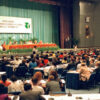
Gender Equality: The Key to Peace, Prosperity, and Sustainability
On Monday, three decades on from the historic Fourth World Conference on Women, the General Assembly meets to discuss recommitting to, resourcing, and accelerating the implementation of the 1995 Beijing Platform for Action – an historic agreement which mapped the path to achieving gender equality and the empowerment of all women and girls.
A Meeting of Over 150 World Leaders Under One Roof—& the Day UN Came Under a Terror Attack
When the high-level meeting of the General Assembly takes place, September 22-30—with over 150 world political leaders in town--the UN will be in a locked down mode with extra tight security. With a rash of threats and political killings in the US—including an attempted assassination of Donald Trump when he was campaigning for the US presidency in July 2024-- the list continues.
Nepal’s Gen Z protest: How Fake News Tried to Rewrite a Revolution
Claims that Ravi Laxmi Chitrakar, wife of former Nepali Prime Minister Jhala Nath Khanal, was burned alive in her home—fake. The reports of an angry mob destroying and vandalizing the Pashupatinath Temple—fake. Allegations that protesters were demanding a Hindu nation in Nepal—fake. As Kathmandu and other Nepali cities erupted in unrest last week, the fire of fake news spread just as fiercely across Nepal and into neighboring India and the rest of the world.
Nepal Faces Political Crisis after Deadly Gen-Z Protests
Nepal entered into a new era of constitutional and political crisis after deadly protests by the deeply frustrated young generation (Gen-Z). Prime Minister KP Sharma Oli resigned on Tuesday after protests grew out of control.
‘Angola produces large quantities of oil and diamonds, yet most people don’t see the benefits’
CIVICUS discusses recent protests in Angola with Florindo Chivucute, founder and executive director of Friends of Angola, a US-based civil society organisation established in 2014 that works to promote democracy, human rights and good governance in Angola.

Togo’s Young Generation Challenges Six Decades of Dynastic Rule
In late June, thousands flooded the streets of Lomé, Togo’s capital, presenting the ruling dynasty with its biggest challenge in decades. The catalyst was constitutional manoeuvring by President Faure Gnassingbé to maintain his grip on power. In March 2024, his government pushed through constitutional amendments that transformed Togo from a presidential to a parliamentary system. This created a new position, the President of the Council of Ministers – effectively Togo’s chief executive – elected by parliament rather than by popular vote, and with no term limits. Gnassingbé assumed this new role in May, making it abundantly clear the changes were only about keeping him in power indefinitely.
Sexual Exploitation & Abuse at UN Reveals “Significant Underreporting”
A system-wide UN survey of sexual exploitation and abuse (SEA), described as “grave violations of human rights”, has revealed that in 2024, there were 675 allegations reported. A UN message to staffers last week says this is “widely believed” to be “significant underreporting” because the real numbers may be much higher.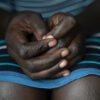
Accountability on Trial: UN’s Unabated SEA Crisis Erodes Trust in World Body’s Leadership
After taking oath of office in December 2016 as Secretary-General, Mr. Antonio Guterres described the eradication of sexual offenses by UN peacekeeping and all other UN personnel as the first item on his reform agenda.
Will the US Blacklist Bar Political Leaders & Delegates from UN’s 80th Anniversary Summit?
When the 193-member General Assembly commemorates the UN’s 80th anniversary during a high-level meeting in mid-September, how many political leaders and delegates will be barred from entering the United States --despite the 1947 US-UN Host Country Agreement?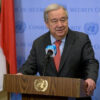
UN80: From “Less-with-Less” to “More-with-Less”
With the ink hardly dry on the Pact for the Future outcome for modernizing global governance from last September’s Summit of the Future, the United Nations’ long-standing financial crisis has morphed into an extreme liquidity crisis.
‘We Must Build Healthier Digital Environments Where Reliable Information Plays a Leading Role’
CIVICUS discusses Bolivia’s upcoming presidential election with Juan Carlos Uribe and Lucas Illanes from ChequeaBolivia, an initiative that monitors and verifies social media content.
The Constitution Isn’t Optional: Why USA Belongs on the CIVICUS Monitor Watchlist
Successive United States governments have prided themselves on being governed by the Constitution of 1788. The First Amendment introduced in 1791 lays the foundations for secularism, respect for fundamental freedoms, and the right to seek redress of grievances.
COMMENTARY: Trump National Monument at Mount Rushmore
President Donald Trump reportedly wants to add his own head to Mount Rushmore National Memorial. But the National Park Service says there’s no room next to the four current presidents: George Washington, Thomas Jefferson, Abraham Lincoln and Theodore Roosevelt. [Branch & White 6/27/2025] Here’s an innovative proposal for how to immortalize him right there in the Black Hills of South Dakota.
Price and Power of Freedom: Celebrating Nelson Mandela International Day
The United Nations celebrated Nelson Mandela International Day in honor of the activist and politician’s lifelong commitment to peace and democracy.« Previous Page — Next Page »


The Week with IPS

NEXT STOP - SDGs
Tracking global progress towards a sustainable world
Tracking global progress towards a sustainable world
