Languages
Wednesday, September 2, 2026



News and Views from the Global South
Democracy

The Emerging Quad 3.0: Prioritizing a Hard Security Agenda
On 1 July, the foreign ministers of the Quad—Australia, India, Japan and the US—convened for the second time this year in Washington, DC. While the first meeting, held just hours after the inauguration of Donald Trump as the 47th President of the United States, signaled the Quad's significance to the new US administration, the second meeting indicates that the Quad is entering a new phase with a renewed focus on a strategic and hard security agenda, weaning itself away from its non-traditional security priorities. This presents a departure from its previous versions: the first Quad, which collapsed in 2007, centred on humanitarian assistance and disaster relief (HADR), and Quad 2.0, which was reinstated in 2017, gradually developed a broad public goods agenda.
Gender-Discriminatory Nationality Laws are Fueling Poverty & Violence Against Women
Around a quarter of countries still have nationality laws that deny women the same rights as men to acquire, retain, or change their citizenship, or to pass citizenship onto their children or foreign spouses.
NATO’s Trillion-dollar Gamble: The Dangers of Defence Without Accountability
Donald Trump’s bullying tactics ahead of NATO’s annual summit, held in The Hague in June, worked spectacularly. By threatening to redefine NATO’s article 5 – the collective defence provision that has anchored western security since 1949 – Trump won commitments from NATO allies to almost triple their defence spending to five per cent of GDP by 2035. European defence budgets will balloon from around US$500 billion to over US$1 trillion annually, essentially matching US spending levels.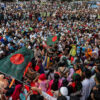
Bangladesh’s Democratic Promise Hangs in the Balance
When Bangladesh’s streets erupted in protest in mid-2024, few could have predicted how swiftly Sheikh Hasina’s regime would crumble. The ousting of the prime minister last August, after years of mounting authoritarianism and growing discontent, was heralded as a historic opportunity for democratic renewal. Almost a year on, the question remains whether Bangladesh is genuinely evolving towards democracy, or if one form of repression is replacing another.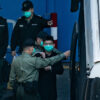
The Silencing of Hong Kong
Joshua Wong sits in a maximum-security prison cell, knowing the Hong Kong authorities are determined to silence him forever. On 6 June, police arrived at Stanley Prison bringing fresh charges that could see the high-profile democracy campaigner imprisoned for life. This is the reality of Hong Kong: even when behind bars, activists can be considered too dangerous ever to be freed.
Democracy under Attack: Why the World Needs a New UN Special Rapporteur
When tanks rolled through Myanmar’s streets in 2021, civil society groups worldwide sounded the alarm. When Viktor Orbán systematically dismantled Hungary’s free press, democracy activists demanded international action. And as authoritarianism returns to Tanzania ahead of elections, it’s once again civil society calling for democratic freedoms to be respected.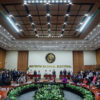
Mexico’s Judicial Elections: A Democratic Mirage
On 1 June, Mexico made history by becoming the only country in the world to elect all its judges by popular vote, from local magistrates to Supreme Court justices. This unprecedented process saw Mexican voters choose candidates for 881 federal judicial positions, including all nine Supreme Court justices, plus thousands at local levels across 19 states. Yet what the government heralded as a transformation that made Mexico the ‘the most democratic country in the world’ may turn out to be a dangerous deception.
Poland’s Democratic Deadlock
Poland’s embattled Prime Minister Donald Tusk emerged bruised but still standing after his government survived a parliamentary vote of confidence on 11 June. He’d called the vote, which he won by 243 to 210, just days after the presidential candidate of his Civic Platform (PO) party suffered an unexpected defeat.
Why Peacebuilding Needs a New Global Agenda
 It has been 33 years since peacebuilding was formally recognized within the United Nations system, by the then UN Secretary-General Boutros-Ghali, who defined it as a long-term structural work aimed at preventing the recurrence of violence, setting the stage for the UN’s ongoing efforts to address the root cause of conflict and not just its consequences. “Post-conflict peacebuilding is the action to identify and support structures which will tend to strengthen and solidify peace in order to avoid a relapse into conflict,” Boutros-Ghali said.
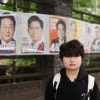
South Korea‘s Democracy Renewed
On a resounding 79.4 per cent turnout, South Korean voters have delivered a clear mandate for change. Lee Jae-myung of the centrist Democratic Party of Korea (DPK) decisively won the 3 June election, becoming the country’s new president after a turbulent time for South Korean democracy.
Tanzania and Uganda: Bad Places To Be an Opposition Politician
In East Africa's Tanzania and Uganda, political tensions are rising as they prepare for the next elections. Tanzania goes to the polls in October 2025, while Uganda’s presidential and general elections will take place early in 2026.
‘Live Facial Recognition Treats Everyone as a Potential Suspect, Undermining Privacy and Eroding Presumed Innocence’
CIVICUS discusses the dangers of live facial recognition technology with Madeleine Stone, Senior Advocacy Officer at Big Brother Watch, a civil society organisation that campaigns against mass surveillance and for digital rights in the UK.

Regaining Progress on Birth Registration Is Critical to Child Protection
Registering the birth of a newborn, which is taken for granted in many countries, has profound lifelong repercussions for a child’s health, protection, and well-being. But after initially increasing this century, the global birth registration rate has declined in the past ten years, with some countries in the Pacific and Sub-Saharan Africa facing significant challenges. Embracing new registration technologies, increasing political will, and increasing parents’ understanding of its importance are paramount to reversing the trend.
UN vs US: the Battle for Transgender Rights
As the Trump administration continues its battle against the United Nations-- over war crimes, human rights, and the climate treaty, among others -- they also remain sharply divided over Lesbian, Gay, Bisexual, Transgender, and Intersex. (LGBTI) rights. The US has taken several actions, some by Executive Order, related to transgender people, including restricting Access to Gender-Affirming Care, banning Transgender Individuals from Military Service, rescinding Protections for Transgender Students and ending Federal Funding for gender Ideology.
Portugal: No Longer an Exception to Europe’s Far-right Rise
For decades, Portugal stood as a beacon of democratic stability in an increasingly unsettled Europe. While neighbours grappled with political fragmentation and the rise of far-right movements, Portugal maintained its two-party system, a testament to the enduring legacy of the 1974 Carnation Revolution that peacefully transitioned the country from dictatorship to democracy. It was long believed that Portugal’s extensive pre-revolution experience of repressive right-wing rule had effectively inoculated it against far-right politics, but that assumption is now demonstrable outdated. An era of exceptionalism ended on 18 May, when the far-right Chega party secured 22.8 per cent of the vote and 60 parliamentary seats, becoming the country’s main opposition force.
Rethinking Digital Platform Design: A Systems Approach
A better internet that supports democracy rather than undermines it is possible. In 2025, we stand at a crossroads in the digital era. Our platforms have become the new public squares, but rather than fostering democracy and dignity, many are optimized for manipulation, division, and profit. The Council on Technology and Social Cohesion's "Blueprint on Prosocial Tech Design Governance" offers a systems-level response to this crisis.
The Africa Our Youth and Women Want
History rarely remembers those who waited quietly. In Africa, it is those who dare to act, to resist, to lead, and to dream aloud who have shaped the continent’s most defining moments.
Hide the Numbers, Control the Message
In the past, Shakespeare famously wrote in his play Henry VI that the first step for those seeking power was to “kill off the lawyers”. Today, the first step taken by those seeking power is to hide the numbers and control the message.
Romania’s Electoral Crisis: A Warning Shot for Democracy in the Digital Age
On 6 December 2024, Romania’s Constitutional Court made an unprecedented decision: with just two days to go before a presidential runoff expected to bring a far-right, Russia-sympathising candidate to power, the court took the extraordinary step of annulling the election due to evidence of massive Russian interference. It was the first time an EU member state has cancelled an election over social media disinformation. It may not be the last.
Civilians Face Humanitarian Disaster in Great Lakes, Horn of Africa Conflicts
Political instability and conflicts in the Great Lakes, the Horn of Africa, Sudan, and South Sudan have led to massive displacements and civilian suffering, and because the whole region is in crisis, the civilian population has few places to find refuge.
From Grief to Action: Demands for Democratic Renewal in the Balkans
Three catastrophic events in the Balkans have sparked powerful movements for systemic change. A train collision that killed 57 people in Greece, a nightclub fire that claimed 59 young lives in North Macedonia and a collapsed railway station roof that left 15 dead in Serbia have ignited sustained anti-corruption protests in all three countries. These weren’t random tragedies but the culmination of systemic failure – neglected safety regulations, illegally issued permits and compromised oversight – with corruption the common denominator.« Previous Page — Next Page »


The Week with IPS

NEXT STOP - SDGs
Tracking global progress towards a sustainable world
Tracking global progress towards a sustainable world
