Languages
Wednesday, November 11, 2026



News and Views from the Global South
Democracy

Opinion: Foreign Policy is in the Hands of Sleepwalkers
The United Kingdom has been accused of “sleepwalking” into the Ukraine crisis – and the accusation comes from no less than the House of Lords, not usually considered a place of critical analysis.
Opinion: Sharing the Vision of a Changed World
This year has many initiatives taking place in the realm of women’s leadership, but one platform and movement in particular is standing out, and people are noticing. We are the founders of IMPACT Leadership 21, leadership architects for inclusive, high growth economies.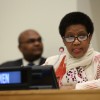
CSW 59 Wraps up as Delegates Look Towards 2016
The Commission on the Status of Women, one of the biggest events on the calendar for United Nations headquarters in New York City, is over for another year.
Opinion: Measurement Matters – Civic Space and the Post-2015 Framework
For those of us interested in a vibrant civil society, it seems to be best of times and the worst of times.
Opinion: ‘We Owe It to More Than Half of the Global Population to Do a Better Job’
Undoubtedly, we are at a crucial time in the advancement of gender equality.
Women in the Philippines at the Forefront of the Health Food Movement
When Tinay Alterado’s team from ARUGAAN, an organisation of women healthcare advocates, visited Eastern Visayas, a region of the Philippines devastated by Typhoon Haiyan in November 2013, they noticed that the relief and rescue sites were flooded with donated milk formula, which nursing mothers were feeding to their babies in vast quantities.
World’s Richest One Percent Undermine Fight Against Economic Inequalities
The growing economic inequalities between rich and poor – and the lopsided concentration of wealth and power in the hands of the world’s one percent - are undermining international efforts to fight global poverty, environmental degradation and social injustice, according to a civil society alliance.
Nobel Peace Laureate Calls for Global Human Compassion to Combat Child Slavery
Nobel Peace Laureate Kailash Satyarthi has called for globalised human compassion to combat the global and persistent problems of child labour and child slavery.
Unseen and Unheard: Afghan Baloch People Speak Up
Balochistan, divided by the borders of Iran, Pakistan and Afghanistan, is a vast swathe of land the size of France. It boasts enormous deposits of gas, gold and copper, untapped sources of oil and uranium, as well as a thousand kilometres of coastline near the entrance to the Strait of Hormuz.
Unseen and Unheard: Afghan Baloch People Speak Up
 Balochistan, divided by the borders of Iran, Pakistan and Afghanistan, is a vast swathe of land the size of France. It boasts enormous deposits of gas, gold and copper, untapped sources of oil and uranium, as well as a thousand kilometres of coastline near the entrance to the Strait of Hormuz.
Despite the wealth under their sandals, the Baloch people inhabit the most underdeveloped regions of their respective countries; Afghanistan is no exception.

Opinion: Rape in Conflict: Speaking Out for What’s Right
Earlier this month, President Barack Obama delivered an impassioned speech marking the 50th Anniversary of the civil rights march from Selma to Montgomery, Alabama and the bloody attack on civil rights marchers by police.Pro-Democracy Activists at U.S. Event Jailed in DR Congo
Journalists, activists, hip hop artists and a United States diplomat were rounded up by police at a pro-democracy event on Sunday in Kinshasa in the Democratic Republic of the Congo, sponsored in part by the U.S. government. Security forces charged them with threatening stability, according to a government spokesperson.Sparks Fly As Sierra Leone’s VP Is Expelled From Party
An internal war is roiling the administration of President Ernest Bai Koroma with the Vice President, Samuel Sam-Sumana, at dead center. The VP, expelled last week from the ruling All People’s Congress (APC), is said to be forming a rival political movement from his home district in Kono, the country’s raw diamond capital, and an election decider.
Veto Costs Lives as Syrian Civil War Passes Deadly Milestone
As the long drawn-out Syrian military conflict passed a four-year milestone over the weekend, the New York-based Global Centre for the Responsibility to Protect (R2P) summed it up in a striking headline: 4 years, 4 vetoes, 220,000 dead.Women Often Forgotten In Cases Of Forced Disappearance
Governments must do more to address the impacts of forced disappearances of women, according to an international justice report released Monday.U.N. Panel to Investigate Dag Hammarskjöld’s Death
United Nations Secretary-General Ban Ki-moon, on Monday, appointed an independent panel of experts to examine new information that has emerged from the investigation into the death of former U.N. Secretary-General Dag Hammarskjöld.
Four Ways Women Bring Lasting Peace to the Table
2015 marks anniversaries for two significant commitments made to increasing women’s participation at peace tables.
Indonesia’s Palm Oil Industry in Need of a Makeover
Over the past three decades, 50 percent of the 544,150 square kilometres that comprise Kalimantan, the Indonesian portion of the island of Borneo, has been taken over by the palm oil industry.
Opinion: Gender Equality, the Last Big Poverty Challenge
It is estimated that women account for two-thirds of the 1.4 billion people currently living in extreme poverty. They also make up 60 per cent of the world’s 572 million working poor.
Canada’s Waste Still Rotting in a Philippine Port
Filipino Catholic priest and activist Reverend Father Robert Reyes, dubbed by media as the “running priest”, joined a protest of environmental and public health activists last week by running along the streets of the Makati Business District, the Philippines’ financial capital, to urge the government to immediately re-export the 50 Canadian containers filled with hazardous wastes that have been in the Port of Manila for 600 days now.
More Fighter Jets in Nicaragua, Second-Poorest Country in the Americas
Nicaragua, the second-poorest country in the Americas, is tapping into its depleted coffers to upgrade its ageing military fleet with costly new equipment from Russia – a move that has sparked controversy at home and concern among the country’s Central American neighbours.« Previous Page — Next Page »





The Week with IPS

NEXT STOP - SDGs
Tracking global progress towards a sustainable world
Tracking global progress towards a sustainable world
