Languages
Wednesday, November 11, 2026



News and Views from the Global South
Democracy

Meet the 10 Women Who Will Stop at Nothing
On Apr. 6, 2013, Nadia Sharmeen, a crime reporter, was assigned to cover a rally organised by Hefazat-e-Islam, an association of fundamentalist Islamic groups in Bangladesh whose demands included a call to revoke the proposed National Women Development Policy.
Jailed Journalist’s Family Looks to Iran’s New Year with Hope
The lawyer for Jason Rezaian, the Iranian-American Washington Post reporter detained in Tehran since Jul. 22, 2014, has officially requested temporary bail for her client during Nowruz, the beginning of the Persian calendar year when some prisoners have customarily been granted furlough requests.
Opinion: The ‘Acapulco Paradox’ – Two Parallel Worlds Each Going Their Own Way
The world is clearly splitting into two parallel worlds, with each going their own way, in what we could call the ‘Acapulco paradox’.Women Walk for Peace in the Korean Peninsula
A group of international women peacemakers announced on Wednesday at the United Nations their intention to walk across the two mile De-Militarized Zone (DMZ), in a call for peace and reunification of Korea.
Humanitarian Aid Under Fire Calls for New Strategies
In the face of the growing number of crises taking place at the same time worldwide, humanitarian aid organisations – many of which have already reached their financial and logistic limits – are in desperate need of global coordination.
What’s Driving the Merciless Asylum Seeker Policies in Australia?
As conflicts in the Middle East and elsewhere pushed the number of refugees to 13 million last year, the international community is struggling to shoulder the humanitarian responsibility of protecting those fleeing violence and persecution in their homelands.Wife of Former Ivorian President Gets 20 Years for Inciting Election Violence
The wife of former president Laurent Gbagbo of Ivory Coast will serve jail time for inciting election violence in the 2011 post-election crisis.
Coal: Burning Up Australia’s Future
With less than a year to go before the United Nation’s annual climate change meeting scheduled to take place in Paris in November 2015, citizens and civil society groups are pushing their elected leaders to take stock of national commitments to lower carbon emissions in a bid to cap runaway global warming.
Women Make Progress in Politics, But Glass Ceiling Remains Unbreakable
Secretary-General Ban Ki-moon, a creature of the U.N.’s 193 member states and who serves at their will and pleasure, did not hesitate to fault 13 countries that kept women out of their national parliaments and governments in power.
From the Mountains to the Sea, Timorese Women Fight for More
In Timor-Leste, the gap between rich and poor is most keenly felt by rural women and children. But while women are working hard to help rebuild Timor-Leste, their contributions are not always recognised, in a country where men’s narratives still heavily dominate.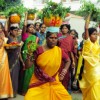
The 15 Journalists Putting Women’s Rights on the Front Page
Media coverage of maternal, sexual and reproductive health rights is crucial to achieving international development goals, yet journalists covering these issues often face significant challenges.
World Misses Its Potential by Excluding 50 Percent of Its People
The meeting is billed as one of the biggest single gatherings of women activists under one roof.Prominent Lawyer Defending the Poor Gunned Down in Mozambique
As billions pour into Mozambique from foreign investors scooping up fields of coal and natural gas, the signs of newfound wealth are impossible to miss.Burundi-Watchers See Erosion of Human Rights and Civic Freedoms
The bad old days of the 1980s and 1990s when Burundi was widely considered a police state may be making a comeback.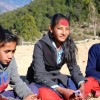
By Girls, For Girls – Nepal’s Teenagers Say No to Child Marriage
If not for a group of her school friends coming to her rescue, Shradha Nepali would have become a bride at the tender age of 14.Syrians “Have No Faith” in International Community to Solve Human Rights Crisis
Syrian citizens “have no faith” in the international community to solve the chaos and war raging across their country, according to a prominent human rights defender.
Gaza Reconstruction, Hampered by Israeli Blockade, May Take 100 Years, Say Aid Agencies
Despite all the political hoopla surrounding an international pledging conference in Cairo last October to help rebuild Gaza, the reconstruction of the Israeli-devastated territory is apparently moving at the pace of paralytic snail.
For Women in Asia, ‘Home’ Is a Battleground
Nearly half of the four billion people who reside in the Asia-Pacific region are women. They comprise two-thirds of the region’s poor, with millions either confined to their homes or pushed into the informal labour market where they work without any safeguards for paltry daily wages. Millions more become victims of trafficking and are forced into prostitution or sexual slavery.
U.N. Member States Accused of Cherry-Picking Human Rights
The United Nations High Commissioner for Human Rights (UNHCHR) Zeid Ra’ad Al Hussein has criticised member states for ‘cherry-picking’ human rights – advocating some and openly violating others – perhaps to suit their own national or political interests.Namibian President Wins $5 Million African Leadership Prize
Outgoing Namibian President Hifikepunye Pohamba was Monday named winner of the Ibrahim Prize for Achievement in African Leadership, believed to be the most lucrative individual award in the world.

Tobacco Workers in Cuba Dubious About Opening of U.S. Market
“We have to wait and see,” “There isn’t a lot of talk about it,” are the responses from tobacco workers in this rural area in western Cuba when asked about the prospect of an opening of the U.S. market to Cuban cigars.« Previous Page — Next Page »





The Week with IPS

NEXT STOP - SDGs
Tracking global progress towards a sustainable world
Tracking global progress towards a sustainable world
