Languages
Wednesday, November 11, 2026



News and Views from the Global South
Development & Aid
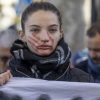
The Global Femicide Epidemic
‘Per Giulia e per tutte’ (‘For Giulia and for all’) echoed through the streets of Italy in mid-November 2023. Thousands of women, activists and supporters gathered to protest and show solidarity with the 22-year-old student Giulia Cecchettin, who was killed by her ex-boyfriend on the night of 11 November 2023.
The Impact of Climate Migration on Developing Nations
As the world is still gearing up to welcome 2024, let us find a moment to reflect on some of the key trends of the past year and pursue now to embrace the path towards hope and promise for everyone, everywhere.
World Bank Enables Foreign Aid Theft
World Bank aid encourages governments to enable illicit financial outflows to offshore tax havens by reducing capital controls, thus draining precious foreign exchange and government resources.
Humanitarian Cash Not Accelerating Aid Delivery in Nepal’s Earthquake Response
Delivering humanitarian assistance in the form of cash sounds great: recipients get to choose exactly how to spend their money and aid organizations can respond faster and better track their giving.
New Era: Unlocking Africa’s Agriculture Potential Through CGIAR TAAT Model
As hunger and food insecurity deepen, Africa is confronting an unprecedented food crisis. Estimates show that nearly 282 million people on the continent, or 20 percent of the population, are undernourished. Numerous challenges across the African continent threaten the race to achieve food security; research and innovative strategies are urgently needed to transform current systems as they are inadequate to address the food crisis.
AI Will Transform the Global Economy: Let’s Make Sure It Benefits Humanity
We are on the brink of a technological revolution that could jumpstart productivity, boost global growth and raise incomes around the world. Yet it could also replace jobs and deepen inequality.
With Attack on Yemen, the U.S. Is Shameless: “We Make the Rules, We Break the Rules”
Have you heard the one about the U.S. government wanting a “rules-based international order”? It’s grimly laughable, but the nation’s media outlets routinely take such claims seriously and credulously. Overall, the default assumption is that top officials in Washington are reluctant to go to war, and do so only as a last resort.
The World’s Richest Men Leave Women Far Behind—Amid Rising Economic Inequalities
The world’s rich are getting progressively richer while the world’s poor continue to be increasingly poorer. In a new report released January 15, Oxfam says the wealth of the world’s five richest men has doubled since 2020 –even as five billion people were made poorer in a “decade of division.”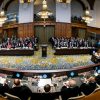
South Africa’s Genocide Case Flawed, Premature, Inaccurate, says Israel
Israel disputed both South Africa’s jurisdiction and the provisional measures that it demanded the International Court of Justice impose on the State of Israel to prevent genocide. Israel’s co-agent, Tal Becker, said in his opening address that Jewish people’s experience of the Holocaust meant that it was among “among the first states to ratify the Genocide Convention, without reservation, and to incorporate its provisions in its domestic legislation. For some, the promise of ‘never again for all people’ is a slogan. For Israel, it is the highest moral obligation.”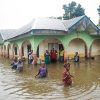
Advanced Economies Must Let the IMF Play a Productive Role on Climate
The world faces the existential threat of a climate change crisis, and it is becoming increasingly clear that the outcome of the latest UN climate summit, COP28 — hosted as it was by the CEO of one of the world’s largest oil companies, and filled with a record number of fossil fuel lobbyists — is not going to do much to change that.
Palestine: Nothing Can Justify Genocide, It’s Not the Time for Silence
Far from the mayhem, destruction, and humanitarian crisis in Gaza, the South African government argued in the International Court of Justice in the Hague that it had an obligation and a right to bring a case to halt a genocide by the Israeli government and its military.
South Africa’s Genocide Case Against Israel at the International Court of Justice
The Institute for Middle East Understanding (IMEU) published the following Q&A with human rights attorney and political analyst Diana Buttu on South Africa’s genocide case against Israel at the International Court of Justice ICJ). The court is scheduled to hold hearings on the petition January 11-12.
Where Does the International Criminal Court Stand on Charges of Mass Killings in Gaza?
The continued devastation of Gaza by Israel has triggered widespread charges of war crimes, genocide, forced displacement, ethnic cleansing, starvation as a weapon of war and mass killings of civilians – over 22,000 at last count—compared to 1,200 killings by Hamas. These accusations have prompted growing demands for intervention by the International Criminal Court (ICC) in The Hague, which has remained silent while its Prosecutor Karim Khan is accused of double standards and playing politics.
How Afghan Women Connect and Learn in the Face of Taliban Restrictions
The prevalence of social media usage among Afghan women and girls has surged since the Taliban assumed control of the country in August 2021. Faced with restrictions confining them to their homes, many women find solace in the messaging app WhatsApp.
Assessing Public Debt Sustainability with a Long-Term View
When students from poor families in developing countries are offered places at prestigious universities, they are often faced with a tough choice. One option is to accept the offer and create more debt, likely through borrowing from a loan shark, to pay for tuition fees. Another option is to forgo this opportunity, which could be the first in family generations, and start working as low-wage workers.
Cooperative Farming Makes Bangladesh’s Coastal Women Farmers Climate-Resilient
In the past, Salma Begum, 40, lost her crops every year due to natural disasters. She lives with her five-member family in Ashabaria village under Rangabali upazila, a remote coastal island in Patuakhali district. “We did not have enough livelihood options in the coastal area where we live. Cyclones, coastal floods, and tidal surges have been having adverse impacts on agriculture, making it difficult for my wage-laborer husband to find work regularly,” she said.
Ready or Not, America, Your Population Is Also Aging
As the signs of population aging are crystal clear and widely available, many countries are taking steps to address the far-reaching effects of that momentous demographic trend. A notable exception is the United States, a country that seems neither ready nor willing to deal with the aging of its population.
From Chemical Engineer to Climate Justice Avenger: A Journey with Yamide Dagnet
As a child on the French-Caribbean island of Guadeloupe, Yamide Dagnet dreamed of launching rockets into space. She stuck to science, discovering her path in chemical engineering. She became a scientist focused on critical reactions to solving real-world problems like improving water quality in the United Kingdom.
Technology Transfer Critical to Revolutionizing Africa’s Pharma Industry
An agreement signed between the Rwandan government and the Africa Pharmaceutical Technology Foundation (APTF) gives impetus to Africa’s domestic industry with the hope of helping the continent tackle vaccine inequity and fill the critical gap in vaccine manufacturing.
Time to End the Israeli-Palestinian Conflict with a Two State-One Nation Solution
Since October 9 2023, Israel’s war on Gaza has displaced over 1.8 million, according to UN estimates and killed almost 22,000 people in Gaza as of 2 January 2024, most of them women and children, according to the Hamas-run territory’s health ministry. Hamas' October 7 surprise attacks on Israel killed 1,200 people.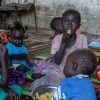
2024 Demands Swift Action to Stem Sudan’s Ruinous Conflict
Nearly nine months of war have tipped Sudan into a downward spiral that only grows more ruinous by the day. As the conflict spreads, human suffering is deepening, humanitarian access is shrinking, and hope is dwindling. This cannot continue.« Previous Page — Next Page »





 2026 High-level Political Forum on Sustainable Development. Credit: UN Photo/Eskinder Debebe
In 2015, the United Nations and its Member States adopted the Sustainable Development Goals (SDGs) in an effort to make the world a more sustainable and peaceful place for future generations. Progress on the 17 SDGs has been uneven, and inequality persists across the globe. 10 years after adoption, the 2025 UN SDGs Report revealed that only 35% of the SDG targets are on track, with more than half moving too slowly, and 18% moving backwards from the 2015 baseline. Poverty remains one of the world’s most pressing issues, with hunger, violence, and inequality impeding the opportunities for all people to achieve success. In September 2024, the United Nations Summit of the Future introduced a new goal: to eradicate global poverty by 2030, ensure universal rights to basic services, and increase the overall standard of living in terms of industrialization, economic well-being, citizen health, and literacy. Furthermore, recent shifts in United States foreign aid policy – notably, major budget cuts to USAID and the termination of thousands of development programmes– have severely threatened vital lifelines of financial aid to impoverished communities around the world. Additionally, the United States’ withdrawal from the Paris Climate Agreement has undercut international efforts at sustainable development. With the upcoming 2030 deadline, the UN Secretary-General has called for urgent multilateralism across six priority areas: food systems, energy, digital connectivity, education, jobs and social protection, and climate and biodiversity. IPS sheds light on marginalized communities that struggle on a daily basis to survive and have their stories heard and respected.
Updated by Yilan Batista and Shuli Wong August 2026

The Week with IPS

NEXT STOP - SDGs
Tracking global progress towards a sustainable world
Tracking global progress towards a sustainable world
