Languages
Wednesday, November 11, 2026



News and Views from the Global South
Development & Aid

Homeless Families Now a Growing Issue in Zimbabwe
It is do or die on the streets of Zimbabwe as homeless families battle for survival solely depending on begging. Such is the life of 69-year-old Gladys Mugabe, who lives with her disabled son in Harare Gardens, a well-known recreational park in the Zimbabwean capital, Harare. Over the decades, Zimbabwe’s economy has underperformed. It started in 2000 with the departure of white commercial farmers, and the country has experienced subsequent periods of hyperinflation, which the International Monetary Fund estimated reached 172% in July last year.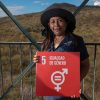
There Is No Democracy Without Gender Equality
Violence against women and girls is one of the most widespread and persistent abuses of fundamental rights at a global level that, to a certain extent, derives from what we consider "normal" in our societies. In addition to firmly condemning that every three women in the world suffer from physical or sexual violence, we must question what we are normalizing as a society for this to happen.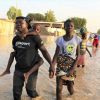
Nigeria Prioritizes Climate Action to Mitigate Natural Disasters
In 2022 alone, flooding killed at least 662 people, injured 3,174, displaced about 2.5 million, and destroyed 200,000 houses individuals. As far back as 2012, the World Bank reported that erosion was affecting over 6,000 square kilometres of land in the country, with about 3,400 square kilometres highly exposed.
Europe’s Shift to the Far Right and its Impact on Immigration
The recent elections in the Netherlands signals the increasing power of the far right in Europe. The populist party of Geert Wilders, the Party for Freedom, won a decisive, albeit unexpected, victory taking 37 seats out the 150 seat in parliament. Wilders will likely be the head of the next Government. His policies include stopping all immigration into the Netherlands, holding a referendum on leaving the EU, and banning mosques and the Quran.
US Hypocrisy Over Russian and Israeli Killings
When US President Joe Biden lambasted “the largest aerial assault,” which hit “a maternity hospital, a shopping mall and residential areas killing innocent people”, he was not talking of the devastating Israeli attacks on Gaza but criticizing the most recent Russian military assault on Ukraine.
Amidst a Horrendous 2023, Civil Society is Fighting Back Society
The year 2023 has brought so much tragedy, with incomprehensible loss of lives, whether from wars or devastating ‘natural’ disasters, while our planet has seen yet more records broken as our climate catastrophe worsens. And so as the clock ticks towards the (mostly western) New Year, readers are traditionally subjected by media outlets like ours to the 'yearender'—usually a roundup of main events over the previous 12 months, one horror often overshadowed by the next.
Catastrophic Shortage of Food in Gaza—Starvation as a Weapon of War
As the killings of civilians in Gaza rose to over 20,000, the besieged city—which has been virtually reduced to rubble by Israeli bombardments—is also being ravaged by hunger and starvation. In new estimates released on December 21, the Integrated Food Security Phase Classification (IPC), a global partnership that includes the World Health Organization (WHO), said Gaza is facing “catastrophic levels of food insecurity,” with the risk of famine “increasing each day.”
South Asian Women, Girls Need Responsive Legal System to Gender Violence
Criminal justice systems in South Asia are failing women, despite stark statistics on the prevalence of violence. WHO estimates translate to one in every two women and girls in the region experiencing violence daily.
What’s in Store for Indian Farmers After Cop 28’s Conclusion in Dubai?
Durga Das*, a 59-year-old farmer from the Indian state of Maharashtra, committed suicide last year by ingesting a poisonous substance. He was unable to repay the loan he had taken from the bank for the renovation of his single-story house. This year, his 32-year-old son, Pradeep Das, a father of two children, is equally desperate. The family owns half an acre of cultivated land where they grow cotton. The harvest has been devastated due to intense heat waves, leaving farmers like Dass and his son Pradeep in dire straits. The loan the family had taken is yet to be paid, and the land they had mortgaged in the bank is about to be confiscated. This means no crops, no cultivation, no business, and no food.
The Opaque Chain of Electric Cars Assembled in Mexico
The city of Austin, Texas, on the U.S.-Mexico border, had 945,000 residents in 2021 and on average each household owned two cars, hundreds of them electric. Among the manufacturers of these electric vehicles are companies such as the US Tesla, Ford and General Motors (GM).
Saving Energy, Saving Forests: How Kindle Stoves Are Changing Women’s Lives
Five years ago, farmer Sehlisiwe Sibanda would walk into a nearby forested area to fill a scotch cart with huge wood logs for cooking and heating; a pile of firewood would last her a week during the summer. But now she does not need a cartful of huge logs. Small branches and twigs are enough to last for more than a month.
Latin America Can Boost Economic Growth by Reducing Crime
Crime and violence have long been a top-of-mind concern for households across Latin America and the Caribbean. The region accounts for nearly half of the world's intentional homicide victims, despite representing just over 8 percent of the global population, United Nations data show.
World Bank Enables Private Capture of Profits, Public Resources
The World Bank insists commercial finance is necessary for achieving economic recovery and the Sustainable Development Goals (SDGs), but does little to ensure profit-hungry commercial finance serves the public interest. By failing to address pressing challenges within their purview, the second-ever Bretton Woods institutions’ (BWIs) annual meetings on the African continent, in Marrakech in October 2023, set the developing world even further back.
Construction of New Megaport in Peru Ignores Complaints from Local Residents
"We have always lived a very quiet life here, but everything has changed since the construction of the multi-purpose port began a few years ago," said Miriam Arce, a neighborhood leader in this municipality 80 kilometers north of the Peruvian capital, where the new port is projected to become the epicenter of trade between China and South American countries.
Myanmar Refugees Build Schools, Cafes and Hope in Mae Sot
The typical image of a refugee is a poor person with their hands out asking for aid. The Burmese refugees in Mae Sot on the Thai-Myanmar border defy that stereotype. Many are middle-class, educated urbanites with skills and plenty of initiative. After standing up to the Burmese military and suffering for it, they left everything and fled for their lives to Mae Sot where they continued their struggle. Despite intimidation, exploitation by some Thai authorities, and living in fear without documentation, they have achieved a lot in under two years. Their purpose is to support their community and the revolution in a variety of ways through their resilience, commitment, ability and innovation. Some refugees have set up businesses such as cafes, restaurants, bars, shops, hairdressers, a farm and cross-border trade. While they are for-profit, they also provide employment for other refugees and donate to the most vulnerable. One café owner said, “If I am lucky, I break even but the café gives refugees employment, keeps them occupied and is a place where Burmese can meet and relax.” [caption id="attachment_183577" align="alignleft" width="630"]Paul Greening is an ex-UN senior staff officer with over 20 years of experience in six Asian countries working for six UN agencies and four INGOs. He worked in Sittwe, Rakhine State for the International Organization for Migration (IOM) from 2017 to 2020 and has been living in Mae Sot for two years. First published by Myanmar news outlet Irrawady

Fundraising in Africa: How Looking Inward Makes the Difference
Across Africa, non-governmental organisations (NGOs) bearing different monikers such as community-based organisations (CBOs), civil society organisations (CSOs) and nonprofits have long borne the duty of designing and implementing developmental interventions to address varying challenges.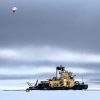
Watching the Arctic Melt, Meteorologist’s Experience on Icebreaker Oden
Conflicting emotions greet the outcomes of COP28. After 28 years of climate conferences, an agreement has, for the first time, proclaimed that fossil fuels are the biggest culprit behind the warming of our planet and stated that it would encourage all nations to “accelerating action in this critical decade so as to achieve net zero by 2050 in keeping with the science." The agreement calls for, among other things, a tripling of renewable energy by 2030, but also an increased pace in the work to develop technical solutions for the separation and storage of carbon dioxide, an extremely expensive and, so far, limited effort.
Caribbean Confidence High Post COP28, But Vigilant Follow-Through on Key Deals Needed
Buoyed by USD 800 million in pledges to the Loss and Damage Fund and an unprecedented agreement to transition away from fossil fuels, but grounded in the reality of the work ahead to meet key climate targets, the Caribbean will need to maintain its focus on sustainable agriculture, renewable energy, and climate resilience.
UN and Humanitarian Partners Seek USD 46 Billion for Humanitarian Assistance
Funding humanitarian programs will continue into the new year, but the funding cuts of the previous year may impact the prioritization of the most immediate and most life-threatening needs. The Office for the Coordination of Humanitarian Affairs (OCHA) released the Global Humanitarian Overview (GHO) for 2024. This annual assessment of the global humanitarian sector provides insight into the humanitarian action undertaken by the UN and its partners and reviews current and future trends in this sector.
Peru’s Andean Peoples ‘Revive’ Water that the Climate Crisis Is Taking From Them
"The rich world has caused the climate change that is drying up our water sources, and here we are doing everything we can to recover them because otherwise we will die," said Juan Hilario Quispe, president of the small farming community of Muñapata, just over 50 kilometers from the Peruvian city of Cuzco.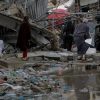
The United States, the United Nations, and Genocide in the Gaza Strip
The political significance of US-Israeli differences is easily exaggerated. It is certainly true that tensions in the relationship exist. Israel is currently committing genocide against the Palestinians in the Gaza Strip. The US would like Israel to reduce - not cease, but reduce – its slaughter Palestinian civilians,« Previous Page — Next Page »





 2026 High-level Political Forum on Sustainable Development. Credit: UN Photo/Eskinder Debebe
In 2015, the United Nations and its Member States adopted the Sustainable Development Goals (SDGs) in an effort to make the world a more sustainable and peaceful place for future generations. Progress on the 17 SDGs has been uneven, and inequality persists across the globe. 10 years after adoption, the 2025 UN SDGs Report revealed that only 35% of the SDG targets are on track, with more than half moving too slowly, and 18% moving backwards from the 2015 baseline. Poverty remains one of the world’s most pressing issues, with hunger, violence, and inequality impeding the opportunities for all people to achieve success. In September 2024, the United Nations Summit of the Future introduced a new goal: to eradicate global poverty by 2030, ensure universal rights to basic services, and increase the overall standard of living in terms of industrialization, economic well-being, citizen health, and literacy. Furthermore, recent shifts in United States foreign aid policy – notably, major budget cuts to USAID and the termination of thousands of development programmes– have severely threatened vital lifelines of financial aid to impoverished communities around the world. Additionally, the United States’ withdrawal from the Paris Climate Agreement has undercut international efforts at sustainable development. With the upcoming 2030 deadline, the UN Secretary-General has called for urgent multilateralism across six priority areas: food systems, energy, digital connectivity, education, jobs and social protection, and climate and biodiversity. IPS sheds light on marginalized communities that struggle on a daily basis to survive and have their stories heard and respected.
Updated by Yilan Batista and Shuli Wong August 2026

The Week with IPS

NEXT STOP - SDGs
Tracking global progress towards a sustainable world
Tracking global progress towards a sustainable world
