Languages
Thursday, November 12, 2026



News and Views from the Global South
Development & Aid

UNDP Assistance Helps Farmers to Meet New EU Deforestation Rules
In 2015, just over 30 cocoa farmers from Padre Abad in Ucayali, a province in the lush and ecologically diverse Peruvian Amazon, formed an alliance to tackle long-standing concerns such as soil quality, access to markets, fair prices for their produce and a growing number of illegal plantations. The result was the Colpa de Loros Cooperative, and from the start, the goal was to produce the finest quality, export-ready cocoa.
Mercury Project Puts Great UNEP Treaty at Risk
The Minamata Convention on Mercury, a stellar success story to date, has been favorably compared to the prototype success story for a treaty on toxins: the Montreal Protocol. Both had a single focused mission; both gained universal support across the globe; both matched technological innovation with environmental science to discard old polluting methods.
UNDP Assistance Helps Farmers to Meet New EU Deforestation Rules

The UNDP has assisted cocoa farmers from the Peruvian Amazon to ensure the commodities meet European Parliament regulations. The regulation prohibits the placing of products on the market if their production has led to deforestation.

Local Innovations Key to Meeting Challenges of the Climate Crisis
Several years ago, on a visit to a village in rural Zimbabwe, I met a small group of women with a story to share. Having participated in a UNDP-supported adaptation project – including drought-resistant seeds and education in climate-smart agricultural practices – the women had significantly increased the productiveness of their home gardens.
Education Cannot Wait Grant Gives Refugees, Displaced Children Hope
Colombia's government is expanding its educational response to the Venezuelan regional crisis, and its efforts are supported by Education Cannot Wait (ECW), which announced USD 12 million grant. However, the need is great, and ECW estimates financial support of USD 46.4 million is needed for the multi-year resilience response.

Holistic Education Support in Colombia Extended to Counter Snowballing Learning Crisis
The largest external displacement crisis in Latin America’s recent history is unfolding as countries open their borders to an influx of refugees from Venezuela following unprecedented political turmoil, socio-economic instability, and a humanitarian crisis.
The Last Mile to Malaria Elimination: Confronting Gender Inequalities & Power Dynamics
For centuries, malaria has remained one of the deadliest diseases, inflicting great suffering on families and perpetuating the cycle of poverty in many communities and nations. The African region currently accounts for 95% of malaria cases and 96% of malaria deaths globally, with women and girls disproportionately affected by the disease.
No Parent Should Ever Be in the Position We Find Ourselves, Say Mothers of LGBTQ+ People in Uganda
The mothers of LGBTQ+ individuals in Uganda have taken a stand against Bill passed by the Ugandan Parliament proposing the death penalty for aggravated homosexuality, life imprisonment for the "offense of homosexuality," and up to 20 years in jail for promoting homosexuality.
Where do Bangladesh’s “New” Poor Fit in?
The world is becoming increasingly coexistent with crises. A pandemic, the Ukraine-Russia war, and cost-of-living crisis are only a few of the ordeals we’ve seen in just the last two years.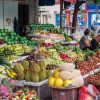
What Local Food Challenges and Choices Across Vietnam Reveal About a Global Push for Food Systems Transformation
Last month, Nature spotlighted three insightful new studies chronicling food-related challenges from a global perspective. One presented worrisome new data on the global rise in the prevalence of diabetes, high blood pressure and liver disease, all linked to obesity. Another presented a new assessment revealing that half of the greenhouse emissions generated by food systems globally are caused by food waste. Finally, the third study found that food consumption could add “nearly 1 degree Celsius to warming by 2100,” with most of that attributed to global methane emissions from meat, dairy and rice production.
Politics Behind the Removal of Mughal History From Textbooks Say Academics
The removal from school textbooks of chapters covering the Mughal period of Indian history spanning three centuries has raised a storm of protests from academics.
ChatGPT & Artificial Intelligence: What this Means for Small Business
As 2022 came to a close, ChatGPT, an artificial intelligence chatbot, became the fastest-growing app in history, reaching an estimated 123 million users less than three months after its launch.
Biogas and Biomethane Will Fuel Development in Cuban Municipality
The first five biomethane-fuelled buses in the Cuban municipality of Martí will not only be a milestone in the country but will also represent a solution to the serious problem of transportation, while reducing emissions of greenhouse gases and bolstering local development.
Global Solidarity Needed to Address Taliban’s Attacks on Women’s Rights
Matiullah Wesa’s crime was to try to ensure young people got an education in Afghanistan. His recent forceful abduction by the Taliban offers the latest stark reminder that global solidarity and coherent action from the international community are needed to prevent the complete loss of the rights of women and girls in Afghanistan.
Chile’s Water Vulnerability Requires Watershed and Water Management
Good management of the 101 hydrographic basins which run from the Andes mountain range to the Pacific Ocean is key to solving the severe water crisis that threatens the people of Chile and their main productive activities.
Africa, Now Squeezed to the Bones
As many as 45 African countries –out of the Continent's 54 nations–, all of them grouped in what is known as Sub-Saharan Africa, have now been further squeezed to their bones, as funding shrinks to lowest ever levels, and as a portion of the so-called aid goes back to the pockets of rich donor countries.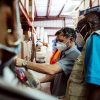
From Recovery to Resilience: Volcanic Eruption in Saint Vincent & the Grenadines Two Years on
On the morning of 9th of April 2021, the La Soufrière Volcano on the main island of St. Vincent and the Grenadines erupted -filling the sky with ash and transforming the lives, livelihoods and landscape of this small Southern Caribbean nation.
Localizing SDGs Means Truly Empowering Citizens
The Future We Want was the groundbreaking outcome of the Rio+20 Summit, the summit, held in 2012, where the idea of Sustainable Development Goals (SDGs) was first conceptualized.
El Salvador Still Lacks Policies to Bolster Food Security
Sitting under the shade of a tree, Salvadoran farmer Martín Pineda looked desperate, and perhaps angry, as he said that governments of different stripes have come and gone in El Salvador while agriculture remains in the dumps.
Myanmar’s ‘Forgotten War’ Lurches Deeper into Horror
Food is passed around a campfire, and a guitar strums as cool night air tumbles down mountain cliffs, relieving the jungle of its heat. A dozen or so young Myanmar activists – some having just travelled long distances evading military checkpoints, others already living in exile – have come together in a jungle camp for a training course with a difference. Instead of armed combat, their chosen role is enabling the overthrow of the military junta through non-violent means.
Livelihoods of Almost Half the World’s Population Depend on Agrifood Systems
New research by the United Nations Food and Agriculture Organization (FAO) has revealed that almost half the world’s population of around eight billion people belong to households whose livelihoods depend to some degree on agrifood systems (AFS).« Previous Page — Next Page »


 2026 High-level Political Forum on Sustainable Development. Credit: UN Photo/Eskinder Debebe
In 2015, the United Nations and its Member States adopted the Sustainable Development Goals (SDGs) in an effort to make the world a more sustainable and peaceful place for future generations. Progress on the 17 SDGs has been uneven, and inequality persists across the globe. 10 years after adoption, the 2025 UN SDGs Report revealed that only 35% of the SDG targets are on track, with more than half moving too slowly, and 18% moving backwards from the 2015 baseline. Poverty remains one of the world’s most pressing issues, with hunger, violence, and inequality impeding the opportunities for all people to achieve success. In September 2024, the United Nations Summit of the Future introduced a new goal: to eradicate global poverty by 2030, ensure universal rights to basic services, and increase the overall standard of living in terms of industrialization, economic well-being, citizen health, and literacy. Furthermore, recent shifts in United States foreign aid policy – notably, major budget cuts to USAID and the termination of thousands of development programmes– have severely threatened vital lifelines of financial aid to impoverished communities around the world. Additionally, the United States’ withdrawal from the Paris Climate Agreement has undercut international efforts at sustainable development. With the upcoming 2030 deadline, the UN Secretary-General has called for urgent multilateralism across six priority areas: food systems, energy, digital connectivity, education, jobs and social protection, and climate and biodiversity. IPS sheds light on marginalized communities that struggle on a daily basis to survive and have their stories heard and respected.
Updated by Yilan Batista and Shuli Wong August 2026

The Week with IPS

NEXT STOP - SDGs
Tracking global progress towards a sustainable world
Tracking global progress towards a sustainable world
