Languages
Thursday, November 19, 2026



News and Views from the Global South
Development & Aid

Hopes and Challenges for the First-Ever Food Systems Summit
Building inclusive and healthier food systems, and safeguarding the health of the planet will be some of the key priorities at the first-ever Food Systems Summit next year.

Caring for Poorest and Most Underserved Children Vital for Creating a Better World
Kerry Kennedy has a clear mission – along with Nobel laureates and leading international figures – she wishes to ensure that hard-won gains in children’s rights are not destroyed by the economic fallout from the COVID-19 pandemic.
Failing Africa’s Farmers, Starving the Continent
African organizations are demanding answers after a recent report found that Alliance for a Green Revolution in Africa (AGRA) strategies have failed spectacularly to meet its goals of increasing productivity and incomes for millions of small-scale farming households by 2020 while reducing food insecurity on the continent.
Financing Economic Recovery
As the socio-economic impacts of the COVID-19 pandemic spread across the length and breadth of Asia and the Pacific, finance ministries are continuing their relentless efforts to inject trillions of dollars for emergency health responses and fiscal packages. With continued lockdown measures and restricted borders, economic rebound seems uncertain.
UN’s First-Ever Food Systems Summit to Fight Impending Emergency
Food systems involve all the stages that lead up to the point when we consume food, including the way it is produced, transported, and sold. Launching a policy brief on food security in June, UN chief António Guterres warned of an “impending food emergency”, unless immediate action is taken.
Nobel Laureate Kailash Satyarthi on Where to Find the $1 trillion Needed for Marginalised Children
 Nobel Laureate Kailash Satyarthi says that $1 trillion can solve many of the problems the world's most marginalised communities are facing.

Exclusive: Kailash Satyarthi Warns over a Million Children Could Die Because of COVID-19 Economic Crisis
Nobel Laureate Kailash Satyarthi warns of the danger that over one million children could die, not because of the COVID-19 pandemic, but because of the economic crisis facing their families. In an exclusive interview with IPS, Satyarthi said that without prioritising children we could lose an entire generation as evidence mounts that the number of child labourers, child marriages, school dropouts and child slaves has increased as the COVID-19 pandemic spread across the globe.
COVID-19: Lessons from the Losses
If countries considered Universal Health Coverage (UHC) a central policy in their health systems, the COVID-19 has surely demonstrated the need for its urgent and widespread roll out. The pandemic has upended world systems in a manner that no scientists or sophisticated global intelligence could have foreseen.
Education Cannot Wait Responds to Beirut Explosion with US$1.5 Million in Education in Emergency Funding to Rehabilitate Damaged Schools
Education Cannot Wait (ECW) today approved US$1.5 million in new education in emergency funding in response to last month's explosion in Beirut.
UN Women Calls for Accelerating its Unfinished Business
Twenty-five years ago, the Fourth World Conference on Women in Beijing set a path-breaking agenda for women’s rights. As a result of the two-week gathering with more than 30,000 activists, representatives from 189 nations unanimously adopted the Beijing Declaration and Platform for Action.
World Risks Losing Entire Generation of Children, Nobel Laureates Warn
The COVID-19 pandemic has upended the lives of millions of people worldwide, accounted for over 869,000 deaths, destabilised the global economy and triggered a marked rise in poverty and hunger in the developing world. But the fallout from one of the most devastating consequences of the spreading virus is on the lives of a growing new generation: children.UNESCO urges action to meet rampant $200 billion annual funding gap for education in poorest countries due to COVID-19
New research by the Global Education Monitoring Report at UNESCO shows an increase in the annual funding gap for education in the poorest countries to as much as US$200 billion a year. These findings are published in the new paper, Act Now: Reduce the impact of COVID-19 on the Cost of Achieving SDG4.
Nobel Laureates and Global Leaders Call for Urgent Action to Prevent COVID-19 Child Rights Disaster
Regina Njagi’s four children, aged between 11 and 17, have not benefitted from online learning since the COVID-19 led to the closure of all schools in Kenya, earlier in March. With the closure, Njagi lost her job as a teacher at a local private school.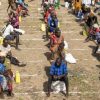
COVID-19: Without Help, Low-Income Developing Countries Risk a Lost Decade
While the COVID-19 crisis is sending shockwaves around the globe, low-income developing countries (LIDCs) are in a particularly difficult position to respond. LIDCs have both been hit hard by external shocks and are suffering severe domestic contractions from the spread of the virus and the lockdown measures to contain it. At the same time, limited resources and weak institutions constrain the capacity of many LIDC governments to support their economies.
“Hidden” Costs of Our Food Systems
Five years after the adoption of the 2030 Agenda we are far from achieving the Sustainable Development Goals (SDGs). According to the recently launched SOFI Report (The State of Food Security and Nutrition in the World 2020), we are not on track to eradicate poverty, hunger and malnutrition. On the contrary, with the current trends, the global number of undernourished people in 2030 would exceed 840 million. Moreover, WHO has reported alarming rates of overweight and obesity, globally affecting 39% and 13% of the adult population, respectively.
Music Collective ‘Megative’ Dubs Out the Negative
Even as their income dries up and their touring opportunities disappear because of the Covid-19 pandemic, some artists are using their work to call out injustice, criticize inept leaders and spark social change.
Navigating Safely Through The Pandemic
Having reported on SARS, Ebola, Bird Flu (H5N1) outbreaks, as well as writing about efforts to combat HIV, I was horrified by what was going on in Wuhan, China last Jan mainly because of how fast this new SARS-CoV-2 virus spread. By early Feb it seemed likely there’d be a global pandemic and by the end of Feb I started to freak out as the pandemic took hold. I’ve never been to Wuhan or China nor seen anyone who had; and I hadn’t travelled any where recently. It was nearly impossible for me to have encountered the virus but that didn’t keep me from getting sick with fear and dread knowing that a goddamn microscopic parasite was going to turn our lives upside down when we already had multiple crisis of on our plate. (You know, climate, ecological collapse, rise of populism and authoritarianism.) I refused to write about the virus or the disease it causes — COVID-19 — until I had to face the little bastard personally.
A Pandemic Cannot Justify Child Labour
For the past five months, our screens have been flooded with distressing imagery of one catastrophe after another: From the impact of the COVID-19 pandemic on vulnerable communities, to cyclones in West Bengal, Odisha, and Maharashtra.
It Is Time to End the Controversial World Bank’s Doing Business Report
On 27 August the World Bank announced that it will suspend the Doing Business Report over data irregularities, until it conducts a review and audit. The halting of the report was welcomed by trade unions, academics and human rights groups.
Women’s access to stimulus packages and post Covid-19 gender equality
All crises—natural disasters, wars, pandemics—affect different sections of people in different ways. Like any other crisis, Covid-19 has differing impacts on society. It has affected men and women, rich and poor, and adults and children differently. Since the ramifications of the coronavirus pandemic vary across people, measures towards the recovery from this crisis should also be focused towards each section of society distinctively.
Technology Meets Creativity on Women’s Empowerment Platform
Eight years ago, at the age of eleven, Fuzia co-founder Riya Sinha decided to start a writing club for school girls. Stemming from this initiative a few years later Sinha, along with co-founder Shraddha Varma, decided to start the online platform for women. Their story and Fuzia's DNA are intrinsically wrapped around each other – and highlight how even in the age of feminism where women’s voices tend to be drowned out, a platform for them can become a global success.« Previous Page — Next Page »


 2026 High-level Political Forum on Sustainable Development. Credit: UN Photo/Eskinder Debebe
In 2015, the United Nations and its Member States adopted the Sustainable Development Goals (SDGs) in an effort to make the world a more sustainable and peaceful place for future generations. Progress on the 17 SDGs has been uneven, and inequality persists across the globe. 10 years after adoption, the 2025 UN SDGs Report revealed that only 35% of the SDG targets are on track, with more than half moving too slowly, and 18% moving backwards from the 2015 baseline. Poverty remains one of the world’s most pressing issues, with hunger, violence, and inequality impeding the opportunities for all people to achieve success. In September 2024, the United Nations Summit of the Future introduced a new goal: to eradicate global poverty by 2030, ensure universal rights to basic services, and increase the overall standard of living in terms of industrialization, economic well-being, citizen health, and literacy. Furthermore, recent shifts in United States foreign aid policy – notably, major budget cuts to USAID and the termination of thousands of development programmes– have severely threatened vital lifelines of financial aid to impoverished communities around the world. Additionally, the United States’ withdrawal from the Paris Climate Agreement has undercut international efforts at sustainable development. With the upcoming 2030 deadline, the UN Secretary-General has called for urgent multilateralism across six priority areas: food systems, energy, digital connectivity, education, jobs and social protection, and climate and biodiversity. IPS sheds light on marginalized communities that struggle on a daily basis to survive and have their stories heard and respected.
Updated by Yilan Batista and Shuli Wong August 2026

The Week with IPS

NEXT STOP - SDGs
Tracking global progress towards a sustainable world
Tracking global progress towards a sustainable world
