Languages
Friday, November 20, 2026



News and Views from the Global South
Development & Aid

Kenya Plans to Leverage on Strategic Partnerships to Advance the “silicon Savannah” and Fast-track the Attainment of the Sustainable Development Goals
The Government of Kenya today signed a Communique with the Center for Effective Global Action (CEGA) at the University of California, Berkeley, along with The Rockefeller Foundation, and the United Nations to inspire future action and support for the delivery of Kenya’s Big Four agenda. The agreement brings together strategic partnerships work with the Government of Kenya to build SDG focused partnerships to drive financing and innovations that help tackle complex development goals.
Women In Leadership: A Q&A with President Sahle-Work Zewde
Women Deliver President/CEO Katja Iversen discusses women in leadership and links between sexual and reproductive health and rights and Universal Health Coverage (UHC) to advance gender equality with the first female President of Ethiopia, Sahle-Work Zewde.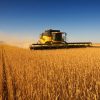
A Brief Guide to the Impacts of Climate Change on Food Production
Food may be a universal language – but in these record-breaking hot days, so too is climate change. With July clocking in as the hottest month on Earth in recorded history and extreme weather ramping up globally, farmers are facing the brunt of climate change in croplands and pastures around the world.
‘I Want my Kids to Know What a Rhino and Turtle Are’ – #ClimateStrike Kids Say
 From Nigeria, to Kenya to the Democratic Republic of Congo, to South Africa, thousands of African climate campaigners have taken to the streets joining millions around the world for the global Climate Strike ahead of the United Nations Climate Action Summit 2019, which starts in New York next week.
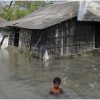
Rural Bangladesh Families Spend 2.0 Billion Dollars on Climate Change ― Dwarfing Government & International Finance
In an alarming imbalance struggling families in rural Bangladesh spend almost US$2 billion a year on preventing climate-related disasters or repairing damage caused by climate change ― far more than either the Bangladesh government or international bodies.
Biogas Makes Pig Farming More Sustainable in Southern Brazil
Biogas has the potential to provide 36 percent of the electricity consumed in Brazil or replace 70 percent of diesel if purified as biomethane, according to the Brazilian Association of Biogas and Biomethane (Abiogas). 
Not Enough Good Information About Africa’s Climate for Adaptation
 "We don't have a good appreciation of our local weather systems," says Dr James Kinyangi head of the African Development Bank's climate and development Africa special fund, which supports investments in climate and weather observations networks in Africa.

Do Women Suffer Greater Loss of Employment than Men in Morbidity?
In a life peppered with tragedy, Mary Shelley wrote in 1818, “Have I not suffered enough, that you seek to increase my misery?” That this accurately sums up the fate of many women in South Asia who suffer a major health shock such as a serious illness or a disability or both, is hard to dispute.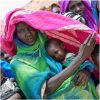
As Climate Crisis Worsens & Poverty Rises, UN Appears Off-Track on Development Agenda
The two key goals in the UN’s development agenda are the eradication of extreme poverty and hunger by 2030. But most of the world’s developing nations, currently fighting a losing battle against rising poverty and hunger –and suffering from the devastating impact of climate change-- are likely to miss the deadline for most of the 17 Sustainable Development Goals (SDGs), according to the latest report by Secretary-General Antonio Guterres.
Key Changes in International Agriculture and Rural Development Issues: Three Priority Areas in the Context of the 2030 Development Agenda
Transformations in international agricultural and rural development issues Some major changes in international agricultural and rural development over the last 30-40 years need to be taken into account in efforts to promote sustainable development and an inclusive rural transformation (IFAD 2016) as we approach the third decade of the millennium. This opinion piece, drawing on a longer article published in Agriculture for Development Journal (Summer 2019 Issue), seeks to stimulate reflection and debate on how work to support agricultural and rural development can evolve to address key challenges and opportunities related to migration, sustainable urbanization and youth in a changing global policy context.
Human trafficking: A Disorganised Response to an Organised Crime
Human trafficking is perhaps one of the most well-organised crimes being committed in India. How else do we explain the phenomenon of adolescent girls and young women from remote villages across India being found in brothels in our cities?
When the Search for Jobs Ends in Slavery
In 2017, Zubedah Nakitende’s electronics shop was robbed with thieves taking her entire stock. But she had heard from a colleague about lucrative jobs in Jordan and decided to take on work as a domestic helper, earning an income of 740 dollars a month.
How a Bangladesh Non Profit for Leprosy Made its Members Completely Self-Sufficient
The 20th International Leprosy Congress just wrapped up in Manila, Philippines last week. Alongside policy makers, diplomats, medical researchers, doctors, donors and academics, several Hansen's disease-affected people’s organisations also participated in the 3-day congress that was co-sponsored by The Nippon Foundation (TNF) and Sasakawa Health Foundation (SHF). 
Developing Economies’ Subordinate Financialization
Rapid financial globalization is due not only to financial innovations, but also to choices made by national policymakers, often with naïve expectations, trusting promoters’ promises of steady net inflows of financial resources.
Tana River Bears the Cost of Development
The damming of Kenya's River Tana and the environmental degradation upstream, has reduced the amount of silt and water reaching the Tana River Delta over time. Hence the sea has been pushing further and further inland unhindered, jeopardising livelihoods. 
African Development Bank Plans for a Self-sufficient, Integrated and Industrialised Continent
Arama Sire Camara, a fruit and vegetable seller in the province of Kindia, some 135 km from the Guinean capital of Conakry, feels safer trading well into the night thanks to the Rural Electrification Project, financed by 21-million-dollar investment by the African Development Bank. “With lighting on the road at night and illuminating our goods, it means we are safer, especially with all the cars on the road. You can work for longer after nightfall, and so we can make more of our products,” she says.
World’s Whale Population Struggles to Recover from Carnage Amid Serious Concerns
Sri Lanka is endowed with an impressive and large concentration of whales off its shores and it is believed they are not a population that migrates seasonally. 26 species have been spotted in Sri Lankan waters, including the massive blue whales.
Multidisciplinarity of Data: Time to Put Data at the Heart of UN’s 2030 Agenda
The 2030 Agenda for Sustainable Development was adopted in 2015. At its core are 17 Sustainable Development Goals and 169 targets, all meant to guide efforts by all countries towards a more sustainable, prosperous and equal future.
Asian & Arab Parliamentarians to Move Forward on Reproductive Health & Gender Empowerment
Over the years, the UN Population Fund (UNFPA) has worked in tandem with legislators and parliamentarians to help implement the historic Programme of Action (PoA) adopted unanimously by over 20,000 UN delegates at a landmark International Conference on Population and Development (ICPD) in Cairo back in 1994.G5 Sahel Summit: African Development Bank, partners, commit to light up and power the Sahel with the Desert to Power initiative
Dr. Akinwumi Adesina, president of the African Development Bank, has arrived in Ouagadougou, capital of Burkina Faso, ahead of the G5 Sahel Summit, and was received by Burkina Faso’s president, Mark Roch Christian Kaboré.
Three Questions to Wale Shonibare, Acting VP, Power, Energy, Climate & Green Growth
The Desert to Power initiative is an ambitious and innovative partnership-driven initiative of the African Development Bank to transform the Sahel and Sahara region through the deployment of solar technologies, at scale, in eleven countries: Burkina Faso, Chad, Djibouti, Ethiopia, Eritrea, Mali, Mauritania, Niger, Nigeria, Senegal, and Sudan.« Previous Page — Next Page »


 2026 High-level Political Forum on Sustainable Development. Credit: UN Photo/Eskinder Debebe
In 2015, the United Nations and its Member States adopted the Sustainable Development Goals (SDGs) in an effort to make the world a more sustainable and peaceful place for future generations. Progress on the 17 SDGs has been uneven, and inequality persists across the globe. 10 years after adoption, the 2025 UN SDGs Report revealed that only 35% of the SDG targets are on track, with more than half moving too slowly, and 18% moving backwards from the 2015 baseline. Poverty remains one of the world’s most pressing issues, with hunger, violence, and inequality impeding the opportunities for all people to achieve success. In September 2024, the United Nations Summit of the Future introduced a new goal: to eradicate global poverty by 2030, ensure universal rights to basic services, and increase the overall standard of living in terms of industrialization, economic well-being, citizen health, and literacy. Furthermore, recent shifts in United States foreign aid policy – notably, major budget cuts to USAID and the termination of thousands of development programmes– have severely threatened vital lifelines of financial aid to impoverished communities around the world. Additionally, the United States’ withdrawal from the Paris Climate Agreement has undercut international efforts at sustainable development. With the upcoming 2030 deadline, the UN Secretary-General has called for urgent multilateralism across six priority areas: food systems, energy, digital connectivity, education, jobs and social protection, and climate and biodiversity. IPS sheds light on marginalized communities that struggle on a daily basis to survive and have their stories heard and respected.
Updated by Yilan Batista and Shuli Wong August 2026

The Week with IPS

NEXT STOP - SDGs
Tracking global progress towards a sustainable world
Tracking global progress towards a sustainable world
