Languages
Saturday, November 21, 2026



News and Views from the Global South
Economy & Trade

Achieving Gender Equality for Women’s Re-entry to the Labour Force Post COVID-19
During the height of the COVID-19 lockdowns, while many sought safety being at home, women in the healthcare, child care, aged care, teaching and services fields — who hold the majority of jobs in those occupations — went to work everyday.
A Global South Organization – a Sine Qua Non for Developing Nations’ Influence in World Arena
I observed the Group of 77 (G77) shortly after the 1964 Geneva Conference on Trade and Development (UNCTAD), the 1968 UNCTAD 2 in New Delhi and the 1972 UNCTAD 3 in Santiago. The Group was influential at the time, benefiting from several factors helpful for its functioning which are no longer present, namely:
Five Steps to Combat Gender-Based Violence Globally
The 410 Legal Aid Centers that I manage in Bangladesh for BRAC’s Human Rights and Legal Aid Services received approximately 35,900 requests for assistance in 2020. Almost all of them involve gender-based violence against women and girls.
Inequality, COVID-19 and the Plight of the Young
Inequality characterizes the world we live in, predisposing how we act and think. We perceive our existence as composed of dichotomies – men and women, young and old, black or white, as well as a difference between those who have and those who do not have access to wealth, health, education and influence. Dichotomies are also born out of comparisons, about how things are now and how they could have been, how they were before and how they are now.
Sustainable Development Goals Can Guide Asia-Pacific to Build Back Better
The COVID-19 crisis poses an unprecedented threat to development in the Asia-Pacific region that could reverse much of the hard-earned progress made in recent years. The good news is we know how to tackle this challenge. Recovery from the pandemic and our global efforts to deliver the United Nations Sustainable Development Goals (SDGs) by 2030 must go hand-in-hand. The Goals provide a compass to navigate this crisis, faster and greener, everywhere and for everyone.
COP26 and India’s NDCs
Climate change is one of the most pressing issues that the world is collectively facing at the moment. It is contended that strengthening the global response is pertinent to combat the threat of climate change.
Magellan, Inquisition and Globalisation
Globalisation’s beginnings are symbolised by Ferdinand Magellan’s near circumnavigation of the world half a millennium ago. But its history is not simply of connection and trade, but also of intolerance, exploitation, slavery, violence, aggression and genocide.
The Fruition of the “China Dream”: Beijing’s Inexorable Rise
China is on the roll. Already the second largest economy in the world, it is poised to become the first sooner than expected, possibly within this decade. Small wonder that the focus of the globe should be on the lianghui currently being held in Beijing. This is the ‘two sessions,’ China’s annual Parliamentary meeting. They entail back- to- back sessions of the Chinese People’s Political Consultative Conference (CPPCC), the highest advisory body, and the National People’s Congress (NPC), the principal legislative forum. There might lack the scintillating repartees of a debate in the House of Commons, and the thrill of the Question hour in Commonwealth Parliaments. But nonetheless would have an enormous impact on the lives of global citizens, including the proverbial man on the Clapham omnibus. That is because the sessions provide an insight into the plans and aspirations of the world’s most rising power.
International Women’s Day, 2021
More Women Leaders Make Better Societies
This year it will be 128 years since the right of women to vote was first recognized, with New Zealand becoming the first nation to allow the participation of women in its general election in 1893.
From the suffragettes - to today’s feminists, both men and women have fought to increase women’s political participation and representation. It has been a slow, sometimes bitter and occasionally even dangerous struggle. Yet global progress remains slow and uneven – as it does in Samoa. As we approach the 2021 General Election on 9 April, it is important to remember that women’s full and effective participation in all areas of life drives progress for everyone.

Death of an Ambassador and the Congolese Slaughter
On the morning of 22nd February a jeep from the World Food Programme (WFP), followed by another one with the Italian ambassador, Luca Anastasio, was driving along Route Nationale 2 passing by The Virunga National Park, an UNESCO Congolese World Heritage Site famous for its dwindling population of unique mountain gorillas.
Malawian Youth Wipe Away Unemployment Tears with Agribusiness
After getting tired of searching for employment for seven years, Feston Zale from Chileka area in Malawi’s Southern Region decided to venture into agribusiness.
Down in Hell
I am about 200 feet down a rickety old mine shaft, in the Ashanti gold mining region of Ghana. It is stiflingly hot and darker than a moonless night. I can only feel the touch of sweaty bodies passing in the darkness and hear the reverberating sound of miners coughing and breaking rocks. The lack of oxygen and dust make it hard to breathe. I have no idea how deep this shaft goes – hundreds of feet? More? If there is a Hell this must be what it feels like.
What Africa Expects of New WTO Chief Dr. Ngozi Okonjo-Iweala
When on 15 February the chair of the World Trade Organization’s (WTO’s) General Council, Ambassador David Walker of New Zealand, announced that Dr. Ngozi Okonjo-Iweala would be the new Director-General, the mood among delegates was of relief.
Prioritise Pandemic Relief, Recovery: No Time for Debt Buybacks
Developing country governments are being wrongly advised to use their modest fiscal resources to pay down accumulated debt instead of strengthening pandemic relief and recovery. Thus, debt phobia risks deepening and extending COVID-19 recessions by prioritising buybacks.
International Women’s Day, 2021
Why Green Growth and Climate Action Fall Short Without Addressing Gender Inequality
As the global effort to address climate change has strengthened over the last few years, so has the realization that rising temperatures and climactic disruptions disproportionately impact women, particularly in developing countries, as they tend to be more dependent upon natural resources and are thus overrepresented in resource-intensive economic sectors. Furthermore, inherent in gender inequality are disadvantages for and discrimination against women in all facets of society, including in the economy and politics. Thus, it is unfortunate, yet perhaps unsurprising, that these structural disparities are mirrored in the negative effects of climate change. Therefore, if gender differences are not incorporated into climate change plans, women will be unable to access the co-benefits that arise from concerted climate action.

The Mexican Economy: A Short or Long Recession Cycle?
The trend of the Mexican economy during the last two years has not been positive. INEGI, the official bureau of statistics, has just reported that GDP registered a fall of 8.5 percent compared to 2019 with seasonally adjusted figures. But in 2019 GDP also receded, although in far less measure, less than one percentage point. However, it must be considered that the Mexican economy has been falling for 6 quarters (compared to the previous year). Considering the population growth rate (1.2 percent per year), the fall in the GDP per capita is close to 11 percent. This figure matters because it gives a more accurate idea of the size of the downturn. It is also necessary to take into account the two years, since our interest should be now to try to figure out how long the recession will be the endure, that is, when will Mexico reach the pre-pandemic level of GDP.
International Women’s Day, 2021
Every Girl Has a Right to An Education
Access to an inclusive quality education is a universal human right. When the inherent right to a good education is ignored or denied, the consequences are severe. For a girl in country of conflict or forced displacement, the impact is brutally multiplied.

International Women’s Day, 2021
Women Must Continue To Claim Power & Challenge The Unseen Barriers
Power is an intriguing concept and it means different things to different people. In simple words, power is the ability to influence the behavior of others to get what you want. Power distribution is usually visible in most societies when there is a clear and obvious division between the roles of the men and expectations from women. One can’t talk about power without talking about patriarchy - in which men always hold the power and women are largely excluded from it. Women are almost always taught power and ambition are two dirty words, and should not be linked to their personalities.
International Women’s Day, 2021
Women’s Leadership in the Global Recovery from COVID-19 Pandemic
Today is International Women’s Day (IWD), and the theme for this year’s celebration is "Women in leadership: Achieving an equal future in a COVID-19 world." We recognize the tremendous contribution and leadership demonstrated by women and girls around the world in shaping our recovery from the COVID-19 pandemic and a more sustainable future.

International Women’s Day, 2021
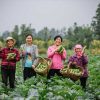
Recognizing Rural Women as Central to Cost-COVID Recovery: An Imperative for International Women’s Day
In times of crisis, policymakers have a tendency to prioritize economic recovery while leaving “social issues” like women’s empowerment on the backburner. During the COVID-19 pandemic, however, women’s leadership is as essential to full and meaningful recovery as it is to basic human rights. As the world mobilizes to design and build a post-COVID landscape, women’s rights, interests and priorities must not only be included in international recovery agendas but pushed to the forefront. To achieve this, women themselves must not simply be included in the discussion, but equitably represented in leadership roles.

International Women’s Day, 2021
A Just COVID-19 Recovery – Not Without Women’s Leadership
Almost exactly a year ago today, I packed my computer and a couple of necessities in the office in New York, hugged the colleagues, and headed home to what most people thought would be a couple of week’s Covid-19 lockdown. Little did we know.
« Previous Page — Next Page »


 UN Commission on International Trade Law Holds Colloquium on Harmonizing Law in Age of Digital Trade and Finance. Credit: UN Photo/Manuel Elías
Trade has historically been a geopolitical tool that can both be used to propel development as well as entrench inequalities. In various nations in East Asia and Latin America, increased trade, as often seen in export booms, has allowed them to achieve influential standings within the global economy. On the other hand, many low-income countries in Sub-Saharan Africa, Asia, and Latin America struggle to maintain a robust trade performance, and oftentimes are subjugated to exploitative trade dynamics through intense extraction of their natural resources. In recent decades, international trade has reached a new era as emerging economies across the world are rising in economic preeminence. Stable international trade is crucial to world peace as global interconnectedness facilitates reliable diplomacy. Nevertheless, significant challenges are on the rise. Notably, a major wave of United States tariff escalations in January 2025 lifted US import taxes to their highest level since the 1930s, changing market dynamics and forcing renegotiations with global trading partners.These articles are aimed at informing readers about the complexities of trade and its varying effects on development, with a special focus on the consequences of the global economic crisis, the potential of fair trade and the gender implications of trade policies.
Updated by Yilan Batista and Shuli Wong August 2026

The Week with IPS

NEXT STOP - SDGs
Tracking global progress towards a sustainable world
Tracking global progress towards a sustainable world
