Languages
Saturday, November 21, 2026



News and Views from the Global South
Economy & Trade

A Healthy Indian Ocean Feeds, Protects, and Connects all South Asians
It is the oceans that engendered life. The lives of humans remain connected to the seas, making the good health of the seas and the efficient management of sea-based activity essential elements for the wellbeing of people and nations.
Women and Girls to the Front
Women hold up half the sky. Some years ago, Sarah al-Amiri, a young Emirati engineer, had a fixed gaze beyond the sky and towards our galaxy. “Space was a sector that we never dared to dream growing up,” she noted.
IMF, World Bank Must Support Developing Countries’ Recovery
The COVID-19 pandemic continues to take an unprecedented human and economic toll, wiping away years of modest and uneven progress towards the Sustainable Development Goals (SDGs). Developing countries now need much more support as progress towards the SDGs was ‘not on track’ even before the pandemic.
Pandemic Accentuates Need for Caribbean Countries to Improve Food and Nutrition Security
Last year, Jaxine Scott was off work as a caregiver at a primary school as a result of the pandemic. One day, she noticed a green shoot emerging from some garlic in her fridge. She decided to plant it, and to her surprise, it thrived. “I thought ‘It looks like I have a green thumb, let me plant something else,’” Scott says. She now has a backyard garden, including cucumber, pumpkin, melon, callaloo, cantaloupe, pak choy and tomatoes. “It makes me feel good,” she says. “I can help my family members and neighbours. It has saved me money. I’m not going to stop, I’m going to continue,” she says.
UN Leadership Necessary for Fairer Tax Cooperation
Illicit financial flows (IFFs) hurt all countries, both developed and developing. But poor countries suffer relatively more, accounting for nearly half the loss of world tax revenue. IFFs refer to cross-border movements of money and other financial assets obtained illegally at source, e.g., by corruption, smuggling, tax evasion, etc. This often involves trade mis-invoicing and transnational corporations’ (TNCs) transfer pricing via ‘creative’ accounting or book-keeping.
Farming-Specific Loans Help Tanzania’s Smallholders Increase Productivity
Small agricultural loans, disbursed through mobile phones and targeting specific farming activities at different phases of production, have more than doubled food productivity among thousands of smallholder farmers in southern and central parts of Tanzania over the past three years, improving their livelihoods.
Recipes with a Taste of Sustainable Development on the Coast of El Salvador
Salvadoran villager Maria Luz Rodriguez placed the cheese on top of the lasagna she was cooking outdoors, put the pan in her solar oven and glanced at the midday sun to be sure there was enough energy for cooking.
World Autism Awareness Day – 2 April 2021
 Autism Spectrum Disorder is a complex condition that remains misunderstood.
The effects of ASD and the severity of symptoms vary so much between individuals.

Covid19 a Wake-up Call to Address Development Fault Lines in Asia and the Pacific
The world is emerging from the biggest social and economic shock in living memory, but it will be a long time before the deep scars of the COVID-19 pandemic on human well-being fully heal. In the Asia-Pacific region, where 60 per cent of the world lives, the pandemic revealed chronic development fault lines through its excessively harmful impact on the most vulnerable. The United Nations Economic and Social Commission for Asia and the Pacific (ESCAP) estimates that 89 million more people in the region have been pushed back into extreme poverty at the $1.90 per day threshold, erasing years of development gains. The economic and educational shutdowns are likely to have severely harmed human capital formation and productivity, exacerbating poverty and inequality.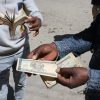
Developing Countries COVID-19 Debt Crisis Could Put SDGs & Climate Agreement Completely Out of Reach
The inability of developing nations to spend on post COVID-19 recovery and resilience has placed the world on the "the verge of a debt crisis". “We face the spectre of a divided world and a lost decade for development,” United Nations Secretary-General António Guterres said on Monday, Mar. 29, during a high-level meeting on financing development post COVID-19.
IMF, World Bank Must Urgently Help Finance Developing Countries
COVID-19 has set back the uneven progress of recent decades, directly causing more than two million deaths. The slowdown, due to the pandemic and policy responses, has pushed hundreds of millions more into poverty, hunger and worse, also deepening many inequalities.
Gathering Dark Clouds: China, US, and a Rapidly Dividing World
The China-US meeting in Alaska last week was an unmitigated disaster. It did not bridge any differences. On the contrary, it may have widened them. If the purpose of diplomacy is to keep the lines of dialogue and communications open through the understanding the protocols, traditions, and culture of the other side, this discussion provided little evidence of even a desire for success. The art of negotiation in the international arena provides a substantial lexicon of nuanced language to advance rewarding discourse. In Alaska, this lesson was ignored. Style and substance were in tatters. Repairs now seem an impossibility anytime soon.
Arab Region Counts Cost of Devastating COVID-19 Pandemic
More than eight million people moved onto the poverty line in the Arab region, a conference of Arab and Asian parliamentarians heard. The hybrid conference, held simultaneously in Beirut, Lebanon, and via video conferencing to delegates in Asia and the Arab region, was a follow up on earlier discussions on the regions' ICPD25 Commitments.
Nobel Economist and 100 Experts Condemn Corporate Action against Argentina and Bolivia after Rollback of Failed Pension Privatization
Nobel Laureate Joseph Stiglitz, Juan Somavia, Jeffrey Sachs, Jose Antonio Ocampo and more than 100 high-level development experts have issued a statement protesting insurance corporations suing Argentina and Bolivia over the reversal of their failed pension privatizations at closed sessions of the International Centre for Settlement of Investment Disputes (ICSID) of the World Bank. If Argentina and Bolivia lose the disputes, it means that impoverished citizens and elderly pensioners will have to compensate wealthy financial corporations. Read their letter: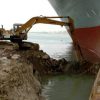
After the Ever Given: What the Ship Wedged in the Suez Canal Means for Global Trade
In the early hours of March 23, the container ship Ever Given was blown off course by high winds on its way through the Suez Canal. At 400 metres long, the Ever Given is longer than the canal is wide, and the ship became wedged firmly in both banks, completely blocking traffic.
Maquila Female Workers in Their Own Words: Fighting COVID and Labor Abuse
A compilation of testimonies collected by Blanca Velázquez Díaz and published by the Ebert Foundation (available at: http://library.fes.de/pdf-files/bueros/mexiko/17328.pdf) offers an account of the harsh reality by which some workers of the maquila industry in the Mexican state of Morelos have gone through over these last twelve months. Their words reflect, undoubtedly, similar experiences of millions of workers in different parts of the country.
A Country with too Many Victims and Few Shelters
In March 2014, Noemi N. took her own life inside a refuge camp in Ciudad Juarez, Chihuahua, where up until now there are no specialized shelters for victims of human trafficking.
A Look at Colombian Coffee Prices One Year on From the Stabilization Fund
It’s been just over a year since the Colombian government launched its landmark price stabilization fund. With a budget of $64 million, the fund was designed to provide a hedge against low prices by subsidizing farmers during periods when prices dropped below production costs.
Humanitarian & Food Aid Can Never be Enough to Manage Cascading Disasters
The intersection of crisis, climate change and COVID-19 has resulted in a “rapid rise in hunger”, according to United Nations World Food Programme (WFP) Deputy Executive Director Amir Abdullah.
End Vaccine Apartheid Before Millions More Die
At least 85 poor countries will not have significant access to coronavirus vaccines before 2023. Unfortunately, a year’s delay will cause an estimated 2.5 million avoidable deaths in low and lower-middle income countries. As the World Health Organization (WHO) Director-General has put it, the world is at the brink of a catastrophic moral failure.
Brexit Shows Why Traders Need Reliable Information But Many Are Ahead of the Game
It’s now almost three months since the United Kingdom entered into a new trade agreement with the European Union. During that time, we’ve seen traders struggle to get to grips with the new arrangements. From lorry drivers having their sandwiches confiscated by Dutch customs officers to estimates of additional paperwork costs of $7 billion a year, and pig breeders watching their meat rot on the quayside for want of the correct forms.« Previous Page — Next Page »


 UN Commission on International Trade Law Holds Colloquium on Harmonizing Law in Age of Digital Trade and Finance. Credit: UN Photo/Manuel Elías
Trade has historically been a geopolitical tool that can both be used to propel development as well as entrench inequalities. In various nations in East Asia and Latin America, increased trade, as often seen in export booms, has allowed them to achieve influential standings within the global economy. On the other hand, many low-income countries in Sub-Saharan Africa, Asia, and Latin America struggle to maintain a robust trade performance, and oftentimes are subjugated to exploitative trade dynamics through intense extraction of their natural resources. In recent decades, international trade has reached a new era as emerging economies across the world are rising in economic preeminence. Stable international trade is crucial to world peace as global interconnectedness facilitates reliable diplomacy. Nevertheless, significant challenges are on the rise. Notably, a major wave of United States tariff escalations in January 2025 lifted US import taxes to their highest level since the 1930s, changing market dynamics and forcing renegotiations with global trading partners.These articles are aimed at informing readers about the complexities of trade and its varying effects on development, with a special focus on the consequences of the global economic crisis, the potential of fair trade and the gender implications of trade policies.
Updated by Yilan Batista and Shuli Wong August 2026

The Week with IPS

NEXT STOP - SDGs
Tracking global progress towards a sustainable world
Tracking global progress towards a sustainable world
