Languages
Thursday, August 27, 2026



News and Views from the Global South
Economy & Trade

A Dream Deferred: Why Is Traveling Across Africa So Hard for Africans?
Aliko Dangote, Africa’s richest man, carries his frustration as visibly as he carries his passport. To travel across the continent he calls home, he needs 35 visas—each a bureaucratic hurdle and a reminder of the barriers to free movement and trade in Africa.
Rethinking Africa’s Debt: Debunking Myths and Identifying Sustainable Solutions
To achieve the Sustainable Development Goals (SDGs) and Agenda 2063 aspirations, Africa requires an additional $1.3 - 1.6 trillion in financing.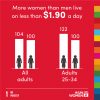
A World Where Rich Get Richer, Poor Get Poorer — and Billionaires Rise
Perhaps one of the UN's most ambitious and longstanding projects – the launching of 17 Sustainable Development Goals (SDGs)-- is aimed, among other things, at helping developing nations eradicate extreme poverty by 2030. But that elusive goal has made little or no significant progress.
Pemba’s Woman Salt Farmers Forge Livelihoods Amid Climate Woes
As the cool morning breeze sweeps across the Indian Ocean beach in Tanzania’s Pemba archipelago, Salma Mahmoud Ali begins her day. With her brightly coloured Kikoi cinched tightly around her waist and a dark blue scarf framing her face, she walks barefoot toward her salt ponds. The humid air hangs, but Ali wades through ankle-deep water with courage.
Africa & Europe Must Join Forces to Protect Our Ocean by Pressing Pause on Deep Sea Mining
Deep-sea mining may not be on the official agenda next week at the World Economic Forum in Davos (January 20-24), but restoring public trust in international cooperation is.
Education Cannot Wait Interviews Adenike Oladosu, ECW Global Climate Champion and BBC 100 Women 2024
Adenike Oladosu is a leading Nigerian ecofeminist, climate justice leader and researcher. She was appointed as an ECW Global Climate Champion on World Environment Day in June 2024. In December of last year, Adenike was honored by #BBC100Women, selected as one of the BBC’s 100 most influential and inspiring women from around the world. She was also a finalist for the Pritzker Emerging Environmental Genius Award.

Trillions in Dirty Money: How Hidden Loopholes Fuel Corruption and Inequality
It is no longer a secret that at major global summits there are more lobbyists than official delegates. There, they participate as ‘guests,’ and most of them work for big business corporations. Their goal? To deter the adoption of policies that conflict with their employers’ interests.
Ghana a Contender for BRICS+ Alliance
With heightening geopolitical interest in building a new Global South architecture, Ghana's administration is considering joining the 'partner states category' of BRICS+, an association of five major emerging economies (Brazil, Russia, India, China and South Africa).
The Davos Disconnect
"It was the best of times; it was the worst of times." Charles Dickens is more relevant today than ever. The wealthy and powerful are meeting again this year in glamorous Davos, at an invitation-only event. They arrive in chartered aircraft and private jets to speak about our warming climate, among other global concerns.
African Countries Urged to Plug Wealth Loss, Stop Illicit Financial Flows
Africa loses billions of dollars annually through illicit financial flows, resulting in the continent failing to improve the lives of millions of people despite vast mineral wealth, according to experts. Agencies say more needs to be done to turn the continent's natural resources into prosperity at a time governments are struggling to address challenging economic conditions that have spawned high poverty levels.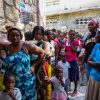
2024 Marked An Escalation in Brutality for Haiti’s Gang War
2024 was a transitional period in Haiti’s history, marked by rampant political instability, brutal gang violence, and widespread civilian displacement. Since the eruption of hostilities in March 2024, the Caribbean nation has been in a state of emergency. In response, the United Nations (UN) Security Council approved The Multinational Security Support (MSS) Mission in Haiti to assist the Haitian government in deposing gang activity and restoring order. However, the support mission has been largely ineffective as gangs continue to seize more areas in Haiti.
Nature Goes to Court
Nature is taking the stand as courtrooms worldwide become battlegrounds for Earth’s rights. The rise in climate litigation shows how the environment can take centre stage as a plaintiff, demanding justice and accountability, benefiting us all.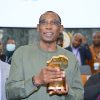
Unlocking SDG Success: How Better Data Can Develop Africa
That one in three Africans will not be counted as countries failing to meet census deadlines is a huge setback for development planning.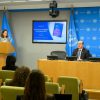
Geopolitical Uncertainties Cloud World Economic Prospects, UN Report Says
In the past few years, the world economy has made significant strides in mitigating inflation, unemployment, and poverty. Despite this, global growth has yet to regain its pace from before the pandemic.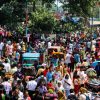
The Challenges Facing the World’s Fifth Largest Economy
India has surged forward as the world's fifth-largest economy and has now surpassed China to claim the title of the most populous nation. However, this rapid ascent is not without its challenges; rising unemployment and inflation loom large, threatening demographic dividend and its ambitious goal of sustaining a 7 to 8% GDP growth.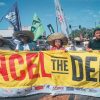
Developing Countries are Being Choked by Debt: This Could be the Year of Breaking Free
The debt disaster is back. Indeed, the aid agency Cafod reports that developing countries today face “the most acute debt crisis in history”.
Erratic Sales and Government Apathy Hurt Telangana Weavers
The southern Indian state of Telangana has always been home to exquisite cotton and silk weaves. But in recent years, lack of market access, expensive inputs, and government apathy have taken their toll on the weaving community. As a result, the younger generation is refraining from pursuing this traditional occupation and opting for more lucrative pursuits.
Our Health is at Stake: The Solutions SIDS Need to Fight Climate Change
Climate change is one of the most serious global threats to the future of the world’s population. Its impact extends far and wide, from the economy to governance to the very health and well-being of society.
Financing for Development Priorities Today
The forthcoming fourth United Nations Financing for Development conference must address developing countries’ major financial challenges. Recent setbacks to sustainable development and climate action make FfD4 all the more critical.
A Renewed Vision for Prosperity for Landlocked Developing Countries
Over 570 million people live in the world’s 32 Landlocked Developing Countries (LLDCs), spanning across Africa, Asia, Europe, and Latin America. These nations face unique and complex development challenges. Their lack of direct access to the sea, geographical isolation, limited infrastructure, and difficulty integrating into global trade and value chains hinder sustainable development and progress.
This Year’s Three UN Summits Set the Stage for COP30 to Transform Food Systems
This year has been a landmark one for climate and environment policy. Starting with the UN’s COP16 biodiversity talks in October, followed by the COP29 climate talks in November, and closing with the desertification COP16 in December, few years have offered such critical moments back-to-back.« Previous Page — Next Page »


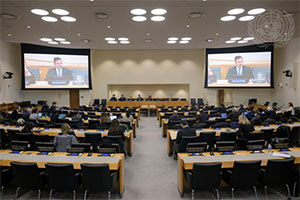 UN Commission on International Trade Law Holds Colloquium on Harmonizing Law in Age of Digital Trade and Finance. Credit: UN Photo/Manuel Elías
Trade has historically been a geopolitical tool that can both be used to propel development as well as entrench inequalities. In various nations in East Asia and Latin America, increased trade, as often seen in export booms, has allowed them to achieve influential standings within the global economy. On the other hand, many low-income countries in Sub-Saharan Africa, Asia, and Latin America struggle to maintain a robust trade performance, and oftentimes are subjugated to exploitative trade dynamics through intense extraction of their natural resources. In recent decades, international trade has reached a new era as emerging economies across the world are rising in economic preeminence. Stable international trade is crucial to world peace as global interconnectedness facilitates reliable diplomacy. Nevertheless, significant challenges are on the rise. Notably, a major wave of United States tariff escalations in January 2025 lifted US import taxes to their highest level since the 1930s, changing market dynamics and forcing renegotiations with global trading partners.These articles are aimed at informing readers about the complexities of trade and its varying effects on development, with a special focus on the consequences of the global economic crisis, the potential of fair trade and the gender implications of trade policies.
Updated by Yilan Batista and Shuli Wong August 2026

The Week with IPS

NEXT STOP - SDGs
Tracking global progress towards a sustainable world
Tracking global progress towards a sustainable world
