Languages
Wednesday, November 4, 2026



News and Views from the Global South
Editors' Choice

Latin American Rulers Embrace Harsh Prisons
Invoking the fight against terrorists and sending those who can be charged with this crime to new maximum security prisons are increasingly emerging in the toolbox of Latin American leaders who want to show an iron fist against criminals and opponents.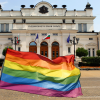
New Bulgarian LGBT+ Law Marginalizes Communities, Rights Groups Warn
A law banning the portrayal of LGBT+ identities in Bulgarian educational institutions is just the latest piece of repressive legislation in a wider assault on minorities and marginalized communities across parts of Europe and Central Asia, rights groups have warned.
In Tonga the UN Secretary-General Declares a Global Climate Emergency
Three months ahead of the COP29 United Nations (UN) Climate Change Conference, the United Nations Secretary-General, António Guterres, has called for an emergency response from the international community as new data from the World Meteorological Organization (WMO) reveals a critical deterioration in the state of the climate.
Enough is Enough: End Nuclear Testing Once and For All
In 2009 the United Nations General Assembly proclaimed 29 August the International Day Against Nuclear Tests. This date recalled the official closing of the Semipalatinsk nuclear weapons testing site in today’s Kazakhstan on 29 August 1991; that one site alone having seen 456 nuclear test explosions between 1949 and 1989.
UN Polio Vaccine Campaign in Gaza Will Proceed During Humanitarian Pause
The UN’s multi-agency polio vaccine campaign in Gaza is set to begin this weekend. It will do so under continued constraints on humanitarian operations and mobility, but with the assurance from Israel to pause fighting for the campaign to go ahead.
Climate Assemblies Seek Citizen Participation in Latin American Solutions
Danilo Barbosa had never taken part in political processes until his name was drawn in a lottery to join the climate assembly of the municipality of Bujaru, in the Amazon region of Brazil.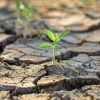
Signs of Progress on Peace-Positive Climate Adaptation
The consequences of climate change are disproportionately impacting fragile and conflict-affected settings (FCS). Climate shocks can exacerbate security risks in FCS, conflict and instability compromise a region’s ability to adapt to climate change, leaving its population ever more vulnerable to future climate shocks.
Struggling at Sea: The Plight of Indian Fishworkers Amid Climate Change and Government Policies
Climate change forces millions of India’s fishworkers to venture beyond the country's exclusive economic zone into the perilous high seas.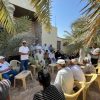
UN Efforts for a Resilient Iraq
Climate change and water scarcity pose significant threats to Iraq's stability, prosperity, and the well-being of its people. The environmental challenges facing the nation are complex and interconnected, requiring a comprehensive and coordinated response.
UN Secretary General Warns of ‘Brutal’ Impacts of Climate Change for Pacific Islands
UN General Secretary General António Guterres warned of the wide-ranging impacts of climate change on a visit to the Pacific islands of Samoa and Tonga. "(Climate change) spells disaster: wide-ranging and brutal impacts, coming far thicker and faster than we can adapt to them—destroying entire coastal communities,” said Guterres, speaking at a meeting of Pacific Island leaders in Tonga.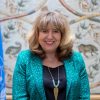
Biodiversity: Roll Up the Sleeves and Do Something, says Astrid Schomaker, New UNCBD Head
“We are living in a time where nature is regularly raising its hand and saying, 'Look, I'm here and I'm in trouble,' and then bringing us all sorts of natural disasters to the table," says Astrid Schomaker, Executive Secretary of the United Nations Convention on Biological Diversity (UNCBD), in an exclusive interview with IPS.
Explainer: COP16—What’s It About and What Does It Need to Achieve?
‘Peace with Nature’ is the theme for the 16th meeting of the Conference of the Parties (COP16) to the Convention on Biological Diversity (CBD), which will take place in Cali, Colombia, between October 21 and November 1, 2024.
Clean Energy Boosts Autonomy for Brazilian Women Farmers – VIDEO
 A community bakery, family production of fruit pulp, and the recovery of water springs are some of the initiatives of the Energy of Women of the Earth, organised since 2017 in the state of Goiás, in central-western Brazil.

Fast-Acting Interventions Needed for Sudanese Refugee Children as Needs Outpace Response
As peace eludes war-torn Sudan, thousands of displaced people fleeing the deadly battle between the Sudanese Armed Forces (SAF) and Rapid Support Forces (RSF) have found refuge in neighboring countries, including Egypt.
Absence of Reproductive Care Haunts Syrian Displaced Women
Pregnant women in northern Syria's camps for internally displaced people fear about their health and the health of their unborn children because of a lack of basic medical care and a healthy diet. These conditions exacerbate the illnesses and challenges faced by women, particularly amid the region's widespread poverty, food insecurity, and the remoteness of hospitals and health centers from the camps.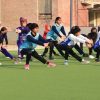
Climate Change Poses Yet Another Stumbling Block for Pakistani Sportswomen
Goalkeeper Rehana Jamali, 17, is jubilant. Her team came in second in the All Sindh Women Hockey Tournament, held last month.
Various Uncertainties Block Indigenous Land Rights in Brazil
A never-ending battle threatens the indigenous rights that seemed clear and secure in Brazil, until the extreme right emerged in 2018 with a force challenging the civilisational advances set out in the Constitution.
Neglected for Years, Mpox Now a Public Health Emergency of International Concern
There is a deadly outbreak of a new and graver variant of mpox in the Democratic Republic of Congo (DRC), and at least one case has been confirmed in nearly 12 African countries, including those like Kenya, Burundi, Uganda, and Rwanda that were previously unaffected. Suspected mpox cases across these countries have surpassed 17,000, a significant increase from 7,146 cases in 2022 and 14,957 cases in 2023.
Micro-Dams, a Solution to Water Shortages in Rural Brazil
Water shortage is over, springs have emerged or become perennial, small ponds with fish have formed and pastures have become greener and more permanent, all thanks to the ‘barraginhas’, the Portuguese name given in Brazil to micro-dams that retain rainwater and infiltrate it into the soil.
Gender Equality Has Everything To Do with Climate Change
After years of reporting on the frontlines of climate change, I have witnessed the devastating impact extreme weather events have on women and girls. In Kenya’s pastoralist communities in far-flung areas of Northern Kenya, West Pokot, Samburu and Narok counties, droughts mean a resurgence in harmful cultural practices such as outlawed female genital mutilation (FGM), beading and child marriages.
Rizwana Hasan Vows to Ensure Justice for Those Killed During Bangladesh’s Quota Reform Movement
Justice for all those who died and suffered injuries during the recent student-led quota reform movement in Bangladesh and reforms to the systems to ensure that this justice takes place are not negotiable, an adviser to the Bangladesh interim government, Syeda Rizwana Hasan, told IPS in an exclusive interview« Previous Page — Next Page »





The Week with IPS

NEXT STOP - SDGs
Tracking global progress towards a sustainable world
Tracking global progress towards a sustainable world
