Languages
Saturday, October 10, 2026



News and Views from the Global South
Energy

Europe’s Dash for Gas Presents Pitfalls for Africa
One of the knock-on effects of Moscow’s invasion of Ukraine is that European countries have embarked on a ‘dash for gas’ to find alternatives to Russian energy supplies.
Solar Energy Benefits Children and Indigenous People in Northern Brazil
Solar energy is booming in Roraima, a state in the far north of Brazil, to the benefit of indigenous people and children in its capital, Boa Vista, and helping to provide a stable energy supply to the entire populace, who suffer frequent electricity shortages and blackouts.
Needed Global Financial Reforms Foregone yet Again
Calls for more government regulation and intervention are common during crises. But once the crises subside, pressures to reform quickly evaporate and the government is told to withdraw. New financial fads and opportunities are then touted, instead of long needed reforms.
Mexico’s Huge Challenge To Refine Marine Green Fuels
VERACRUZ, Mexico - By 2025, the state-owned Petroleos Mexicanos (Pemex) should comply with Mexican regulations to produce clean fuels, including marine ones, but there’s an obstacle: Mexico lacks a plan for the development of cleaner marine fuels.
Energy Efficiency Is Law in Chile but Concrete Progress Is Slow in Coming
The Energy Efficiency Law began to gradually be implemented in Chile after the approval of its regulations, but more efforts and institutions are still lacking before it can produce results.
Rich Nations Doubly Responsible for Greenhouse Gas Emissions
Natural flows do not respect national boundaries. The atmosphere and oceans cross international borders with little difficulty, as greenhouse gases (GHGs) and other fluids, including pollutants, easily traverse frontiers.
Can Asia and the Pacific Get on Track to Net Zero?
The recent climate talks in Egypt have left us with a sobering reality: The window for maintaining global warming to 1.5 degrees is closing fast and what is on the table currently is insufficient to avert some of the worst potential effects of climate change. The Nationally Determined Contribution targets of Asian and Pacific countries will result in a 16 per cent increase in greenhouse gas emissions by 2030 from the 2010 levels.
Open Veins of Africa Bleeding Heavily
The ongoing plunder of Africa’s natural resources drained by capital flight is holding it back yet again. More African nations face protracted recessions amid mounting debt distress, rubbing salt into deep wounds from the past. With much less foreign exchange, tax revenue, and policy space to face external shocks, many African governments believe they have little choice but to spend less, or borrow more in foreign currencies.
Will the Global Energy Crisis Accelerate the Energy Transition? The Big Question at COP27
COP27 is unlikely to produce new commitments to reduce emissions of climate-changing gases, but the global energy crisis will eventually prompt more action by countries to move away from fossil fuels. That is the positive feeling that many observers are taking away from the annual climate summit being held in Egypt.
The United Kingdom’s, USA’s and Russia’s Great Game: A History Lesson about War and Greed
Like most armed conflicts the Ukrainian war intends to establish hegemony over a certain area, in rivalry with other usurpers. Russian propaganda pinpoints the US and EU as Russia’s main adversaries, while Ukraine is portrayed as a pawn in these nations’ international yearnings. Such a scenario is not new.
COP27 Fiddling as World Warms
The latest annual climate conference has begun in the face of a worsening climate crisis and further retreats by rich nations following the energy crisis induced by NATO sanctions after the Russian invasion of Ukraine. Copping out again The 27th Conference of the Parties (COP 27) to the United Nations Framework Convention on Climate Change (UNFCCC) is now meeting in Sharm-el-Sheikh, Egypt, from 6 to 18 November 2022.
Former War Zones in El Salvador Obtain Water with the Help of the Sun – VIDEO
 Several community-run water projects powered by solar energy have improved the quality of life of thousands of rural families in areas that were the scene of heavy fighting during El Salvador's civil war in the 1980s.
Revealed: Rich Countries ‘Miserably’ Fall Below Their Climate Promises, Further Indebt the Poor
Just a few days ahead of the UN Climate Conference (COP27) in Egypt (6-18 November), new revelations show how far rich, industrialised countries –those who contribute most to the growing catastrophes- have been lying over their real contributions to climate finance.
Solar Power Brings Water to Families in Former War Zones in El Salvador
The need for potable water led several rural settlements in El Salvador, at the end of the 12-year civil war in 1992, to rebuild what was destroyed and to innovate with technologies that at the time seemed unattainable, but which now benefit hundreds of families.
Campaign for a Fossil Fuels Non-proliferation Treaty Gathers Steam
When it comes to moral endorsements, having the Vatican’s backing takes some beating. So the international campaign for a legally binding Fossil Fuel Non-Proliferation Treaty took a huge step forward in July when Cardinal Michael Czerny, the prefect of the Dicastery for Promoting Integral Human Development, gave it his total support.
Early Coal Retirement: How about a Global Auction
Report after report highlights that we can only achieve the greenhouse gas (GHG) emission reductions required by the climate goals of the Paris Agreement if much of the existing coal power generation capacity is retired early. To this end, one concept that deserves greater consideration is conducting an auction for early retirement of coal power plants worldwide: a global coal retirement auction. This article sets out the broad outlines of how this global auction might operate.
Oil Exporters Make Markets, Not War
The decision to cut oil production by the Organization of Petroleum Exporting Countries (OPEC) and its allies as of Nov. 1 comes in response to the need to face a shrinking market, although it also forms part of the current clash between Russia and the West.
How China Can Retire Coal Early in Pakistan and Elsewhere Through the BRI
With COP 27 approaching, pressure is mounting on wealthy countries to increase their support to poorer ones in the face of climate change. The recent floods in Pakistan have amplified this issue. China, as the world’s second largest economy, will similarly face increasing pressure to help other developing countries on climate.
War, Greed and Mass Manipulation
In his treatise On War, the Prussian general Carl von Clausewitz (1780–1831) stated that war is “merely a continuation of policy with other means”. With his experience from the Napoleonic Wars von Clausewitz knew that totalitarian regimes could end up conducting huge and ruthless military campaigns. Furthermore, he assumed that to win a war it is necessary to mobilize and indoctrinate the inhabitants of an entire nation. Such an endeavour is called total war, a term that actually can be applied to Putin’s war in Ukraine.
Europe in Its Labyrinth
European politicians continue to run in all directions to find a way out of their energy crisis. One of them – Simonetta Sommaruga, the Swiss Environment Minister, asked people to ‘shower together’. Others are competing to grant the business of transporting energy from the North of Africa to the continent. All this is not new.
Solar Energy, the Solution for Remote Communities in Argentina
When asked about the impact of incorporating solar energy at the school he runs in Atraico, a remote rural area in the Patagonian steppe in southern Argentina, Claudio Amaya Gatica is unequivocal: "Life has changed, not only for the school but for the whole community.”« Previous Page — Next Page »





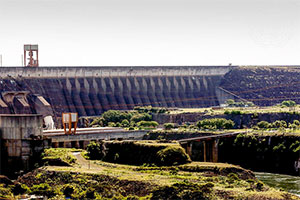 UN Power Plant, Paraguay. Credit: UN Photo/Evan Schneider
Energy has posed a great challenge for economies around the world. As global energy consumption skyrockets throughout the years, so does the need for sustainable solutions. The Sustainable Development Goals are essential in providing people with access to safe, affordable, and sustainable energy sources that minimize harm on the planet. Progress towards these goals opens the door for an advancement in modernization for communities on a global level and allows for a potential mitigation of tensions between nations.
The UN’s Summit of the Future in 2024 offered new initiatives that are being taken to achieve these goals, including a decreased reliance on fossil fuels, a switch to renewable energy sources, and improved climate financing.
IPS is well positioned to provide relevant, insightful, and compelling analysis of recent updates and measures being taken around the world to achieve a cleaner future.

The Week with IPS

NEXT STOP - SDGs
Tracking global progress towards a sustainable world
Tracking global progress towards a sustainable world
