
Monday, November 23, 2026



News and Views from the Global South
Environment
G24 Says Rich Nations’ Policies Hurting Developing World
Finance ministers of the G24 group of developing and emerging countries met on the sidelines the World Bank and International Monetary Fund spring meetings here on Thursday, warning against continued risks to their economies, despite largely "strong" growth as the world climbs out of the global financial crisis.
A Table for Nine Billion
As the World Bank and International Monetary Fund convene for their annual Spring Meetings here, soaring food prices are high on the agenda, prompting some analysts to fast-forward to 2050 and the question of how to nourish the mid-century's estimated world population of 8.9 billion people – the majority of whom will live in developing countries.
ENVIRONMENT: Military Debris Threaten Oceans
 Military debris dumped into the world’s oceans are hazardous to coral ecosystems, reefs, fish and marine wildlife, say experts, who also warn - in light of the recent tragedy in Japan - that earthquakes and tsunamis could disturb this debris and even wash it ashore.
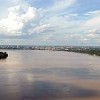
Emerging Powers Harnessing Neighbours’ Hydroelectricity
Emerging countries like Brazil and China are building numerous hydroelectric dams at home and abroad to help drive their economic growth. But while in Latin America the phenomenon is touted as an integration process, in Asia it has generated tension over the shared use of rivers.China’s Green Blueprint Raises Stakes at U.N. Climate Talks
China’s rise as a leader in the environmentally friendly, low-carbon economy is giving the Asian giant new diplomatic muscle for this year’s round of climate change negotiations leading up to the COP17 U.N. summit in Durban, South Africa in November.WATER-SOUTH AFRICA: Managing Flooding on the Orange River
Many farms and crops were devastated when the January floods hit South Africa at the start of this year. Farmer organisation Agri South Africa (AgriSa) estimated damages as high as 270 million dollars.
JAPAN: Difficult Shift From Aid Donor to Recipient
April has traditionally been the time for ‘hanami’, or cherry blossom festivals, when millions of Japanese hold parties under the pink flowering trees in parks and streets lit up gaily by lanterns.LATIN AMERICA: Boosting Accountability for Mining and Oil Industries
Guatemala has been accepted as a candidate country by the Extractive Industries Transparency Initiative (EITI), which aims to strengthen governance by improving transparency and accountability in the sector, and to reduce tensions between mining and oil companies and local people affected by their activities.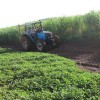
BRAZIL: Sugar Cane Fertilises Its Own Soil
The mechanisation of sugar cane harvesting, originally aimed at curbing the pollution caused by the burning of cane fields, has resulted in an added bonus: it has helped to improve soil quality, according to growers and technical experts in the southern state of São Paulo, where most of Brazil’s sugar and ethanol is produced.
Israel Leads the Electric Charge
A woman takes the driver's seat, turns on the radio, sliding through broadcasts of the tit-for-tat battles between Israel and the Palestinian Islamist movement Hamas till she finds a quiet music station.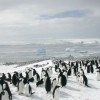
Antarctic Penguin Population Declines with Krill
Two species of Antarctic penguins have declined sharply over the past 30 years as their chief food source has been devastated by a combination of other predators, over-fishing, and rapidly melting sea ice caused by global warming, according to a new study released here Monday by the National Academy of Sciences.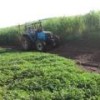
Sugar Cane Fertilises Its Own Soil
Sugar cane growers and technical experts in southern Brazil highlight the environmental benefits of a crop that continues to draw harsh criticism from other quarters.
Endangered Monkey Survives in Tiny Private Paradise
A young forest planted by a woman from the Peruvian Amazon has provided a home for 40 specimens of a highly endangered monkey species with very few places left to live.Ecobreves – OIL: Cuba Promises Environmental Safeguards in the Gulf of Mexico
Cuba has pledged to adopt all necessary environmental safeguards as it prepares to begin drilling five oil wells in the Gulf of Mexico, which it shares with Mexico and the United States.Ecobreves – VENEZUELA: Sigatoka Disease Spreads Through Banana Plantations
Heavy, sustained rainfall outside the normal rainy season has triggered an upsurge in the spread of Mycosphaerella fijiensis, the fungus that causes Black Sigatoka disease, in banana plantations south of Lake Maracaibo in northwestern Venezuela.Ecobreves – HONDURAS: More Than 500 Forest Fires
In the first quarter of 2011, over 500 forest fires were recorded in 16,973 hectares of forest, Trinidad Suazo, director of the Forest Conservation Institute of Honduras, told Tierramérica.Ecobreves – BRAZIL: Super Plastic Developed from Fruit Fibres
Researchers at the State University of São Paulo have created a new plastic ideal for use in automobiles from fruit fibres, using nanotechnology.
EUROPE: The Harmless Invasion of the Pacific Oyster
In the 1970s, French oyster breeders introduced the Pacific oyster (Crassostrea gigas) to the Bay of Biscay to diversify the area’s species and develop the commercial oyster industry.
BRAZIL: Belo Monte Dam Faces Endless Hurdles and Controversies
The Xingu river flows around small isles and islands and across rapids and waterfalls in Brazil's Amazon jungle, and has a dramatically reduced flow during dry season. Navigating it presents constant hurdles and risks.CLIMATE CHANGE: Developing Countries Step In Where Richer Nations Fear to Tread
Led by countries like Indonesia, 48 developing nations are rolling out a range of pledges to voluntarily cut their respective emissions of greenhouse gases (GHG) by 2020, the year climate scientists say the earth’s rising temperature should peak by if an environmental catastrophe is to be avoided.CUBA: Balancing Bane and Blessing of Oil
Cuba is sticking to its plans to begin oil exploration this year in its territorial waters in the Gulf of Mexico, and has assured neighbouring countries that "every reasonable" safety and environmental protection measure will be taken, in an area still haunted by the disastrous effects of the crude oil spill in 2010.« Previous Page — Next Page »


Through our global network of local writers, we are continuing our award-winning coverage of global and local environmental challenges, with a focus on the people for whom the ecosphere matters in a direct way: rural dwellers who have little means to protect themselves against adverse conditions; communities that need to switch to sustainable development in order to survive; poor women and children, who are the most vulnerable in natural disasters. Sponsored by the United Nations Environment Program (UNEP), the United Nations Development Program (UNDP) and The World Bank (WB), IPS also maintains the award-winning Tierramérica, a specialised information service on environment and development.

The Week with IPS

Tracking global progress towards a sustainable world


