
Monday, November 23, 2026



News and Views from the Global South
Environment
ENVIRONMENT: U.N. Tries to Put Its Own House in Order
In the past few years, United Nations headquarters in New York has undergone a transformation. Besides renovating the entire building, the U.N. is trying, as a leading international organisation, to take more responsibility and set an example for environmentally-friendly, sustainable practices by implementing such changes as cutting back on printing, posting more documents online, and creating water-saving measures.
HEALTH-COLOMBIA: Controversy Still Surrounds Malaria Vaccine Pioneer
The announcement of progress towards making synthetic vaccines against 517 infectious diseases, and the award of an international prize for his work have stirred up lively controversy around Colombian pathologist Manuel Elkin Patarroyo, a malaria vaccine pioneer.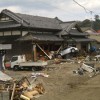
EXCLUSIVE: Report from Fukushima
 My decision to visit Fukushima - the area worst hit by the massive quake, tsunami and nuclear power accident on Mar. 11 - was taken one afternoon last week after a long meeting with scientists.
CLIMATE CHANGE: World Bank Under Fire for Role in New Global Green Fund
The World Bank is facing mounting opposition from a broad network of green and grassroots activists over its role in a new global Green Climate Fund (GCF) aimed at helping developing countries combat the ravages of climate change.
WORLD HEALTH DAY: The Ten-Year Timeline for Antibiotics Burnout
Though the World Health Organisation (WHO) has focused this year's World Health Day Apr. 7 on prioritising the struggle against the global spread of antimicrobial resistance (AMR), scores of international researchers and scientists fear this decision is coming too late, with 2011 already shadowed by the failure of pharmaceutical antibiotics to curb the proliferation of diseases.
Brazil Beefs Up Nuclear Emergency Plans
The Brazilian government is tightening safety procedures at its two nuclear power stations. Although this South American country is not prone to earthquakes or tsunamis, it is not exempt from natural disasters like landslides and flooding that could jeopardise evacuation plans if a radiation leak occurred.
BRAZIL: Porto Alegre Cyclists Step Up Demands for Bike Lanes
In the weeks since a motorist mowed down dozens of cyclists in the southern Brazilian city of Porto Alegre, the incident has becoming a rallying flag in the fight to create a more bike-friendly city.
ARGENTINA-BOLIVIA: Gas Pipeline to Boost Development, Revenues – But Not for Everyone
"The pipeline will carry gas to Bolivia and seven provinces in Argentina, but we who live in Campo Durán, where the pipeline starts, will not have gas," Julio Palavecino told IPS.LATIN AMERICA: Tracking Down Radioactive Food Imports
Rather belatedly, Latin America is beginning to test products imported from Japan to check that they are not contaminated with radioactivity from the Fukushima nuclear power station that was severely damaged by the Mar. 11 earthquake and tsunami.‘No Safe Levels’ of Radiation in Japan
In a nuclear crisis that is becoming increasingly serious, Japan’s Nuclear Safety Agency confirmed that radioactive iodine-131 in seawater samples taken near the crippled Fukushima Daiichi nuclear power complex that was seriously damaged by the recent tsunami off the coast of Japan is 4,385 times the level permitted by law.CLIMATE CHANGE: Uncertain Future of Kyoto Protocol Alarms Green Groups
With just seven months to go before a pivotal U.N. climate change summit in South Africa, green groups are raising the alarm here about the future of the Kyoto Protocol, the world’s only international treaty that mandates most industrialised nations to cut their environment polluting greenhouse gases (GHG) to save the planet from overheating.BRAZIL: Science and Sugar Cane Produce Versatile Harvest
For nearly five hundred years, sugar cane was used almost exclusively for making sugar, with a handful of by-products like rum, alcohol and molasses. Now, in Brazil, it has become a source of multiple derivatives, and the focus of much scientific and technological research.
Porto Alegre Cyclists Step Up Demands for Bike Lanes
A motorist’s attack on a group of cyclists in Porto Alegre has drawn local and international attention to the cause of bicycles as a mainstream means of transportation.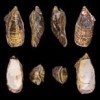
The Harmless Invasion of the Pacific Oyster
Exotic species pose a threat to biological diversity in many parts of the world. But the invasion of the Baltic Sea by an oyster native to the Pacific coast of Asia is rather atypical in several ways.Ecobreves – ARGENTINA: Buenos Aires to Contract Cooperatives for Waste Collection
The city of Buenos Aires will contract 13 cooperatives to handle the collection and recycling of all of the capital’s dry wastes as of 2012.Ecobreves – BRAZIL: Guaraní Aquifer Threatened by Pollution
The illegal dumping of garbage and toxic agrochemicals used in sugarcane farming poses a serious threat to Latin America’s largest groundwater reservoir, the Guaraní Aquifer, according to the Institute for Technological Research (IPT) in the southern Brazilian state of São Paulo.Ecobreves – HONDURAS: Illegal Dam Construction Under Investigation
The Office of the Special Prosecutor for Ethnic Groups in Honduras is investigating the construction of small hydroelectric dams without the required environmental licences in the western department of Intibucá, which is home to most of the country’s Lenca indigenous people.
SOUTHERN AFRICA: Assessing the True Value of Water
As water resources in Southern Africa come under pressure from growing population, climate change and increasing industrial and agricultural use, economic accounting for water is among the tools that could aid better management.
UGANDA: Sun Smiling on Renewable Energy Initiative
Clementine Auma was still living in a displaced person's camp in Gulu district when she acquired the treasure she's gone into the house to fetch. She re-emerges from her home with a white box in her arms: a solar oven.Fukushima Forces Europe to Rethink Nuclear Energy
The unfolding catastrophe at the Japanese nuclear power plant Fukushima has forced a number of European countries to radically rethink their energy policies and eventually renounce nuclear power.A Fatal Addiction to Plastic
"Be fantastic, don't use plastic!" chanted a troop of 10-year- olds from President Thomas Jefferson Elementary School in Honolulu at the conclusion of an international conference on the millions of tonnes of trash that enter the oceans every year, with serious consequences for marine life and habitats as well as to human health and the global economy.« Previous Page — Next Page »


Through our global network of local writers, we are continuing our award-winning coverage of global and local environmental challenges, with a focus on the people for whom the ecosphere matters in a direct way: rural dwellers who have little means to protect themselves against adverse conditions; communities that need to switch to sustainable development in order to survive; poor women and children, who are the most vulnerable in natural disasters. Sponsored by the United Nations Environment Program (UNEP), the United Nations Development Program (UNDP) and The World Bank (WB), IPS also maintains the award-winning Tierramérica, a specialised information service on environment and development.

The Week with IPS

Tracking global progress towards a sustainable world


