
Wednesday, November 25, 2026



News and Views from the Global South
Environment
Bamboo Against Deforestation
As the farming frontier pushes into forests and threatens natural resources, in southern Paraguay an effort is under way to cultivate tacuara and other cane species in harmony with nature.
Quake Damage Begins at Home
There is little awareness about quake-related dangers for homes and other buildings in vulnerable zones like Cuba, say experts.Ecobreves – HONDURAS: Highway Avoids Native Species
The stretch of road intended to facilitate trade between Honduras and El Salvador is not expected to harm the endemic species the Honduran emerald hummingbird (Amazilia luciae) or the spiny-tailed iguana (Ctenosaura melanosterna) as environmentalists had feared it would.Ecobreves – CUBA: Blue Scorpion Against Cancer
Cuban scientists have isolated three proteins from the poison of the Caribbean's blue scorpion (Rhopalurus junceus), which inhibit malignant cancer cells. The scientists say they are willing to work with other laboratories to expand the research.Ecobreves – CHILE: Preparing for Cochabamba Climate Summit
More than 100 people will be part of the Chilean delegation to the World People's Conference on Climate Change and the Rights of Mother Earth, to take place Apr. 19-22 in the central Bolivian city of Cochabamba.Ecobreves – BRAZIL: Plant Fiber Production Expands
The Brazilian Amazon region is beginning to reinstate itself in production of plant fibers, benefitting from campaigns against plastics.Ecobreves – VENEZUELA: Readying for Reforestation
Venezuela's Environment Ministry announced that it will finalize resources for the Tree Mission, a reforestation program for river headwater areas begun in 2006, and now intended to recover national parks affected by the fires resulting from the drought that has lasted since 2009.ENVIRONMENT-CHINA: Record Drought Exposes Water Woes
A once-in-a-century drought in south-west China has sparked concern over how China, which has one-fifth of the world’s population but just 7 percent of its water, has managed its water supply and growing network of hydroelectric dams.
ZAMBIA: Health Fears Follow Floods
As the heavy rains subside, signifying the end of the rainy season, a cholera outbreak is sweeping through the Zambian capital, Lusaka.SOUTH AFRICA: Coal Plant Won’t Promote Development, Say Groups
As the World Bank approved a controversial three-billion-dollar loan for a coal-fired power plant in South Africa Thursday, both the details and the broader impacts of the loan continue to be criticised by community and environmental groups.ECUADOR: Environmental Inspection in Yasuni Park
Representatives of Ecuador's ombudsman's office and environmental groups are visiting the Yasuni National Park on Saturday, home to some of the world's last indigenous people still living in voluntary isolation, in order to verify reports of illegal activity by oil companies.ENVIRONMENT-BRAZIL: A Tragedy of Local and Global Dimensions
The people who live in the favela of Guararapes are probably unaware that the heavy rains that forced them to flee their homes were caused by a phenomenon that is affecting the whole planet: global warming.
CARIBBEAN: Final Throes for Jamaica’s ‘Hippie Paradise’?
For centuries, Negril, a seven-mile stretch of white sand beach on the western tip of Jamaica, was cut off from the rest of the island by bad roads and a large swamp.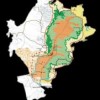
SOUTH AMERICA: Clear Water – Mercosur’s Underground Treasure
Invisible beneath a vast area of Argentina, Brazil, Paraguay and Uruguay, the Guaraní Aquifer is one of the world's largest reserves of freshwater. Despite supplying water to millions of people, it is neither contaminated nor overexploited.ARGENTINA: Sweeping the (Garbage) Problem Under the Rug
To live up to the "Zero Garbage" law that went into effect in 2006, the volume of waste ending up in landfills in the Argentine capital was to be significantly reduced every year, with the ultimate aim of eradicating landfills by 2020. But environmentalists are skeptical that the goal will be reached.
PERU: Miners Call Off Protests for Talks; Six Killed in Clashes
In response to a government promise to negotiate, small-scale gold miners in southern Peru temporarily called off protests Wednesday in which six people were killed and as many as 30 injured when the police attempted to clear a roadblock.
URUGUAY: Fighting Climate Change from the Countryside
"We would get up and go to bed every day looking up at the sky, hoping for something to fall, but nothing happened, not even a drop fell," says María Inés Queiros, who makes artisanal cheese in the southern Uruguayan province of San José.
ENVIRONMENT: Forests at a Climate Crossroads
Billions of dollars are being mobilised to protect and increase the world's forests under a climate protection mechanism known as REDD (Reduced Emissions from Deforestation and Degradation). But many experts are unsure that it will work, and some fear it could end in disaster.
WATER : Swazi Village Gets a Self-Sustaining Water Supply
No one loves the bill collector, and Sifiso Shongwe gets a chilly welcome as he goes from household to household collecting money for Maphilingo's community water scheme.ASIA: Mistrust Lingers as China Confronts Thorny Mekong Issues
Lost in the deluge of accusations that China's dams are the culprit in the Mekong River's unusually low levels is the fact that Beijing has actually become much less tightlipped about thorny issues with its neighbours than in the past.ENVIRONMENT-INDONESIA: Solving Waste Woes Far from Easy
By running his illegal dumpsite, Nasrulloh believes he is doing the community good, helping the city government, doing his bit for the environment – while making money for himself as well.« Previous Page — Next Page »


Through our global network of local writers, we are continuing our award-winning coverage of global and local environmental challenges, with a focus on the people for whom the ecosphere matters in a direct way: rural dwellers who have little means to protect themselves against adverse conditions; communities that need to switch to sustainable development in order to survive; poor women and children, who are the most vulnerable in natural disasters. Sponsored by the United Nations Environment Program (UNEP), the United Nations Development Program (UNDP) and The World Bank (WB), IPS also maintains the award-winning Tierramérica, a specialised information service on environment and development.

The Week with IPS

Tracking global progress towards a sustainable world


