
Thursday, November 26, 2026



News and Views from the Global South
Environment
ENVIRONMENT-SOUTH AFRICA: Opportunities Spring From e-Waste
There was an audible gasp when Kirsten McIntyre told the audience that e-waste is the third fastest growing waste stream in the world, with between 40 and 50 million tons of computers, TVs and washing machines being "thrown away" each year.
Q&A: Desertification and Climate Change Go Hand in Hand
"The entire social fabric of an area is compromised when soils are depleted," says Italian expert Massimo Candelori, whose fight against desertification is increasingly linked to global efforts to combat climate change.DEVELOPMENT: Resource Crunch Signals Larger Ecological Crisis
How would development programmes look if viewed from the position of scarcity, especially the scarcity of food, water, and energy?
SOUTH AFRICA: We Have Land Rights but No Water Rights – Farmers
Thandi Sihadi stands next to a dry tap. As a maize and dairy farmer in one of South Africa’s driest districts, the lack of running water is nothing new to her.
ENVIRONMENT: Turning Junk Mail Into Art
Like everyone else, Barbara Hashimoto hated the junk mail coming in through the door. Until she decided one day that it could be transformed into art, and lessons about the environment.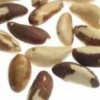
Amazon Nuts at Exploitative Prices
The low pay for harvesting Brazil nuts in the Amazon has allowed Bolivia to become the world's leading exporter of this forest-grown food.
Desertification and Climate Change Go Hand in Hand
Precise indicators are needed to quantify desertification and its interactions with climate change, says expert Massimo Candelori in this exclusive Tierramérica interview.Ecobreves – BRAZIL: Biodiesel Sustainability Is in Doubt
Animal fat is the second leading raw material used in making biodiesel in Brazil, representing 14.62 percent of the total in July, following soybean oil (78.7 percent).Ecobreves – VENEZUELA: Dolphin Census
With cameras in hand, youths from the environmental group Vida Marina (Marine Life) use boats to track the dolphins in the Caribbean off the coast of the Venezuelan state of Aragua. They are putting together a dolphin database.Ecobreves – CUBA: Cultivating Sea Sponges
The creation of farms to grow sea sponges is opening the way for an economic and environmental alternative in Carahatas, a fishing community of 800 people in the central Cuban province of Villa Clara.Ecobreves – CHILE: Studying Flora for Biofuels
The Chilean government's National Resources Information Center will analyze 30 plant species to determine which are most suitable for developing biofuels and their potential for cultivation in this country.Ecobreves – HONDURAS: Betting on Renewable Energies
In the next two months Honduras is launching several renewable energy products that could save the country 87 million dollars and improve the operations of the government's national electrical energy agency.ENVIRONMENT: India Warms Up to Copenhagen
With the clock ticking away on the United Nations Framework for Climate Change Committee (UNFCCC) summit in Copenhagen in December, the fractiousness between the developed and the developing nations on who ought to do more to control climate change is getting increasingly strident.PHILIPPINES: Ketsana Signals Need for ‘No Regrets’ Adaptation Plan
Typhoon Ketsana, which swept into the Philippines and left hundreds of people dead and massive devastation in its wake, should serve as a wake-up call to the government.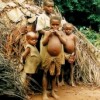
CAMEROON: ‘Our Lives Are Defined By This Forest’
Pauline Siembe, a Baka pygmy in South East Cameroon, comes out of her smoky hut licking her fingers after a meal of pounded yam and bush meat soup.ENVIRONMENT: Nations Urged to Share Low Carbon Development Costs
Following a strict global carbon budget is the only way to ride out climate change — and this is as much the responsibility of developing countries as it is of developed ones.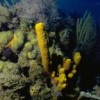
MEXICO: Underwater Museum to Protect Coral Reefs
Four sculptures in human forms, made of concrete, will be submerged in November in the Mexican Caribbean - the first of 400 figures that will comprise the world's largest underwater museum.SOUTHERN AFRICA: Too Much Water and Not Enough to Drink
Mmankosana Letsoela has been queuing since 5am to collect water. You would think that arriving so early at the bore-hole water pump; she would be the first in line.VIETNAM: Preparation Mitigates Impact of Typhoon Ketsana
Three days may have been a small window of opportunity, but it was enough time to save thousands of lives.
CAMEROON: Gearing Up for Copenhagen
"Developed countries have failed to respect the Kyoto Protocol which compelled them to reduce latest 2008 emissions of greenhouse gases by five percent. There is therefore need for new engagements to be taken at the Copenhagen Summit." Decisive words from Cameroon's minister for the environment, Pierre Hele.
TRADE: “We Won’t be Frogmarched Towards a Doha Conclusion”
In a rare meeting of minds, a parliamentarian, a civil servant and a trade unionist, all three from Africa, agreed that the current course of the World Trade Organisation’s Doha Round of trade talks is detrimental to the interests of African countries.« Previous Page — Next Page »


Through our global network of local writers, we are continuing our award-winning coverage of global and local environmental challenges, with a focus on the people for whom the ecosphere matters in a direct way: rural dwellers who have little means to protect themselves against adverse conditions; communities that need to switch to sustainable development in order to survive; poor women and children, who are the most vulnerable in natural disasters. Sponsored by the United Nations Environment Program (UNEP), the United Nations Development Program (UNDP) and The World Bank (WB), IPS also maintains the award-winning Tierramérica, a specialised information service on environment and development.

The Week with IPS

Tracking global progress towards a sustainable world


