
Friday, November 27, 2026



News and Views from the Global South
Environment
RIGHTS-SUDAN: ‘We Really Need Some Political Will’
The civil war in Darfur, a six-year conflict that has killed up to 300,000 Sudanese civilians thus far, is now virtually out of U.N. Secretary-General Ban Ki-Moon’s hands.
ENVIRONMENT: Polluters See Green in Carbon Market
Egypt's pollution problem is a potential goldmine of foreign revenue - if the country can tap into the lucrative international carbon trading market.INDIA: Rural Communities Turn to Traditional Climate Mitigation
In Tamilnadu, southern India, and Uttar Pradesh, northern India, villagers have revived ancient systems of storing surface and groundwater that are putting them in a good position to contend with today’s changing climate.WORLD: Fishy Fishing Practices Threaten the Environment
For years, fishing communities along Africa’s 30,000 km-long coastline have been raising the alarm on the depletion of their fish stocks, to no avail. Over- fishing by foreign vessels has been wiping out the livelihood of West African fishers, contributing to desperate migration attempts into Europe.CHILE: Dakar Rally Left Trail of Archaeological Damages
The Dakar rally, held this year for the first time in Chile and Argentina, caused severe damage to archaeological sites in northern Chile, according to a report by the Council on National Monuments.Q&A: ‘We Do Not Want to See The Blame Game’
Developing economies are vulnerable to climate change and need funds to implement much needed adaptation and mitigation measures. This is one of the key points that needs to be addressed during the next round of U.N.-led negotiations on climate change in Copenhagen, according to Mohamed Aslam, Maldives Minister of Housing, Transport and Environment.INDIA: Fishermen Struggle As Seas Change and Fish Dwindle
At Pudumadaka beach, 60 kilometres from the coastal city of Vishakhapatnam in southeastern India, 40-year-old Ummudi Bangaraiah stares hopelessly at the day’s catch of 4 kilos of sardines, the money from which, when divided by the five other fishermen in his boat, will not pay for one meal for his family.ENERGY-CAMEROON: Dam Project Questioned
Construction has begun on a new dam at the confluence of the Lom and Pangar rivers in Cameroon. The government is pushing the project as key to addressing an energy shortfall, allowing for economic growth; observers believe the plan may only increase the country's vulnerability to drought.CAMEROON: Fears for Forest as Dam Construction Begins
Crouched on a low wooden stool in front of his mud hut in the village of Pangar, Alain Selembe puffs away at his clay pipe, his gaze lost in the surrounding forest, quite oblivious to the noise made by his two playing daughters. All he hears is the rumbling of bulldozers opening up a 30 kilometre road from Deng Deng village to the confluence of the Lom and Pangar rivers, where the government plans to construct a new dam.CLIMATE CHANGE: 75 Million Environmental Refugees to Plague Asia-Pacific
Pacific Islanders, aiming to secure their very survival, are calling for immediate commitments from the developed world to reduce greenhouse gas emissions by at least 45 percent by 2020.
COLOMBIA: Women Lead Opposition to Gold Mine
Women in the small Andean town of Cajamarca and the nearby city of Ibagué, in the central-west Colombian province of Tolima, are leading the struggle against a major gold mining venture that threatens to alter their way of life.
Q&A: 'Time to De-Grow'
Serge Latouche, professor emeritus of economic science at the University of Paris-Sud, is one of the main proponents of "the society of de-growth".
Mapping the Riches of the Tropical Andes
The cartography of the biodiverse Northern and Central Andes of South America is the first step towards their environmental conservation.
Tequila Leaves Environmental Hangover
The environmental impact of tequila production is only recently being recognized by the industry, say observers.Ecobreves – BRAZIL: In Pursuit of Illegal Cattle in the Amazon
Seven meatpacking plants and two exporters in the northern Brazilian state of Pará have pledged not to accept meat or livestock from illegally deforested areas of the Amazon.Ecobreves – MEXICO: Transgenic Oversight Agency Awakens Doubts
Mexico has set up an agency to monitor the presence of genetically modified organisms, but environmentalists see it as a cosmetic effort.Ecobreves – ARGENTINA: Applause for Maritime Rules in Antarctica
The non-governmental Whale Conservation Institute of Argentina is celebrating the International Maritime Organization's decision to regulate navigation in Antarctica's waters in order to protect the environment.
TANZANIA: Solutions to Dar's Water Problems in the Pipeline
In the nine months since she moved to the Dar es Salaam neighbourhood of Kinondoni, Anna Christopher has only seen water running from her taps once.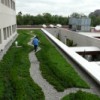
MEXICO: Green Therapy on the Rooftops
In the last two years a Mexico City hospital, kindergarten and municipal government office building have experimented with plant-covered rooftops. Today, workers and visitors are enjoying the benefits.WATER-TANZANIA: Who Pays the Piper?
When John Rubara* and his family moved into their new house in Dar es Salaam's Tabata Kimanga, a fast-growing middle-income neighbourhood in Temeke district, the water company disconnected their supply because the previous owner was in arrears.U.S.: Coal Power Hitting Roadblocks
As more and more states are turning against coal power facilities in the U.S., advocates have been using the legal system to halt new pending plants.« Previous Page — Next Page »


Through our global network of local writers, we are continuing our award-winning coverage of global and local environmental challenges, with a focus on the people for whom the ecosphere matters in a direct way: rural dwellers who have little means to protect themselves against adverse conditions; communities that need to switch to sustainable development in order to survive; poor women and children, who are the most vulnerable in natural disasters. Sponsored by the United Nations Environment Program (UNEP), the United Nations Development Program (UNDP) and The World Bank (WB), IPS also maintains the award-winning Tierramérica, a specialised information service on environment and development.

The Week with IPS

Tracking global progress towards a sustainable world


