
Friday, November 27, 2026



News and Views from the Global South
Environment
G8: It Will Be a Tale of Two Summits
There is a reason that eight and five do not add up to 13 when it comes to the G8. And it is not just that the five developing countries that now attend the summit of the eight mighty ones as a matter of course are less rich. It's because they have their own way to go, and parallel with the G8 meet, their own summit to attend.
Q&A: "It’s Wrong to Burn Food of the Poor to Drive Cars of the Rich"
The world needs to overcome "the bizarre irony that rural areas, where food is grown, is home to cruel poverty and hunger," says Ismail Serageldin, former chair of the Consultative Group on International Agricultural Research (CGIAR).IRAQ: Is Another Conflict Inevitable?
Relations between Iraq's various Kurdish, Arab and Turkoman ethnicities are going through a new round of complications since a provision in the draft constitution of the country's northern Kurdistan region declared a range of disputed areas part of the historical Kurdish homeland, infuriating non-Kurds in the country.
AGRICULTURE: A Stormy Time for Indigenous Wisdom
Indigenous peoples risk losing control over their traditional knowledge if the World Intellectual Property Organisation (WIPO) insists on strict standards for managing access to information.TRANSPORT-BRAZIL: Recharge Your Batteries Here
Brazil has long been committed to developing alternatives to fossil fuels to power its vehicle fleet, to the extent that 90 percent of new cars sold in the country are flex-fuel, running on ethanol or gasoline in any proportion. Now the government is embarking on another technological field: electric vehicles.G8: Not Everyone Is Following the Leaders
Many civil society organisations are staying on in Sardinia island in support of a region severely affected by the economic crisis, after the G8 leaders summit was moved from there to the city of L'Aquila.ENVIRONMENT-LAOS: Rubber Plantations Spawn Social Strife
For decades, rubber plantations in the country's Mekong region have reaped huge profits for local businessmen. However, this industry, long regarded a blessing, is now increasingly becoming a source of social strife.
Gold Conflict in Colombia's Central Mountains
The Colombian authorities could determine this month whether they will move forward on a giant gold mining project in a nature preserve in the central mountain range.
A Stormy Time for Indigenous Wisdom
The World Intellectual Property Organization is making an effort to protect indigenous knowledge, but its criteria put it on a collision course with the indigenous concept of knowledge itself.Ecobreves – BRAZIL: Invention to Curb Industrial Pollution
Industrial sulfate pollution could be practically eliminated using a biological process discovered at the Engineering School of the University of São Paulo.Ecobreves – MEXICO: Grass for Ethanol
From greenhouse-grown grasses in the southern Mexican town of Atlixco, some 150 km from the capital, a new type of biofuel could ultimately emerge.Ecobreves – ARGENTINA: Women Jailed for Defending Water Source
Residents of the northwestern Argentine province of La Rioja oppose exploration for an open-pit mining operation and have denounced "political persecution" against them.
SWAZILAND: Add Water and Stir
What is the first step towards transforming life in a hardscrabble rural community? Address issues of water.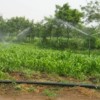
AGRICULTURE-AFRICA: Calls for Sustainable Green Revolution
Africa needs a Green Revolution, but one that will increase agricultural productivity by using practices that build soil fertility while minimising harm to the environment.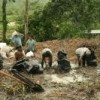
PERU: Petroleum Sullies the Amazon
"Now the fish are going to disappear," said Luis Umpunchi, an Awajún Indian, one of about 20 people gathered around a broken oil pipeline in the Jayais community, in the northern Peruvian province of Amazonas.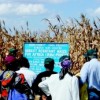
AGRICULTURE: Biotechnology: Africa Must Not Be Left Behind
Africa must embrace agricultural biotechnology or risk being excluded from a major technological revolution that has had increased food production in the Europe, North America and Asia.HEALTH: Sri Lanka’s Battle With Dengue
Sri Lankan health authorities have had to combat an upsurge in cases of the lethal Dengue flu in the island nation this year. They have used mass man-power, public awareness campaigns and even threatened incarceration to stem the spread of the killer disease that has touched epidemic levels in the past six months. But it won’t be easy to stop the disease from spreading.US-ECUADOR: Chevron Fails in Effort to Lift Trade Benefits
In the latest in a string of setbacks that could cost the U.S. oil giant Chevron billions of dollars in damages, President Barack Obama decided this week to extend trade preferences for Ecuadorean exports for another six months under the 1991 Andean Trade Preferences Act (ATPA).CLIMATE CHANGE: Opportunity For Biopirates?
Genetically modified (GM) crops that can withstand environmental stress may be one answer to climate change but a powerful lobby is building up against the patenting of technologies involved, especially when they are derivatives of traditional farmers’ innovations.
ENVIRONMENT: Scientists Study the Riches of the Mexican Pacific
Mexico’s Pacific coast, one of the world's richest seaboards in terms of biodiversity, has been the focus of very few scientific studies. A new observatory aims to fill that void.TRADE: Who’s Harming Fish Stocks? Trawlers or Artisanal Fishers?
Red tunas, sharks, rays and cods may soon disappear from our tables. Negotiations are ongoing at the World Trade Organisation (WTO) to reduce the subsidies that contribute to this catastrophe. These talks foresee exceptions for developing countries, but small fishers may have to turn to other sources of livelihood.« Previous Page — Next Page »


Through our global network of local writers, we are continuing our award-winning coverage of global and local environmental challenges, with a focus on the people for whom the ecosphere matters in a direct way: rural dwellers who have little means to protect themselves against adverse conditions; communities that need to switch to sustainable development in order to survive; poor women and children, who are the most vulnerable in natural disasters. Sponsored by the United Nations Environment Program (UNEP), the United Nations Development Program (UNDP) and The World Bank (WB), IPS also maintains the award-winning Tierramérica, a specialised information service on environment and development.

The Week with IPS

Tracking global progress towards a sustainable world


