Languages
Thursday, October 8, 2026



News and Views from the Global South
Europe
Erdoğan’s Race to Avoid Orbán’s Fate
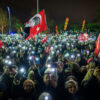
When Hungary’s Prime Minister Viktor Orbán lost by a landslide to a unified opposition in April, Turkey’s President Recep Tayyip Erdoğan was watching. The lesson he drew was not that he should be more moderate; it was that he needed to crack down harder. He had already arrested Istanbul Mayor Ekrem İmamoğlu, the opposition Republican People’s Party (CHP)’s leading presidential contender, in March 2025. After Orbán’s defeat, he has accelerated his campaign to fracture the opposition and rewrite the rules before the next election in 2028.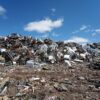
How Europe’s Waste Could Supply Over Half of Critical Material Demand – Report
Europe’s growing mountain of waste could become one of its most important sources of critical raw materials, according to a major new report that warns of rising geopolitical risks and growing global competition for minerals needed in the green and digital economy.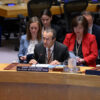
Civilian Casualties Grow Amid Russian and Ukrainian Drone Strikes
Four years after the start of the Russo-Ukrainian War, 2026 has marked a significant escalation in hostilities, with intensified bombardments from both sides causing immense destruction across the region, complicating humanitarian operations, and deepening an already severe humanitarian crisis. As exchanges of attacks have intensified in recent days, the United Nations (UN) warns that women and girls will be disproportionately impacted as violence disrupts access to basic, lifesaving services.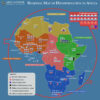
Media As Bedrock for Developing Russian-African Relations
Under the auspices of the Faculty of Journalism of Lomonosov Moscow State University, the Russian-African Club, in late April, held its IV International Forum of Journalists from Russia and Africa, which marked another historical milestone. According to an established annual tradition, discussions were focused on aspects of the media, its structure, current performance, information contents, and challenges as well as future perspectives.
The GEF Leads Global Drive to Tackle Shipping Threat to Oceans
Under the warm waters off Tanzania’s Mafia Island, marine scientist Asha Mgeni hovers above a coral reef she has studied for years. Small fish dart through the currents. To most divers, the reef appears pristine. But Mgeni notices something unusual.
What Hungary’s New Pro-Democracy Government Means For Rule of Law
Péter Magyar, leader of the pro-democratic centre-right Tisza Party, which recently swept into power on an unstoppable wave of hope for change, has now been sworn into office as Hungary’s new Prime Minister.
Hungary’s Long Road Back
When Péter Magyar took the stage in Budapest on the night of 12 April, he told the crowd they had ‘liberated Hungary’. The hyperbole seemed justified. His party, Tisza, had won a parliamentary supermajority on the highest turnout since Hungary’s first free election in 1990, ending 16 years of increasingly autocratic rule.
Keep Inputs Moving to Keep Food Affordable
Across Europe, winter wheat is already in the ground. What farmers apply in the coming weeks will determine the size of this year’s harvest. Those decisions are now being made under a sudden surge in costs that did not exist when seeds went in.
How Santa Marta Finally Made Fossil Fuel Phase-Out Politically Discussable
The First Conference on Transitioning Away from Fossil Fuels in Santa Marta, Colombia, may eventually be remembered as a defining moment in global climate politics, not because it produced a treaty or a formal negotiation outcome, but because it changed the tone, structure, and ambition of the conversation itself.
BULGARIA: ‘We Protested Against a Whole System of Corrupt Governance and State Capture’
CIVICUS discusses Bulgaria’s Gen Z-led protests with Aleksandar Tanev, founder of Students Against the Mafia, an informal student organisation that took part in mass protests against corruption and state capture.
Addressing the Mental Health of Ukrainian Children living on Frontlines of War
“What’s important is to make sure that you can immerse yourself in an environment that is positive for your mental health and wellbeing,” says Olena*.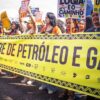
Santa Marta Summit Aims to Push Fossil Fuel Phase-Out as Indigenous Voices Demand Urgent Action
A high-stakes international summit in Colombia starting today (April 24) is expected to sharpen global efforts to phase out fossil fuels, as governments, scientists and Indigenous leaders warn that the world is running out of time to avert irreversible climate damage.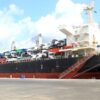
Global Shipping Reforms Cast Shadow Over Tanzania’s Fishing Communities
At dawn, as the sun rises across the Indian Ocean, Venance Shayo perches on the edge of his boat, hauling in a net. The sea gently ripples under the breeze and the sound of revving engines.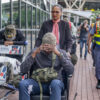
Russia’s African Cannon Fodder
On 7 April, the government of Cameroon published a list of 16 of its citizens confirmed killed fighting for Russia against Ukraine. That means the number of Cameroon citizens killed in this distant war has likely surpassed a hundred, making the country the biggest victim of a Russian recruitment drive increasingly focused on Africa.
Explainer: How the GEF Funds Global Environmental Action
The Global Environment Facility, widely known as the GEF, plays a central role in financing environmental protection across the world. It supports developing countries in tackling climate change, biodiversity loss, land degradation, pollution, and threats to ecosystems.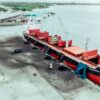
Shipping Industry Seeks Certainty as Experts Back Strong Net-Zero Framework
As global shipping braces for another round of high-stakes negotiations, a volatile mix of rising fuel costs, geopolitical tensions and deep political divisions is testing the fragile consensus around a proposed Net-Zero Framework (NZF) aimed at decarbonising one of the world’s most polluting industries.
Denmark’s Warning
When Danish Prime Minister Mette Frederiksen addressed her supporters on election night on 24 March, she chose her words carefully. Losing four percentage points after almost seven years in power, she suggested, wasn’t so bad given there’s been a pandemic, a war in Europe and a confrontation with Donald Trump over Greenland. The reality was the Social Democrats had recorded their worst general election result since 1903. Meanwhile, the far-right Danish People’s Party (DPP) tripled its seat count, despite years of the Social Democrats leading a systematic crackdown on immigration to try to prevent it gaining support.
ITALY: ‘White Supremacist Concepts Are Entering Mainstream Political Discourse on Migration’
CIVICUS discusses Italy’s restrictive immigration policies with Eleonora Celoria, a researcher at FIERI (Forum Internazionale ed Europeo di Ricerche sull’Immigrazione), a research centre on migration, and a member of the Association for Legal Studies on Immigration (ASGI), an Italian legal organisation that defends migrants’ and asylum seekers’ rights through advocacy, public awareness and strategic litigation.
Experts, Rights Groups Warn of Crisis of Obstetric Violence
Government and medical professionals must implement systematic changes to deal with a “crisis” of obstetric violence (OV) across Eastern Europe and Central Asia (EECA), experts and rights campaigners have said.
PORTUGAL: ‘The Far Right’s Electoral Legitimacy Can Eventually Become Governmental Power’
CIVICUS discusses Portugal’s presidential runoff election and the rise of the far-right Chega (Enough) party with Jonni Lopes, Executive Director of Academia Cidadã (Citizen Academy) and a Steering Committee member of the European Civic Forum, an organisation working on civic engagement, democratic participation and the protection of civic space at national, regional and international levels.
Europe and Multilateralism
“Europe can no longer be a custodian for the old-world order, for a world that has gone and will not return (…) we need a more realistic and interest-driven foreign policy.” These were some of the words pronounced one week ago by the President of the European Commission, Ursula von der Leyen, at the EU Ambassadors’ Conference in Brussels. A speech that sparked considerable controversy: an almost immediate rebuttal from the President of the Council, Antonio Costa; rumours of a motion of censure against Von der Leyen in the European Parliament; more or less public reproaches from several European leaders; and a swift and complete retraction by the President herself.« Previous Page — Next Page »





The Week with IPS

NEXT STOP - SDGs
Tracking global progress towards a sustainable world
Tracking global progress towards a sustainable world
