
Sunday, October 4, 2026



News and Views from the Global South
Farming Crisis: Filling An Empty Plate

DR CONGO: Beauty of a Bean Wins Farmers’ Hearts
Smallholder farmers in Bandundu Province are boosting their harvests with the help of the sweetly-named velvet bean.Agricultural Policy Is Gender Policy
Eva, a Ghanian woman, was given five pigs and some training on how best to care for them. Eventually, her farm grew to 400 pigs and she was able to buy more land and a motorbike which she not only used for transporting her goods to market but for helping neighbours get to town and to hospital quicker.Save Climate and Double Food Production With Eco-Farming
Eco-farming could double food production in entire regions within 10 years while mitigating climate change, according to a new U.N. report released Tuesday in Geneva.Educate the Girl, Empower the Woman
Picture a mother, hunching over a field with a Medieval-style hoe in hand, spending day after day tilling the soil under a beating hot sun - only to retire home to care for her family without electricity or running water.A World Going Hungry
In an era of mass consumption in the West, the developing world is entering its second major hunger crisis in three years, with new figures from the World Bank showing food price hikes have forced 44 million people into economic hardship since last June.Rising Food Prices May Not Signal New Crisis
As food prices rose for the seventh month in a row in January, contributing to recent popular unrest in the Middle East and a spike in commodities purchases by developing countries last week, some analysts are quick to make comparisons to the dry years of 2007-2008.Rampant Speculation Inflated Food Price Bubble
Billions of dollars are being made by investors in a speculative "food bubble" that's created record food prices, starving millions and destabilising countries, experts now conclude.
COTE D’IVOIRE: New Techniques, New Profits for Tomato Farmers
Even while the country has faced civil war and political crisis, innovative research organisations have worked to meet the challenges of food security and rural poverty.Food Worries Rise in China
In China, a country with a history of famine and where rural dwellers still use the greeting "have you eaten?", food is close to sacred. Feeding the country’s massive population remains one of the biggest threats to future economic growth and social stability, experts warn.FOOD: The Rats Have It
While floods and droughts are often highlighted in the media for devastating the world’s rice production, a lesser-known culprit has been able to scurry away without being fingered for causing damage - rats.
In Corrupt Global Food System, Farmland Is the New Gold
Famine-hollowed farmers watch trucks loaded with grain grown on their ancestral lands heading for the nearest port, destined to fill richer bellies in foreign lands. This scene has become all too common since the 2008 food crisis.Latest Food Crisis Brewing for Months
The United Nations, which is trying to reach out to nearly a billion undernourished people, some living in perpetual hunger, is anticipating another food crisis later this year.
Suicides Rise Across India
"India has become the suicide capital of the world," says Daya Sandhu, a counselling psychology professor at the University of Louisville in the U.S.Bahrain’s Farms Disappearing Under Concrete Towers
Environmentalists are engaged in a nation-wide campaign to protect what is left of the agricultural belt in Bahrain. Seventy percent of farms have been eliminated due to urbanisation, according to environmentalists who are warning of a serious environmental crisis.
Cassava Combating Rural Hunger in Zambia
In Zambia, a silver lining has emerged for widespread rural hunger and poverty, thanks to homegrown agricultural research. Local scientists have successfully developed four new, early-maturing and high- yielding cassava cultivars in an ambitious research project conducted in the cassava-rich Luapula Province, under the on-going Root and Tuber Improvement Programme (RTIP).SRI LANKA: Economy Going Nuts
At a marketplace near Colombo, consumers scramble for coconuts being sold from a state-owned truck. Sri Lanka is the world’s fourth largest coconut producer and a major exporter; but a crop shortfall and a drought have forced the country to import coconuts.
AGRICULTURE – SOUTH AFRICA: Small Scale Farmers Face Uphill Battle
Just before sunrise 39-year -old Alan Simons, an emerging small-scale farmer, gets ready for his usual nine-hour day of harvesting, packing and deliveries. In his black Nissan van he drives ten kilometres to the seaside town of Strand outside of Cape Town to pick up his six workers, all of who are women.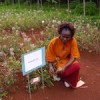
AGRICULTURE: Kenyan Researchers Say Traditional Vegetables Can Improve Food Security
According to Vision 2030, which is a government strategic plan on how to boost growth and development in Kenya, there are an estimated five million out of an estimated eight million households who depend directly on agriculture, despite the fact that agriculture continues to be one of the most under-budgeted ministries.
India-EU Deal Threatens Mom-and-Pop Retail
Retail giants pushing the European Union-India free trade deal promise consumers a "new and dynamic retail experience" but ignore the fate of India’s "mom-and-pop" stores and some 40 million people they employ.
Dire Development Issues Converge in the Drylands
Few are aware that close to one billion people in over 100 different countries are suffering from or severely threatened by intense desertification. Yet awareness is crucial, for it is human behaviour that has led to the proliferation of hyper- arid, uncultivable drylands over the past few decades.Africa’s Future Lies in a Green Energy Grid
Development in Africa could falter as climate change grips the continent, increasing the length and severity of droughts and floods by altering precipitation patterns, among other impacts.« Previous Page — Next Page »


Today, one in six people on the planet go hungry, according to United Nations statistics. The food crisis and now the global economic crisis, together, have increased the number of undernourished people in the world to more that one billion for the first time since the 1970’s. Much of southern Africa continues to face severe food shortages, largely the result of one of the worst droughts in a decade followed by erratic rains. While the Latin American and Caribbean region as a whole is a net food exporter, food price inflation is still having a detrimental impact on the income, nutrition, and health of poor consumers. Solutions must be carefully crafted in each region, country and community taking into account local priorities. The complex web of issues surrounding food security and rural development include farmers access to markets, the adoption of international trade rules, technology transfer, the sustainable use of limited resources, and the application of traditional knowledge, among others. Establishing a prosperous, sustainable economic future for the world means placing a spotlight on agriculture - and giving a voice to farmers. IPS News is covering the food crisis, its causes and its effects, from both a local and a global perspective.

This website is funded through the support of the International Fund for Agricultural Development (IFAD).
