
Sunday, October 4, 2026



News and Views from the Global South
Farming Crisis: Filling An Empty Plate

Research Grant Aims to Meet Critical Maize Shortfalls
As the world's largest international agricultural research coalition celebrated its 40th anniversary here this week, it also announced the launch of a programme to help provide enough maize to meet the annual food demands of over 600 million consumers by 2030.Rising Temperatures Melting Away Global Food Security
Heat waves clearly can destroy crop harvests. The world saw high heat decimate Russian wheat in 2010. Crop ecologists have found that each one-degree Celsius rise in temperature above the optimum can reduce grain harvests by 10 percent. But the indirect effects of higher temperatures on our food supply are no less serious.
ZIMBABWE: Harvesting Water for Food Security
Earth mounds running across her field hold back the water that Caroline Ndlovu uses to grow maize, pumpkins, beans and watermelons long after the short rainy season in this arid part of Zimbabwe.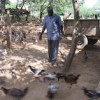
KENYA: Training Poultry Farmers to Vaccinate Against Disease
Every Tuesday and Friday Teresia Muisyo wakes up at 05.00 to feed her ever- growing flock of over 300 free-range indigenous birds.OP-ED: G20 Ministers of Agriculture Must Focus on Smallholder Farmers
The first-ever official meeting of Ministers of Agriculture from G20 countries, to be held in Paris Jun. 22-23, presents an extraordinary opportunity. Tasked with developing an action plan to address price volatility in food and agricultural markets and its impact on the poor, the ministers are uniquely positioned to not only tackle the immediate price volatility problems, but also to take on a more fundamental and long-term challenge - extreme poverty and hunger.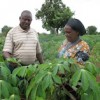
KENYA: Cassava Offers Food Security in Drought
After substituting her maize crop with cassava, Jemima Mueni has enough money to pay school fees for her children and enough food to last until the end of the year, despite the current drought.OP-ED: The Great Land Grab: India’s War on Farmers
Land is life. It is the basis of livelihoods for peasants and indigenous people across the Third World and is also becoming the most vital asset in the global economy.Reimagining Food Systems in the Midst of a Hunger Crisis
Today one billion people are living in hunger, not because of scarcity of production or a shortage of food on shelves in the global marketplace, but because they "lack the most basic purchasing power needed to acquire it", Olivier De Schutter, the United Nations Special Rapporteur on the Right to Food, said Thursday.
Sorghum Proving Popular with Kenyan Farmers
Gadam sorghum was introduced to semi-arid regions of eastern Kenya as a way for farmers to improve their food security and earn some income from marginal land. The hardy, high-yielding sorghum variety has not only thrived in harsh conditions, it has won a place in the hearts - and plates - of local farmers.
Communists Lose by Wide Margin in Eastern India
The cheapest car in the world proved the costliest for a 34-year-old Left Front CPI-M government in India’s eastern state of West Bengal, as the communists lost the elections here by a wide margin.
Egypt Seeks End to Foreign Wheat Dependence
Egypt is stepping up its wheat production in a bid to stem the country’s rising dependence on foreign imports that escalated during the 30-year rule of former President Hosni Mubarak, who was ousted in February.Humanity Hitting the Resource Ceiling
Better living through using far fewer material resources is the only possible future, experts agree. Humanity is pressing up against the limits of a finite planet to provide resources like water, oil, metals and food, according to a new report released Thursday.Seed Proteins May Help Plants Weather Drought
British researchers are working on techniques to improve seeds chances of surviving drought by tapping the potential of little-known proteins that regulate water intake.NIGER: Caring for the River, Reaping the Benefits
In anticipation of growing sorghum during the coming rainy season, Hamadou Abdou and his son are busy preparing the soil on the family's farm in Bougoum, a village in the west of Niger.
DR CONGO: Sowing the Seeds of Food Security in Bandundu
Subsistence farmers in the Democratic Republic of Congo's southwestern Bandundu Province are seeing their harvests double, thanks to an ambitious programme of support by the government.North Korea Hungry for Aid
The Democratic People's Republic of Korea (DPRK) lived through a famine that killed, at conservative estimates, nearly a million people in the 1990s, and is now nearing the brink of a second food disaster, according to an extensive study conducted this year by the United Nations World Food Program (WFP).Jamaica Moves to Slash Hefty Food Import Bill
Behind the rusting zinc sheets covering the gates to his inner-city home, Norman Hamilton is one of the army of backyard gardeners who have been called to action in Jamaica's latest efforts to improve food security.
A Table for Nine Billion
As the World Bank and International Monetary Fund convene for their annual Spring Meetings here, soaring food prices are high on the agenda, prompting some analysts to fast-forward to 2050 and the question of how to nourish the mid-century's estimated world population of 8.9 billion people – the majority of whom will live in developing countries.
Kenyan Women Pulling Together Against Poverty
When it works, it's spectacular: Esther Ngonyo Njuguna's dairy project stands as testimony to the potential of microcredit schemes to boost rural incomes.
Sky-High Oil Prices Here to Stay
As the Arab world continues to pitch and heave with flashes of popular uprisings here and sparks of brutal crackdowns there, analysts are painting a grim picture of the regional unrest's economic consequences, predicting the persistence of high oil prices in the coming years.
HAITI: Seeding Reconstruction or Destruction?
Last year, tens of thousands of tonnes of tools, seeds and plant cuttings were distributed to almost 400,000 Haitian farming families, perhaps one-third to one-half of the country's farming population.« Previous Page — Next Page »


Today, one in six people on the planet go hungry, according to United Nations statistics. The food crisis and now the global economic crisis, together, have increased the number of undernourished people in the world to more that one billion for the first time since the 1970’s. Much of southern Africa continues to face severe food shortages, largely the result of one of the worst droughts in a decade followed by erratic rains. While the Latin American and Caribbean region as a whole is a net food exporter, food price inflation is still having a detrimental impact on the income, nutrition, and health of poor consumers. Solutions must be carefully crafted in each region, country and community taking into account local priorities. The complex web of issues surrounding food security and rural development include farmers access to markets, the adoption of international trade rules, technology transfer, the sustainable use of limited resources, and the application of traditional knowledge, among others. Establishing a prosperous, sustainable economic future for the world means placing a spotlight on agriculture - and giving a voice to farmers. IPS News is covering the food crisis, its causes and its effects, from both a local and a global perspective.

This website is funded through the support of the International Fund for Agricultural Development (IFAD).
