
Saturday, October 3, 2026



News and Views from the Global South
Farming Crisis: Filling An Empty Plate

AFRICA: Regulating the Rush for Land
The adoption of international guidelines to regulate so-called land grabs has been pushed to next year after negotiators failed to agree on conditions for large-scale land investments and enforcement.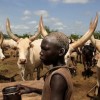
SOUTH SUDAN: Protecting Cattle Saves People
With his bright orange hair, Angelo Waranyang cuts a striking figure as he strides amongst his cattle. His hair colour – dyed with a mixture of cow urine and ash from burnt dung – is symbolic of the close connection that he and the majority of South Sudanese have with their revered animals.
AFRICA: Gov’ts Fail to Invest in Hungriest, Poorest Regions
For millennia, people have coped with drought in the Horn of Africa, comprised mainly of drylands. Yet today, more than 13 million people there are starving because of political instability, poor government policies and failure to invest in the world's poorest people, say experts here in Changwon.
Q&A: ‘Soil is Key to Global Warming, Food Security’
Luc Gnacadja, in his second three-year term as executive secretary, United Nations Convention to Combat Desertification (UNCCD), is widely seen as delivering on his commitment to manage the world's drylands.
AFRICA: “The Man Who Stopped the Desert”
Yacouba Sawadogo, a peasant farmer from Burkina Faso, is known as the "man who stopped the desert." But when he first tried to save his arid land from desertification by planting the trees that have since grown into a 15-hectare forest, people in his village thought he was mad.
Q&A: Africa Keen to Ensure Kyoto Protocol Survives
Durban should not be the burial ground for the Kyoto Protocol, says Kumi Naidoo, Executive Director of Greenpeace International, about his expectations from the 17th United Nations Framework Convention on Climate Change happening in his hometown in South Africa later this year.
East Africa Wants to Trade Beyond the EU
The East African Community (EAC) and European Union head back to negotiations on Monday to resolve the controversy over the delay in signing an economic partnership agreement between the two trading blocs.IBSA: ‘Cash Grants Must Back Food Access’
Studies by the India-Brazil-South Africa (IBSA) Academic Forum on food security issues in the three countries suggest that providing food access works best when backed by cash transfers.
MAURITANIA: Fresh Attempt at Irrigated Agriculture
In a bid to reduce food insecurity, the Mauritanian government is turning to several new approaches to agriculture, including expanded irrigation schemes, popularising new crops and harnessing the energy of recent graduates.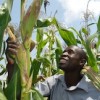
KENYA: Lime Improves Maize Harvest
As the world’s worst food security crisis continues across the Horn of Africa, including in Kenya, some smallholder farmers in the western part of the country are still feeding their families with last year’s abundant harvest.
MOZAMBIQUE: Climate Change Threatens Smallholder Farmers
Long after the wintry sun set over her patch of crops outside the Mozambican capital Angelina Jossefa keeps pulling out weeds. Much of her lettuce, carrots and beetroot died during a cruel winter, which means she has to work harder to feed her three children.
KENYA: Relief Food Sourced from Local Farmers
Mourid Abdi Dolal and Wilson Rotich are both small-scale farmers who grow staple crops. But while one sells his produce at the local village market, the other farms to feed the growing number of refugees in Kenya.SOMALIA: U.S. Greenlights Aid to Shabaab-Controlled Areas
The Barack Obama administration promised Tuesday that the U.S. would not prosecute relief agencies for delivering aid to parts of Somalia controlled by the Islamist insurgent group al- Shabaab, despite concerns that unrestricted aid in the failed state would be diverted to the wrong hands.
MALAWI: Water Drives Integrated Agriculture on Small Farm
When the original owners of a 3.5 hectare piece of land put it up for sale because it was too waterlogged to farm on, Diana Sitima and her husband, Wilson, jumped to buy it.
Famine Relief in Somalia Stymied by Access
While an estimated 12.4 million people linger on the brink of starvation in the Great Horn of Africa, U.S. officials and world relief agencies said Monday that even in a "best case scenario" the crisis will worsen as the areas in most desperate need remain cut off from access to relief.Water Crisis Offers Chance for Unity over Strife
As record-breaking temperature highs and rapidly melting ice caps fuel fears about impending "water wars", some experts in Washington say that the threat of full-blown conflict is exaggerated, adding that robust institutions and solid treaties could transform water crises into international cooperation.
Fish Swim in Israel’s Desert
"It wasn't easy to convince people that growing fish in the desert makes sense," reminisces marine biologist Samuel Appelbaum, peering through the opaque water where thousands of barramundi are being harvested.SENEGAL: Fish Farming Breathes New Life Into Rural Economy
July signals the start of three months of intense activity for residents of the seven villages around the small dam at Sébi Ponty. The dam was stocked with tilapia in 2006, and aquaculture is proving to be a vital economic activity for youth in the area.Growing Water Deficit Threatening Grain Harvests
Many countries are facing dangerous water shortages. As world demand for food has soared, millions of farmers have drilled too many irrigation wells in efforts to expand their harvests. As a result, water tables are falling and wells are going dry in some 20 countries containing half the world's people.BURKINA FASO: Big Boost for Small Agricultural Producers
The government of Burkina Faso has responded to long-standing demands of farmers for greater support for small family producers with the launch of "Operation 100,000 Ploughs". Smallholder farmers say this will strengthen the country's food security.
AFRICA: The Struggle for Women to Own Land
Even at the best of times, obtaining a title deed from the ministry of lands is a difficult process. But as the minister of lands admitted on Jul. 13 that his office is rife with corruption, the disorganisation of this office means Kenyan women are no closer to owning land.« Previous Page — Next Page »


Today, one in six people on the planet go hungry, according to United Nations statistics. The food crisis and now the global economic crisis, together, have increased the number of undernourished people in the world to more that one billion for the first time since the 1970’s. Much of southern Africa continues to face severe food shortages, largely the result of one of the worst droughts in a decade followed by erratic rains. While the Latin American and Caribbean region as a whole is a net food exporter, food price inflation is still having a detrimental impact on the income, nutrition, and health of poor consumers. Solutions must be carefully crafted in each region, country and community taking into account local priorities. The complex web of issues surrounding food security and rural development include farmers access to markets, the adoption of international trade rules, technology transfer, the sustainable use of limited resources, and the application of traditional knowledge, among others. Establishing a prosperous, sustainable economic future for the world means placing a spotlight on agriculture - and giving a voice to farmers. IPS News is covering the food crisis, its causes and its effects, from both a local and a global perspective.

This website is funded through the support of the International Fund for Agricultural Development (IFAD).
