Languages
Thursday, October 15, 2026



News and Views from the Global South
Featured

Developing Countries Feel Squeeze from Lower Natural Resource Revenue & Falling Foreign Aid
Developing countries face major difficulties as income from natural resource extraction industries decreases and wealthier nations reduce their aid.
New US Fed Policy Deepens World Stagflation
The Federal Reserve Bank’s turn to ‘reserve management’ exposes the limited policy options still available as the US seeks to protect itself against international stagflation stemming from President Trump’s policies.
The Search is On for the Next U.N. Secretary General in a Turbulent World
AS THE WORLD HURTLES TO HELL (albeit in a SpaceX rather than a hand basket), it might seem of only academic interest which cipher vegetates on the 38th floor of the U.N. Headquarters. However, the choice is due by the end of the year, unless, as has happened in the past, the Security Council is veto-bound and asks António Guterres to stay on as interim Secretary General.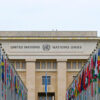
Trump’s Cuts are Pushing the UN out of Geneva. That may be a Win
The $1.2 billion renovation of the Palais des Nations was intended to reaffirm Geneva's centrality to the multilateral system. Instead, the city’s international quarter is emptying.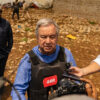
Faced with a Cash Crisis, UN is Urging Senior Staff to Forgo First Class & Business Class Travel
The United Nations has had a longstanding tradition, described by some as a “privilege”, where most senior staffers are entitled to highly-expensive First Class or Business Class seats on trips worldwide.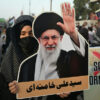
Iran War Deepens Activist Dangers
Narges Mohammadi, awarded the Nobel Peace Prize for her human rights activism in Iran, has been allowed to go home. After guards found her unconscious in her cell, the apparent victim of a heart attack, she was granted temporary release from prison and transferred to a hospital. However, she still faces the threat of being taken back to jail once her condition has improved.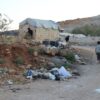
Scarcity of Treatment Makes Syrians More Vulnerable to Mental Health Crisis
The protracted years of conflict in Syria have inflicted profound scars that transcend physical destruction, permeating the psychological well-being of millions.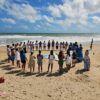
Brazil’s Indigenous Communities Receive $9M in GEF Funding to Protect Lands, Traditions Under Threat
On Brazil’s northeastern coast, the Indigenous community, Tremembé da Barra do Mundaú, lives on a preserved stretch of land shaped by mangroves, dunes, and deserted beaches. The group of around 160 families is led by women and depends on the 3,500-hectare territory for fishing and subsistence farming.
UN General Assembly Votes for Resolution on ICJ Advisory Ruling on Climate Obligations
Member states this week (May 20) deliberated over a draft resolution on states’ obligations in respect of climate change following the advisory opinion from the International Court of Justice (ICJ). The General Assembly agreed to take measures to uphold the ICJ’s advisory opinion for member states to meet their existing obligations to climate justice under international law and multilateral frameworks.
TRANSNATIONAL REPRESSION: ‘China Feels Emboldened to Globalise Its Political Red Lines’
CIVICUS discusses the cancellation of RightsCon 2026 with Barbora Bukovská, Senior Director for Law and Policy at ARTICLE 19, a human rights organisation that works on freedom of expression and information around the world.
Countries Unevenly Impacted by Global Economic Shocks from Mideast Conflict
The ongoing crisis in the Middle East and the closure of the Strait of Hormuz continue to put immense stress and risk on the global economy.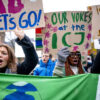
The UN Vote that Could Reshape Climate Justice
Normally, resolutions voted at the United Nations General Assembly do not make the headlines. As nonbinding and mostly symbolic, rich in principles yet empty and lacking the power to carry consequences, these statements are shrugged off and ignored.
‘Do More With Less’: GEF CEO Claude Gascon on Speed, Scale and Reform
As governments prepare for the Eighth Assembly of the Global Environment Facility (GEF) – scheduled to be held from May 30 to June 6 in Samarkand, Uzbekistan – the stakes are unusually high.
UN Weather Agency Warns of Escalating Climate Extremes Across Caribbean and Latin America
Faster-than-average sea level rise, intensifying hurricanes, extreme heat and worsening swings between drought and flooding are increasing pressure on Latin America and the Caribbean, according to a new report released Monday, May 18 by the World Meteorological Organization (WMO).
Stop the Madness: Civil Society Cannot Thrive on Burnout
In an era when civil society funding is in decline, it’s time to rebel against a broken system.
Breaking Cultural Barriers to Equip Marginalised Kenyan Girls With Entrepreneurial Skills
For generations, communities in Kenya’s arid and semi-arid lands (ASAL) have viewed girls through the lens of marriage, with some being married at 11 in exchange for livestock or soon after secondary school, denying them opportunity for further education and skills training.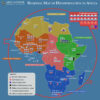
Media As Bedrock for Developing Russian-African Relations
Under the auspices of the Faculty of Journalism of Lomonosov Moscow State University, the Russian-African Club, in late April, held its IV International Forum of Journalists from Russia and Africa, which marked another historical milestone. According to an established annual tradition, discussions were focused on aspects of the media, its structure, current performance, information contents, and challenges as well as future perspectives.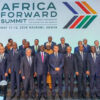
Africa’s Golden Future
It is very appropriate that this Africa Forward Summit is being held in Kenya. Two weeks ago, a Kenyan marathon runner, Sabastian Sawe, did what had been considered impossible: by running a marathon in under two hours! What we have set ourselves here is also a marathon—and we must show the same resilience and perseverance that Mr. Sawe did.
DIGITAL RIGHTS: ‘The Priority Should Be Holding Tech Companies Accountable, Not Banning Children from the Digital World’
CIVICUS discusses the rising trend of social media bans for children with Marie-Ève Nadeau, Head of International Affairs of the 5Rights Foundation, an organisation that promotes children’s rights in the digital environment.
Field-Based Research Is a Lifeline for Zimbabwe’s Food Security
Agriculture sustains millions of people in Zimbabwe, serving as a vital source of both food and income. But climate-related pressures affecting land, crops, rainfall patterns, and increasing pest outbreaks are threatening smallholder farmers’ harvests, leaving them food insecure.
The GEF Leads Global Drive to Tackle Shipping Threat to Oceans
Under the warm waters off Tanzania’s Mafia Island, marine scientist Asha Mgeni hovers above a coral reef she has studied for years. Small fish dart through the currents. To most divers, the reef appears pristine. But Mgeni notices something unusual.« Previous Page — Next Page »





The Week with IPS

NEXT STOP - SDGs
Tracking global progress towards a sustainable world
Tracking global progress towards a sustainable world
