Languages
Friday, November 20, 2026



News and Views from the Global South
Featured

Coal Pollution Continues to Spread in Latin America
Despite growing global pressure to reduce the use of coal to generate electricity, several countries in Latin America and the Caribbean still have projects underway for expanding this polluting energy source.
Climate Change is Already Upon us & Will Only Worsen in Short Term
It is fitting that this year’s conference of parties (on climate change, COP 23) is led by Fiji, a nation on the frontlines. Last month I visited other small islands facing the impacts of a warming world: Antigua and Barbuda and Dominica. The hurricane damage was beyond belief. The catastrophic effects of climate change are upon us. Floods, fires, extreme storms and drought are growing in intensity and frequency.
Vanuatu: Community Farms Helping Small Islands Adapt to Climate Change
Here in Vanuatu, the ocean has been getting warmer and more acidic. Scientists are predicting that cyclone patterns will change, we’ll see heavier rainfalls, a wetter wet season and a drier dry season. We’re already seeing the sea rising six millimeters per year in the capital, Port Vila; higher than the global average.
On Gender Day at Climate Meet, Some Progress, Many Hurdles
“Five years ago, when we first started talking about including gender in the negotiations, the parties asked us, ‘Why gender?’ Today, they are asking, ‘How do we include gender?’ That’s the progress we have seen since Doha,” said Kalyani Raj.
How to Ensure Farming is More Than Just a Footnote in Climate Talks
If change comes from within, then climate action in agriculture must logically start with farmers. They need to find ways to adapt to and mitigate climate change. But when that involves 800 million of the world’s poorest people, they are going to require systematic and dedicated support.
Finance Following Growth
Economists of all persuasions recognize the critical role of finance in economic growth. The financial sector’s stability and depth are widely considered important in this connection.
The Mekong, Dammed to Die
In Laos, the lush forests are alive with the whines of drills that pierce the air. On the Mekong, a giant concrete wall rises slowly above the trees. The Don Sahong dam is a strong symbol, not only for a power-hungry Asia but also for what critics fear is a disaster in the making.
The Harsh Plight of 152 Million Child Labourers
While trillions of dollars are being spent on exploring remote galaxies, Planet Earth is still home to harsh realities that could be easily –and much less expensively—resolved. One of them is that worldwide 152 million children are currently victims of child labour.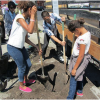
How US Is Taking Climate Action Without Trump
Even after President Trump announced his intention to pull the United States out of the Paris Agreement, much of the country is moving forward with climate action anyway. According to new analysis, more than 2,500 non-federal actors representing more than half the U.S. economy—including cities, counties, states, businesses and more—have pledged their support for the Paris Agreement goals. If these actors were their own country, they’d be the world’s third-largest economy.
Global Campaign for Mercury-Free Dentistry Targets Africa
A vibrant global campaign to ban the use of mercury in dentistry is shifting direction: moving from Europe to the developing world.
Economic Development vs. Climate Action: Rebutting Deniers and Wafflers
As negotiators meet in Bonn to put together a deal to implement the Paris Agreement, John Holdren, a professor of environmental policy at the John F. Kennedy School of Government, Harvard University, stressed that economic development and climate change mitigation and adaptation are not ‘either-or’ but must be pursued together.
Climate Change Poses Alarming Threat to Food Security in Pacific Islands
A high-level meeting of political leaders -– hosted by the Food and Agriculture Organisation (FAO) -– sounded an ominous warning: that climate change poses an “alarming threat to food systems and food security in the Pacific islands.”
Aid Groups Condemn Yemen Blockade, Warn of ‘Catastrophic’ Famine
If aid deliveries are not resumed, Yemen will experience the worst famine the world has seen in recent decades.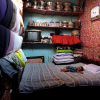
Nations without Nationality – An ‘Unseen’ Stark Reality
Here’s another ‘unseen’ stark reality—that of millions of people around the world who are deprived of their identity, living without nationality. Their total number is by definition unknown and their only ‘sin” is that they belong to an ethnic, religious or linguistic minority in the country where they have often lived for generations.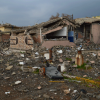
The Illusion of Justice: When Will Reparations be Served to Iraq’s Victims?
It is difficult to spend any time in Iraq without being struck by a sense of profound injustice. After successive decades of war and occupation, violence has become the rule rather than the exception in the country, with each phase of conflict outdoing the previous in terms of brutality and capacity to shock the conscience.
“Refugees Are Nothing but Commodities”
As countless refugees arriving on Italy’s shores report torture, extortion and forced labour in Libyan detention centers, many say they never intended to make the journey to Europe until the chaos in Libya left them no other choice.
Victims of El Salvador’s Civil War Demand Reparations
Among the sea of names of victims of the Salvadoran civil war, engraved on a long black granite wall, Matilde Asencio managed to find the name of her son, Salvador.
Will Policymakers Listen to Climate Change Science This Time Around?
Climate change is altering the ecosystem of our oceans, a big carbon sink and prime source of protein from fish. This is old news.
Pacific Communities Building Resilience in the Face of Climate Change
In the Pacific, climate change is an ever-present threat, undermining human rights, livelihoods, and security. Pacific Islanders are working with courage and resolve to build the resilience of their communities and to catalyse international actions towards ending global carbon pollution.
Fighting the Creeping Catastrophe of Climate Change
November 8 marks the fourth anniversary of Haiyan’s landfall in the Philippines. The super typhoon was the strongest ever to make landfall.
Emerging Markets at Risk Again
Emerging market governments often draw lessons from previous financial crises – or at least claim to do so – to prevent their recurrence. However, such preventive measures are typically designed to address the causes of the last crisis, not the next one. Hence, some measures adopted may inadvertently become new sources of instability and crisis.« Previous Page — Next Page »


The Week with IPS

NEXT STOP - SDGs
Tracking global progress towards a sustainable world
Tracking global progress towards a sustainable world
